Jupiter
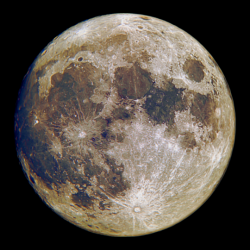
A couple of people requested me to have a look at Jupiter, it's a bit of a learning process but here is what I got. I think it might represent the upper end of what's achievable with a smartphone on "tiny" objects like Jupiter. To get more detailed pics I'm going to need a dedicated astronomy camera, something to look forwards to!
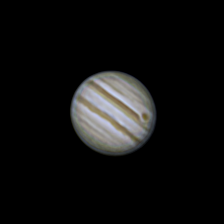
Jupiter is my favourite planet, you can see some of the high altitude cloud formations around the bands and the great red spot (which sometimes is brown!) looming from the horizon. I'm happy to have been able to capture it like this! Next up I want to try to create a high resolution mosaic of the full "mineral" moon 🌕 and in a few months time I might be able to get Saturn 🪐

@SentryTheDefiant
Beautiful 🥰


@SentryTheDefiant
Fabulous. I was looking forward to this. 😊
@trueconfidant123
You're welcome!! Better than the last one I hope!

Hahah yo look at that. THATS REAL? Wow I never fully believe the internet pr news but not seeing thsi come from a real person... Holly Molly!
That real? OH my gooooood hahaha. Such cool view. So so deep and mysterious... like who knows what leaves there?
Awesome image my friend. Really digger this one.
Haha so empty the space around it. Love it lvoe it love it
@MusicalTones6275
Thank you, I'm glad you like it! I'm absolutely fascinated with it all right now haha
I love it. It hunts me in a good way since its real. Not ai or fake nasa stuff. Really interesting.

@SentryTheDefiant what telescope do u use? Can it catch nearby nebulas like orion ect i would love see such pics.
@friendlyBlackberry7487
I used a StellaLyra 8" Dobsonian and my phone recording through the eyepiece to capture it. :)
@friendlyBlackberry7487
Oh and yes you can see some brighter nebula like Orion with it, but I haven't looked at those yet. Those also may have to wait until I get a better camera.
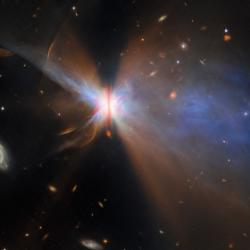
Cameras are good ! But telescope like sky watcher are even best you can even capture bright stars, nebula, dust, orion belts and can cover meta shower more
@Letsgiveatrytobehappy
I got the StellaLyra 8" dobsonian, I was considering the Sky Watcher 200p but ultimately decided on the former because it came with a bunch of cool accessories! The picture there I took with my phone through the eyepiece

request to share more details about camera you used, i tried with DSLR but its not that clear
@HelpingGentleman
Of course! I used a Samsung S26 Ultra to record a high definition video of Jupiter using it's super telephoto lens. The phone is attached to the telescope with a Celestron NexYX adapter and pointed through the eyepiece.
It's quite a difficult process on Jupiter because you need to use high magnification and because I have to manually aim it, you only get about 10 seconds of footage crossing the frame. After that you use a program called PIPP to align all the frames so it looks like a clean stable video.
Next you put the stabilized video into another program called AutoStackkert 4 when then analyzes all the frames you've captures (I had about 900 in the video I got) and then it uses a process called stacking to combine all the best frames into a single image and you'll get something like this: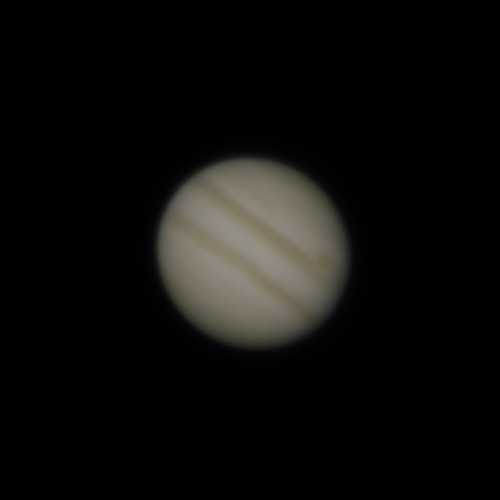
So thats the stacked image, looks blurry but because of the previous process it has a ton of details hidden within it. The next step is to use yet another program called Registax 6 to bring out that detail with specialized algorithms of sharpening and denoising, which then produced the final image!
I was considering getting a DLSR as the next big upgrade but now you can get dedicated astronomy cameras that cost about the same or cheaper and can produce fine details. That's for future me to delve into though!
Thank you

❤️❤️❤️❤️

@SentryTheDefiant this one's magnificent