What makes a criminal?
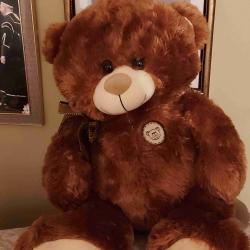
Hearing and accepting the word “no” as a child helps determine how one will cope with disappointment as an adult. When faced with perceived deprivation, some will feel less inclined to follow societal norms, or laws if they feel entitled to something. In their mind the end justifies the means because life hasn’t been fair.
Rarely have I come across someone irredeemably evil or at so at odds with society as to pose a constant danger. These are the psychopaths; individuals who profoundly lack empathy for others and acts out of pure self-interest. This is not to say psychopaths are devoid of free will. They remain aware of laws and morals and make choices as we all do.
We are all endowed with varying amounts of intelligence, insight and empathy. Other important factors include impulsivity, the ability to delay gratification, and the foresight to appreciate consequences prior to action. These attributes all exist on a continuum. It is a mix of all these facets of a personality that interact with the outside world, making tens of thousands of little choices that add up to a life lived.
It is an unimaginably complex mixture comprising each individual. (And what makes
working in mental health eternally interesting.) We are not born moral; a
toddler delights in pulling the cat’s tail. It is a parental figure who
instructs that such an action causes both pain for the animal and might lead to
a nip and is thus best avoided. Even so, our brain’s frontal lobe, the section
most responsible for our socialization, does not fully develop until our mid
20s. Many of us can recall our most bone-headed decisions in our late teens and
early 20s when we believed we already knew it all. Further, it is well known
that 40 marks a general age at which people, especially men, mellow.
A child who grows up with all basic necessities cared for will look different than one who worried about where his next meal would come from or whether trauma lingered outside the door in the form of a physical or sexual abuser. A major factor is resiliency or the
ability to absorb the blows of life and rebound for the better.
Key points
- The brain is very complex and there are still undiscovered factors about what forms our personality
- Our experiences and social environment can have a huge impact on our developement
- Setting boundaries and explaining why can contribute to building resiliency and self-value
What are your thoughts on this article?
#ForensicPsychology #Personality #Neuroscience
@calmDew1576
Hello
What an informative read!
It’s interesting so see all the attributions that can lead to someone being a criminal or not.
Thanks for sharing Dew<3 💛✨
@innateJoy9602 Thank you for reading Joy! I hope you enjoyed it. This is one aspect of what could make a criminal. Definitely setting boundaries and learning how to cope with loss can be beneficial. <3
Laws aren't fair
We're all born on this earth equally, yet it's already been claimed by people before us. Do you think everyone obtained their land fairly? You know wars and greed determined the way the world is today?
@Themaninblackxxx Interesting point of view. At this article we mostly analyzed the criminal aspects of individuals but it is true there are other communities commited to mass crime. In any case there are more aspects that could influence criminal activity and of course this topic is so complex that it's still being heavily researched. Thank you for sharing your thoughts!

I think we need to look at how we define criminal. Is anyone who engages in crime a criminal? I have deep respect for some criminals if that's the definition that we use. Some are way more empathetic than those making certain laws. I think we need to look at some of what society is doing to say what is creating criminals and maybe looking at what went right in the childhood for some of those who are caring for others.
@AffyAvo I can see your point Affy. At many cases the social environment is highly related to someone's criminal activity and the abuser has very often been abused as well. Thank you for reading and sharing your thoughts!
@calmDew1576 That's not really my point. Throughout history people who have helped those who were abused and persecuted have been labeled criminals. They were heroes. We still see this type of thing today.
@calmDew1576 Very interesting article. Thanks for sharing!
@comfortableNight4463 Thank you for reading Night!
@calmDew1576 You're most welcome! I really appreciate your posts.

Thanks for sharing the information.

@calmDew1576
Thank you for this post! Yes, the child that will not listen to the word "no" and now, we see adults that take umbrage to being told "no" even when doing so with different verbiage and in an incredibly polite way.
Boundary issues. Typically those that cannot understand "no" can be those of us in society that have had their growth stunted at an early age and due to a myriad of different factors. At that point, much of growth stops in mental and emotional ways. We end up with adults, in adult sized bodies with the emotional capacity of a 2 year old for boundaries and rules. It's called the "terrible twos".
When adults behave this way, I refer to it as having a "tall tantrum". 😊

@calmDew1576
It's definitely interesting point. I think there may be differing definitions of what is right and wrong for each culture to a sense that society as a while may determine what a criminal is and what a criminal is not. There is a lot of contributions to a person who ends up being a 'criminal' including genetics, environment, development etc. It's definitely insightful to be able to look at all these factors that lead someone to these types of behaviors.