Dietary Restrictions & Food Safety

Food Day is Oct 24th check out Healthy Living for more!
Dietary Restrictions can exist for a number of reasons: allergies, Celiac disease, drug-food interactions, intolerances, decreased ability to maintain a healthy blood glucose level, increased excretion of a mineral are just some of the reasons.
This can make a food that is safe for most people unsafe for an individual.
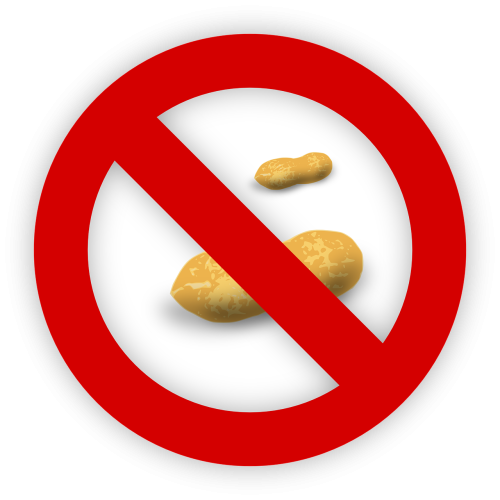
[A peanut free symbol, peanuts in a red circle and line through it]
Some ways to reduce risks when eating are to:
- Be aware of how much certain things need to be avoided, sometimes people can eat small amounts in moderation, other times even traces can cause serious problems
- Read Food Labels
- Understand what those labels mean! If limited amounts are ok things like serving size, may contain, order of ingredients and nutritional labels can be helpful in determining if something is safe to eat and how much
- Be aware of the labeling regulations in your area, just because it's not listed doesn't necessarily mean the product is free of an ingredient
- Be aware of different names for an ingredient for example casein comes from milk
- Be aware of common hidden sources
- Ensure people who are preparing the food are aware of any potential issues. Cross contact can be a serious problem for some people. Heating up a BBQ first may reduce bacterial contamination but remaining food particles may still be a safety risk
- Make use of supplies - parchment paper, tinfoil, containers from home and dedicated cutting boards may be useful
- If possible, bring your own food if food at an event is questionable
Do you Have dietary restrictions or prepare food for someone who does?
What have you found a little tricky?
What tips do you have for someone else?

I don't know if I have any food allergies, but I do have an intolerance to msg, unfortunately. When I eat something with msg, I get a headache, nausea, heart palpitations, etc. It just makes me feel sick to the point where I have to lie down, so I try to avoid it as much as I can. For instance, when I have ramen noodles, I don't use the seasoning pack that comes with them, I have to use my own msg-free seasoning and broth.
The only tip I know is to check the labels, and even then, sometimes you have to do some research online to be fully sure of what's in your food. In my case, sometimes the labels will outright say that the food contains msg. Other times it's tricky and it's hidden behind other words like: autolyzed yeast protein, glutamate, natural flavors, seasoning, soy sauce, vegetable extract, yeast extract, and so on.

@AffyAvo Great post thanks!
Do you Have dietary restrictions or prepare food for someone who does? What have you found a little tricky?
The main problem I find is cross contamination, whether it is someone eating a sandwich made with bread that contains wheat (gluten) who then puts their hand into my packet of crisps ( gluten free) with out realising they have then contaminated that packet of crisps, or if it is someone preparing a subway sandwich and who doesn't clean the utensils and chopping board before switching between gluten free and gluten containing ingredients
Listening - One Step At A Time!

@AffyAvo I live with a partner who has strict dietary restrictions. People who do not live this way have no idea how isolating it can be to not be able to easily eat with others.
@adoredPond2848 Yes, especially when trace amounts are problematic, it can be difficult to eat or even be present in certain places.