Microaggressions (Day 2 of Living Beyond a Label!)

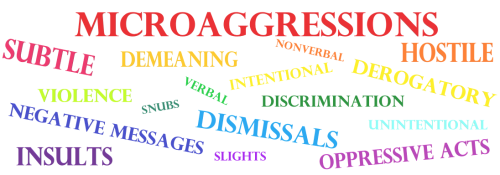
[Image consists of a word collage regarding microaggressions]
Microaggressions are subtle behaviors, both verbal and nonverbal, that consciously or not have a harmful or derogatory effect on a member of a marginalized group. While these behaviors may not be purposeful, they often reflect the biases held toward others. Often seen as potentially less harmful than outright prejudice, even these subtle behaviors, especially when chronic or continuous, can cause significant harm, regardless of intent.
Microaggressions come in many forms, from micro assaults, to micro insults, and micro invalidations. Micro assaults are typically overt and intentional, like using a slang term that is known to have a derogatory meaning. Micro insults often take the form of a backhanded compliment or negative implication. Micro invalidations essentially imply that someone’s experience of prejudice isn’t valid or that they are overreacting. Some microaggressions are even environmental, like having a lack of realistic representations in media.
It’s important to note microaggressions can happen toward any marginalized group, including but not limited to, ethnic minorities, women, people with disabilities and LGBTQ+ people.
Some examples of microaggressions commonly experienced by LGBTQ+ people:
“You don’t look like a lesbain.”
“You don’t seem gay.”
“I went through a bisexual phase in college, I got over it.”
“Were you born a boy or a girl?”
“Who’s the man/woman in the relationship?”
“Did something happen to you when you were a child?”
“Why can’t you just pick one?”
“I never would have known you’re transgender! You totally pass.”
As you can see many microaggressions are a result of things like stereotypes, media representations, and even assumptions regarding a marginalized group. However over time all these seemingly harmless little digs can add up and hinder a person’s mental health, but how do you cope with it?
Sometimes it’s as simple as making a person aware of how what they are doing or saying is hurtful or harmful. It can be important to do so in a calm way rather than becoming upset or angry if only so that people don’t become defensive rather than learning. Other times it’s far more complicated particularly when the individual was intending to cause harm.
Before addressing any instance you may want to ask yourself the following questions:
Will I regret not speaking up? If I don’t speak up, will that suggest I agree?
Will this person become defensive or even aggressive?
How might this change my relationship with this person?
Is my safety at risk if I respond?
Solving microaggressions isn’t really about being politically correct, it’s about understanding what they are and where they come from and learning to communicate better.
Questions to consider:
Why do you think microaggressions persist?
What are ways you try to cope with or overcome microaggressions?
If you want, please share a personal experience with microaggressions and how that made you feel?
[Image consists of a rainbow coloured bandage]
Sources: https://www.verywellmind.com/what-are-microaggressions-4843519 , https://mindremakeproject.org/2021/09/20/microgressions-that-target-lgbtq/

@EmotionsListener
I believe microaggressions persist because it's the most acceptable way to react to things that you don't agree with or as innocently as just thinking you're being kind when you are not, especially to a marginalized group that you don't fully agree with or accept so you try to cope by easing your hatred/disagreement with pretend-like kindness or just flat out verbal violence
in my personal experience the best way I found to cope with it is just to take a step back and detach myself from the person asking the question or from the question itself to prevent myself from feeling attacked or hurt. It helps me come up with a reasonable explanation or feedback that come in accordance to the other person world view since I usually aim to reach a middle ground between us both when I feel like it's unlikely they'll fully agree with me.
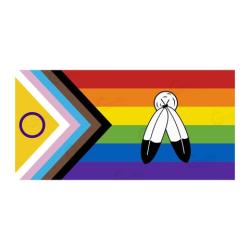
@EmotionsListener
Why do you think microaggressions persist?
- rooted in bias, cultural stereotypes, everyday interactions, marginalized groups( aka 2SLGBTQ+/MOGII)
What are ways you try to cope with or overcome microaggressions?- educate, confront, support - safely (with good support)
If you want, please share a personal experience with microaggressions and how that made you feel?
- I live & work within microagressions every day of my life - from the time I was born. I continue to do so. It makes me feel (and is) tired of it.

@EmotionsListener
Why do you think microaggressions persist? They're easy to get away with, and in a pinch they're easy to walk back. The person using them probably knows what they're saying isn't okay, but they want to test the waters to see if they can get away with it.
What are ways you try to cope with or overcome microaggressions? If I'm feeling froggy, I'll confront them with curiosity: ask questions about what they meant, correct any poorly stated facts, etc. I don't want to make it a full blown conflict, but shining a light on what they're saying forces them to take responsibility for it.
Usually, however, I'll ignore them then talk it out with a trusted friend later on. If I can't do that, walking away helps a lot. Meditation too.
@EmotionsListener
1) Microaggressions persist due to a number of reason, for example ignorance and lack of education / representation / open conversations that help people understand what it means to live as LGBT+ and how certain words and behaviors are perceived.
Not all microaggressions are involuntary and naiv, though, in some cases they are purposefully thrown there to make queer people uncomfortable without being more "openly" queerphobic, which would lead to confrontation and maybe even consequences, while microaggressions are easier to mask as innocent mistakes.
2) finding comfort through community support is always the best way to deal with minority stress. In some cases, educating the interlocutor can be helpful and give us a sense of purpose by knowing that the person is now less likely to commit that microaggression again. But once again, it's not always a matter of innocent mistakes. If it's not the case, relying on community to get support is a great way to cope.
3) As a bisexual woman, misconceptions about bisexuality that invalidate my identity are very frequent, even within the LGBT+ community. It's particularly hurtful when it comes from people that are supposed to be more educated and understanding about queer identities.

@EmotionsListener
I think microaggressions persist because they’re often invisible to the people doing them. They’re entrenched in cultural norms, assumptions, and power structures, so unless someone has done real self-reflection or been called out gently (or not-so-gently), they don’t always see them or see the harm. Some people mean well and still cause harm, and others use “jokes” as a cover for real bias or hate.
When I experience microaggressions, I try to remind myself that someone else’s ignorance or projection doesn’t define me. Sometimes I set a boundary, sometimes I vent to someone I trust, and sometimes I need to let myself feel angry or tired without trying to fix it right away. It depends on how safe I feel in the moment and what my needs are at that time. I also try not to minimize my feelings. Those little moments add up, and it’s okay to acknowledge that they hurt.
One example that stuck with me was when someone said I was “too sensitive” for bringing up how a joke about sexual orientation made me uncomfortable. They tried to make me feel small and like my discomfort wasn’t valid. I stood up for myself, though, because I’ve learned that it’s okay to take up space and to advocate for my peace, even if it makes someone else uncomfortable.