Managing Mental Hygiene

Mental hygiene means taking proactive care of your mind as a means of preventing the onset of mental illness. Mental hygiene is a subjective concept as individuals vary. There is no universally accepted set of guidelines that you need to follow to have proper mental hygiene.
There are fundamental concepts in mental hygiene; adequate sleep, proper nutrition, regular exercise, social support, and regular checkups with a mental health professional.
Maintaining proper mental hygiene may also be using techniques that are meant to help relax and retrain your mind (grounding techniques, mindfulness, ASMR), to help yourself avoid unhealthy fixations and preoccupations that may trigger or intensify common mental health conditions, such as anxiety and depressive disorders. This concept is based on assumptions similar to those applied in other forms of preventive medicine. It is important to express self-awareness and conscientious effort to maintain optimal levels of health by avoiding behavior patterns and lifestyle choices known to impact well-being in a negative manner. It is important to remember that there is no hundred percent way to prevent many mental illnesses and that each coping method's effectiveness varies from individual to individual. Many times mental illnesses are tied to causal factors, including brain chemistry, genetics, exposure to toxins, substance abuse, and even specific social conditions. While some of these factors may not be under your control, others may be lessened by maintaining a healthy lifestyle, reducing stress, and avoiding preventable triggers of mental illness.
Basic mental hygiene principles focus on keeping a good overall physical health as a means of supporting natural, healthy brain function. To get this, you need adequate sleep, proper nutrition, and regular exercises as fundamental pillars of mental hygiene and professionals recommend trying to keep a regular sleep schedule to your best possible degree. Secondary techniques that you can do are limit your alcohol intake and avoid the use of illicit drugs and the abuse of prescription drugs. Both alcohol and drugs alter brain chemistry, which can increase your likelihood of developing mental illness.
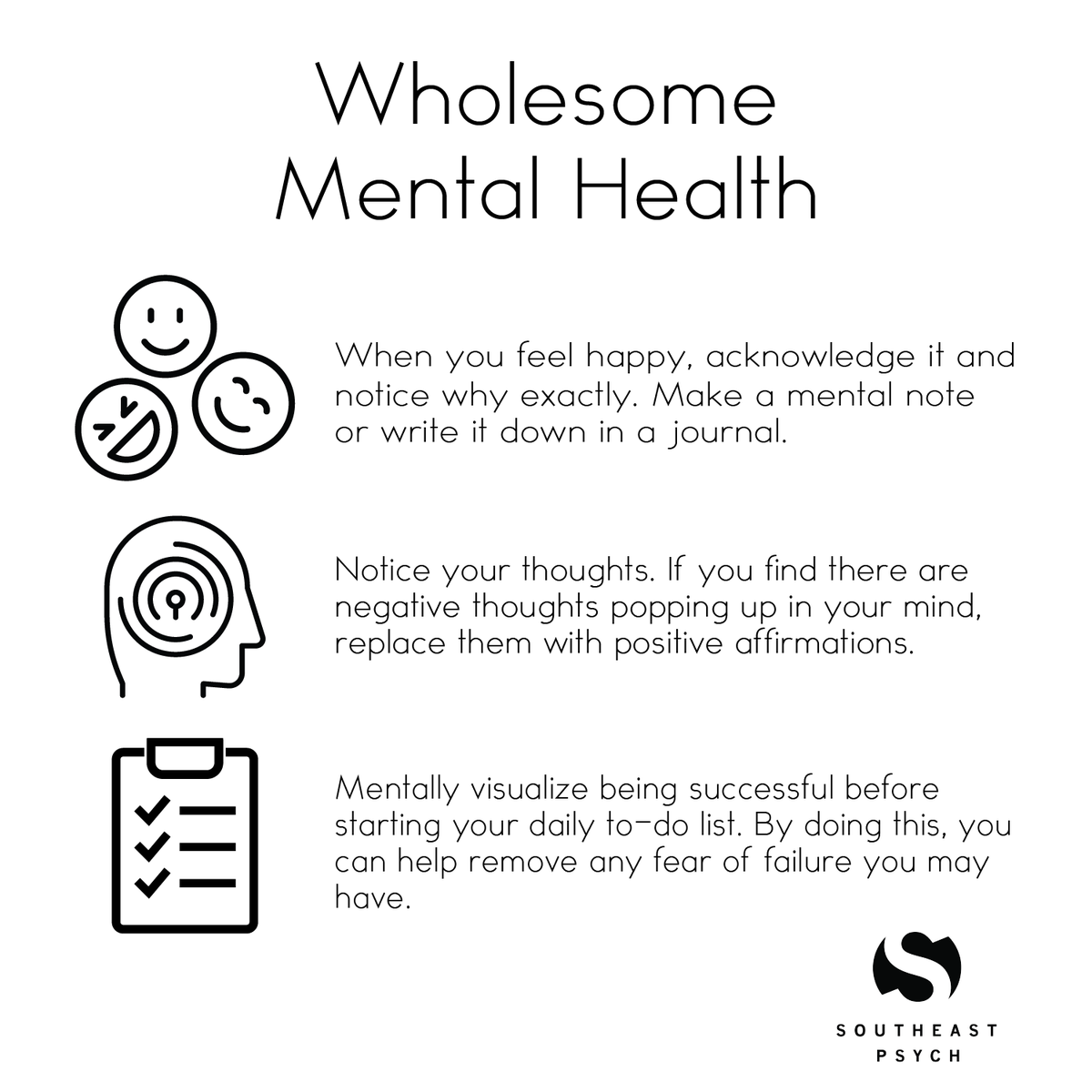
At a deeper level, it can be good for your mental hygiene to make an attempt to cultivate active, fulfilling social lives, community connections, and a sense of purpose in life. Social isolation and not having a purpose have been linked to mood disorders (eg. depression) and many professionals believe it is important for people to stay as engaged as possible with their life. Stress reduction techniques, like meditation and mental retraining, can be part of an individual's tailored mental hygiene program. These can be particularly useful if you have a high-stress occupation and for those who are predisposed to anxiety. Meditation involves focused breathing and visualization exercises to calm the mind. You can join many mindfulness discussions here on 7cups. Mental retraining involves the conscious effort to replace stress-inducing, worrisome, or otherwise negative thought patterns with positive alternatives.
According to professionals, it is important for individuals who are predisposed to mental illness to have regular professional checkups, just as one would have with a physician or dentist. Known predispositions include a family history of mental illness and/or previous personal history with mental illness or related disorders. Regular checkups give those who are predisposed individuals a place to turn for frontline treatment when symptoms begin to onset. Similarly, maintaining mental hygiene allows you to be able to detect possible warning signs of mental illness to seek prompt attention from a qualified mental health professional. Examples of warning signs to look out for are sleep disturbances, prolonged periods of sadness or low mood, difficulty concentrating, sluggishness, loss of pleasure in previously enjoyable activities, changes in eating patterns, diminished sex drive, and significant mood swings or personality changes.
Discussion
- How is your mental health right now?
-
What mental hygiene techniques do you have?
Greene, J. M. (2022). Mental hygiene. Salem Press Encyclopedia of Health.
Hopie. Interested in sending a Listener Coach Request or to be a Verified Listener, send me a PM

@HopieRemi
Awesome post remi, Mental hygiene was a new word for me to learn today, thx for bringing it for a thought ❤️
@blissart Thank you! Always glad to teach new things!
Hopie. Interested in sending a Listener Coach Request or to be a Verified Listener, send me a PM

@HopieRemi
D: let me read this 5 times 😀 my brain hasn’t nommed all the info yet
*will be back*
I definitely learnt something new today 😊 and i may found an answer to a life long question of mine :’) unfortunately my biological parents fed me alcohol as a toddler so yeah 😀 everythings a joy (sarcasm). This is an absolutely wonderful post Hopie 😀 and i feel so much wiser after reading this for the 2nd time XD
Im sorry to hear about what your parents did to you! You’re welcome btw. Im glad I was able to introduce new information @emotionalTalker2260
@HopieRemi
😀 i love learning something new everyday
Then you’ll love me! When I learn something new in my wellness class that can be translated for here lll post here to reinforce my own knowledge ! @emotionalTalker2260
@HopieRemi
who said i didn’t already 😀 (half serious joke). 😀 i very much look forwards to learning more 😛
@emotionalTalker2260 ahah! Likewise. It is great to learn
Hopie. Interested in sending a Listener Coach Request or to be a Verified Listener, send me a PM
@HopieRemi
hehehehe 😛 glad to hear <3
@emotionalTalker2260 ❤️
Hopie. Interested in sending a Listener Coach Request or to be a Verified Listener, send me a PM

I really like this one! It explains mental hygiene well while providing some good was to practice it.
My mental health is pretty good despite a lot of major stressors.
Chronic illness certainly impacts how I incorporate mental hygiene. I get quite a bit of sleep even though it's not very scheduled. I connect with others, including through technology. While my body can put in some major limitations including brain fog I do try to stay involved with engaging mental activities.
@AffyAvo I am glad you like this one. I am glad to hear that your mental health is pretty good despite stressors in your life and that you are able to practice as much mental hygiene as you can despite any limitations on you due to your chronic illnesses. Thank you for joining this discussion.
Hopie. Interested in sending a Listener Coach Request or to be a Verified Listener, send me a PM

I don't think I have the best mental hygeine. In fact this is the first time I've heard that term used before.
I tend to isolate from others when I have a lot of things on my mind or I'm too anxious or depressed. It's like a pause button is pressed. It's not the best because too much of that makes me ruminate on bad memories that are better left in the past.
One thing I must say, however, is that sometimes you may not be able to completely avoid all of your triggers, especially when it comes to mental health. Having alternative coping mechanisms or even trying to build a bit of resilience to those triggers has personally helped me in the past. Not saying it works for everyone, though.
@cafedaydreams Thank you for your response! I am sorry to hear that you don't have the best mental hygiene but it is great that you are able to recognize that in yourself. You are absolutely right that it is impossible to avoid every single trigger. I am glad that you are able to rely on alternative coping mechanisms and build resilience to some of those triggers.
Hopie. Interested in sending a Listener Coach Request or to be a Verified Listener, send me a PM

@HopieRemi
Super insightful post Remi! Thanks for sharing this important concept of mental hygiene with all of us. Personally for me I think right now my mental state is thriving to say the least! I think one of the ways I have mental hygiene is acknowledging the up and downs of mental states, I'm going to have bad days and also good days. Realizing that stabilizes my mood a lot (almost speaking into existence).
@sunnyWriting4806 that is great. I am glad to hear that your mental state is thriving right now. And you’re welcome for bringing up the concept!

Thank you I really needed this I think this will help me out a lot . A lot of good information.
@Loveyourfate You are welcome!
Hopie. Interested in sending a Listener Coach Request or to be a Verified Listener, send me a PM

I agree that mental hygiene is important indeed
💕

@HopieRemi
it's so weird because science is always behind and never has an explanation for outliers.
Many times throughout history has science 'proven' something only to have people that have known this for decades roll their eyes.
Yet it's odd we keep talking about science this and fact that and never really including the more interesting examples of that which is 'unproven'.
What makes our culture and what makes sense can seem directly opposite with truth and 'science' could paint a picture that isn't true.
Unless one has a handle on critical thinking and common sense, and has never experienced a major loss or crises, 'scientific fact' can seem callous.
That's because even the slightest puff of air will be a crisis when it's blown against a raw wound. So how does one quantify something unquantifiable?
It probably doesn't help that English is a language made by men to exclude others and keep them down, and that this may be having an affect on people unconsciously or otherwise still to this day.
One would hope that such themes as inequality and homelessness, poverty and crimes would've been evolved to the point of some enlightened end but it carries on.
We don't have a handle on things. None of us. And with each of us being unique it makes it nearly impossible to imagine that some 100th monkey will shift everything for the better.
Being hopeful and staying positive can be hard. But small changes and wins do feel good and uplifting and all the good things. And perhaps that's enough.
@Dallady Science is definitely always adapting. I agree that being hopeful and staying positive can be hard. I agree small changes and wins can be enough!

@HopieRemi
- How is your mental health right now? It has deteriorated of late since I met a challenge and failed completely. This led to self shamming.
-
What mental hygiene techniques do you have? I listen to affirmations each morning and Meditation at night before bed.
@HopieRemi
1) It's good at present. Grateful for a lot of things and feeling positive 🧡
2) I believe in balance the most. So, I try to average out all the things that I do. When it doesnt feel good, I know something is off balance.