Conquering Anxiety: Panic Attacks and How to Tackle Them


Hey everyone,
I’m excited to join the Conquering Anxiety series with a discussion on panic attacks. These attacks can be scary and feel overwhelming, but there are ways to manage them.
What is a Panic Attack?
A panic attack is a sudden surge of intense fear or discomfort that peaks within minutes. Physical symptoms like shortness of breath, chest tightness, heart palpitations, dizziness, or numbness can accompany it. These symptoms can be really frightening, but it's important to remember that they're not dangerous and will pass.
How are Panic Attacks Different from Anxiety?
Anxiety is a general feeling of worry or unease, often about future events. Panic attacks, on the other hand, are sudden and intense episodes of fear that come on strong and fast. People with anxiety disorders may experience panic attacks, but not everyone who has a panic attack has an anxiety disorder.
Strategies for Managing Panic Attacks
In the Moment:
Deep Breathing: Shallow breathing is common during panic attacks, but deep, slow breaths from your belly can help slow your heart rate and calm your body. Try inhaling for 4 seconds, holding for 7 seconds, and exhaling for 8 seconds.
Focus on Your Senses: Ground yourself in the present moment by focusing on what you see, hear, smell, taste, or touch. Notice five blue things in the room, count the sounds you can hear, or sip some cool water and describe the taste.
Positive Self-Talk: Remind yourself that this is a panic attack, it's temporary, and you'll get through it. Some people enjoy writing their own affirmations in advance.
Relaxation Techniques: Progressive muscle relaxation involves tensing and releasing different muscle groups, which can help ease tension. Practicing PMR regularly during calm periods can be very helpful for managing general anxiety and reducing muscle tension. This lower baseline tension can make you less susceptible to panic attacks. It is not recommended that you practice/apply PMR during periods of panic attacks or long-term anxiety as the body is already in a heightened state of arousal/tension during such states.
General Strategies:
Learn Your Triggers: Identifying situations or thoughts that trigger your panic attacks can help you avoid them or prepare for them. A panic attack journal can help you look for common patterns that may be triggering. Some common triggers are stressful situations, social situations, or negative thoughts.
Challenge Negative Thoughts: When anxious thoughts arise, challenge them with evidence-based reasoning. For example, if you're worried about passing out in public, remind yourself that panic attacks, while uncomfortable, are not dangerous. Try evaluating the evidence that supports and is against the thoughts you are having.
Seek professional help: A therapist can teach you coping mechanisms and help you understand your anxiety.
Actionable Activities:
Create a "Calm Kit": Assemble a collection of items that help you feel grounded and relaxed during a panic attack. This could include calming scents like lavender, a stress ball, pictures of loved ones, or a playlist of soothing music. Having this kit readily available can be a helpful reminder that you have tools to manage your anxiety.
Practice Visualization: Imagine yourself in a calm and peaceful place during times of low anxiety. This can create a mental refuge during a panic attack.
Develop Your Personal Panic Attack Plan: Personalize what you will do during a panic attack according to your needs.
Discussion Questions:
Members:
1. What are some of your experiences with panic attacks?
2. What coping mechanisms have worked well for you?
Listeners:
1. Are there any resources you'd recommend for people who struggle with panic attacks?
2. How can you best support someone who is dealing with a panic attack?
Remember, you're not alone in this. There is help available, and you can learn to manage your panic attacks.
This post is part of the Conquering Anxiety series, you can find all posts of the series here.
You can join or leave the tag list here.
@exuberantBlackberry9105 @unassumingEyes @WeEarth @CordialDancer @YourCaringConfidant @daydreammemories @yellowPineapple3652 @BaklavaBaby @CalmRosebud @Gettingbettertoday @GregariousSky @mytwistedsoul @sincereZebra2546 @pamharley003 @Sugarapplefairy5 @orangish @NovaIsNB @Blahblah1805 @KateDoskocilov

@SoulfullyAButterfly
Listeners:
1. Are there any resources you'd recommend for people who struggle with panic attacks?
Panic Attack vs. Anxiety Attack: How They Differ from verywellmind Panic Attack vs. Anxiety Attack: How They Differ (verywellmid.com)
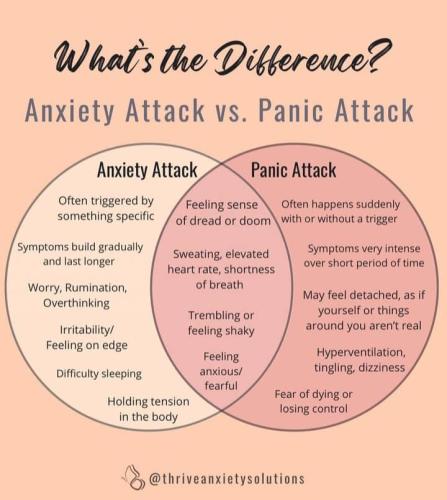
Panic Info Sheet from therapistaid Panic Info Sheet (therapistaid.com)
Relaxation Techniques from therapistaid Relaxation Techniques (therapistaid.com)
Panic Assessment from therapistaid Panic Assessment (therapistaid.com)
2. How can you best support someone who is dealing with a panic attack?
- Staying calm and composed can help the person feel safe and not feel like what might seem like normal for them is being viewed as out of control, not normal or frustrating.
- Remove triggers: If possible, move the person to somewhere private, less crowded, and supportive for them.
- Offer reassurance that you are there for them and will not leave them. Validate their feelings and make sure you are mindful to not put down their feelings/thoughts/emotions. Use a patient, soft, steady voice.
- Encourage them to practice self-care and seek professional support.

@SoulfullyAButterfly Panic attacks can be overwhelming, but there are strategies to manage them:
- Grounding Techniques: Use methods like the "5-4-3-2-1" exercise to focus on your surroundings and bring your attention back to the present.
- Breathing Exercises: Deep breathing (4 seconds in, 4 hold, 4 out) can help calm your body’s physical symptoms.
- Cognitive Behavioral Techniques: Remind yourself that the attack is temporary and you’re safe. Positive self-talk like "This will pass" can help.
- Mindfulness and Self-Compassion: Be kind to yourself and avoid self-judgment during an attack.
- Preparation and Awareness: Have a plan or a soothing object to help during an attack.
- Seek Professional Help: Therapy, especially Cognitive Behavioral Therapy (CBT), can help with long-term management.
These strategies can help reduce the intensity and frequency of panic attacks. If you'd like, we can explore what triggers yours and find ways to address those.

I always try grounding techniques and focus on the present moment by breathing and doing the 3 3 3 rule. It helps me to become aware of my surrounding and help me breathe.

1. Are there any resources you'd recommend for people who struggle with panic attacks?
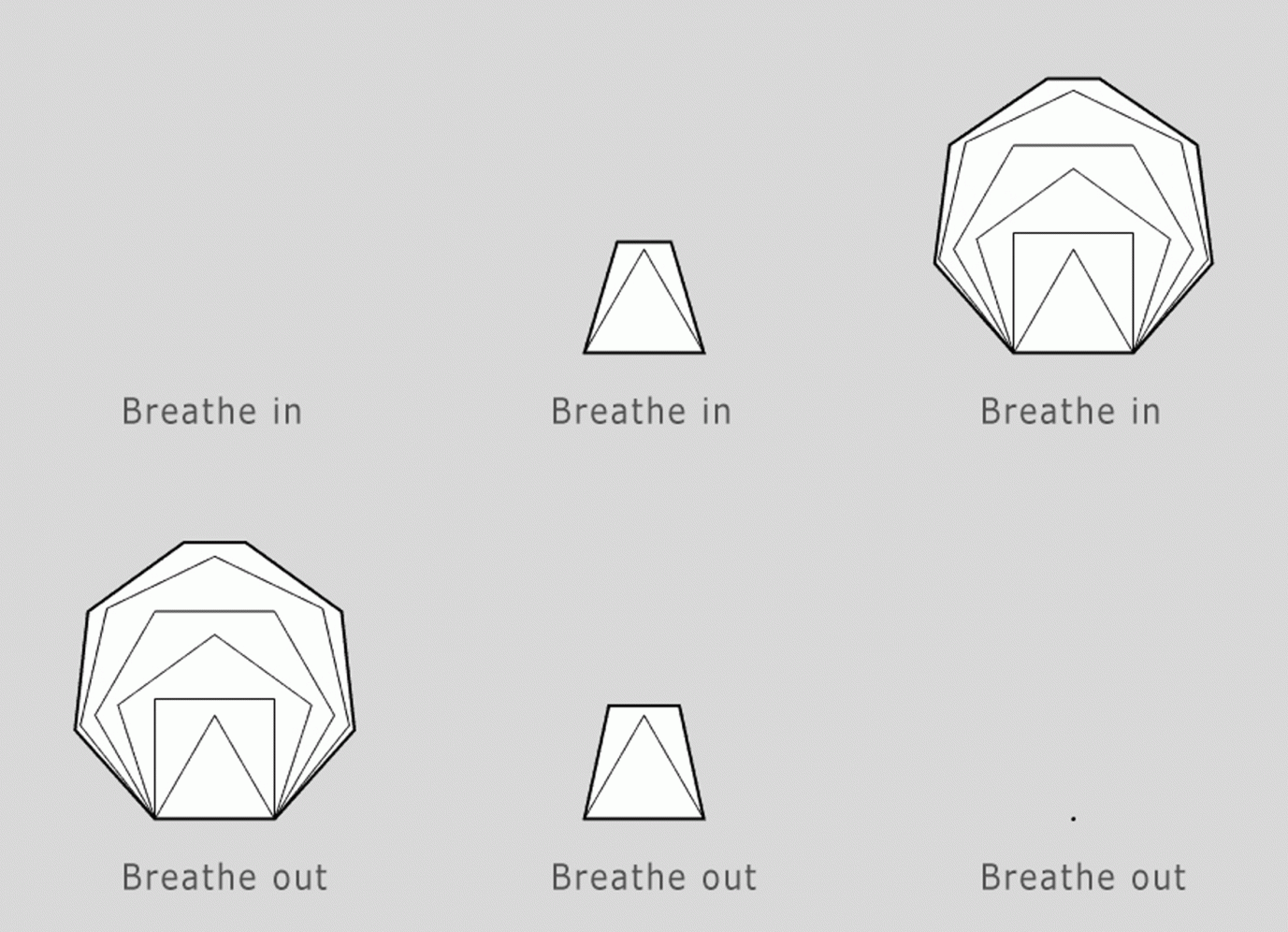
I love this geo breathing gif
2. How can you best support someone who is dealing with a panic attack?
I think when supporting someone whose experiencing a panic attack you should be calm and nice, you could sit down with them and move to a quiet, comfortable area where they can feel less overwhelmed. While it can be really hard for them to communicate, don't assume what they need. Some may want to sit, lie down, or have water, be touched, not touched, do grounding exercises. Be aware of some of the common breathing/grounding exercises. If you know a friend has panic attacks, you could have a convo about how to best support during one. Validate their feelings and acknowledge their experience. If after the panic has passed or they share anything, listen to them and don’t judge. Most importantly, be patient and stay with them. Don’t leave until they are safe and feeling better or have someone else there to support.

@SoulfullyAButterfly Very insightful . Thankyou for sharing this!!

I'm working on overcoming my anxiety around cats and dogs. I'm trying to act normally when I see cats around my building and avoid changing my path. My fear extends to most animals and birds; I'm often worried they'll attack me. I haven't yet found a good way to manage this fear, but I'm motivated to because I also get anxious thinking about the future. I worry about what would happen if I lived alone and encountered these situations without anyone to help me. These thoughts are often on my mind.

@Sarrahbhai - Thank you for sharing this. It sounds like you are working hard to face you fears and motivated to do so. All that you shared makes complete sense. I am curious... what have you tied to overcome your anxiety?

@SoulfullyAButterfly
Experiencing Panic Attacks can be very scary and a sudden thing. I know when I experienced a panic attack I didn’t know what was going on with my body and panicked more, I wish I would have been more prepared with resources to help me understand what was going on, so that I either could have prevented the panic attack or reacted better when it happened. I highly recommend using mindfulness resources such as meditation sounds or breathing videos to help you recenter and feel more in-tuned with your body. I also have found a weighted stuffed animal is extremely helpful especially when feeling physical impacts of anxiety and panic attacks. The best way to support someone who is dealing with a panic attack is to be there for them in a calm nature. Helping them focus on breathing and talking through a panic attack is a great way to de escalate the situation and help and individual feel calmer. For anyone who has ever experienced a panic attack, you are not alone, although it is scary using different resources to help calm you and talking to someone about how you are feeling is a great way to feel better!

@SoulfullyAButterfly
Thank you for such a wonderful post, butterfly 🦋. Here is what I understood so far.
Learning about ourselves is the key to deal with the panic and anxiety as well. Meditation and self care breaks are path to learning ourselves. It helps us analyse our strengths, weaknesses and triggers.

@SoulfullyAButterfly
I struggle with Anticipation anxiety and I am not sure about the Panic Attacks but I have all the symptoms of it. I have never been diagnosed with it or with anxiety. Everything seems to cause fear or maybe a panic attack. I startle very easily. My Therapist says that this response serves me in some way. I have not figured out how or what I could gain from it that would be positive.
I have tried so many different things, only to not be able to see or feel any better productively. Most of all, sitting and trying to be mindful and aware of my surroundings makes me more fearful. The stillness of night makes me feel as if this is evil, and bad things happen in the dark.
I consciously know this but the subconscious seems not to allow me to process that I am safe because I truly don't believe I am, and yet I kind of am safe. It is so ingrained to be ready to run or fight. I feel stuck and trapped inside if this makes sense.
In other words, trying to change what you don't believe to be true although it could be is shipwrecking me.
@WorkingitThrough2 thank you for sharing this. Thinking about the future and its uncertainty can make us all feel fear and anxiety at times. Have you considered logging/jotting down related thoughts and trying to find patterns in your thinking alongside which sort of situations cause this?
I would also encourage you to explore techniques to calm down your nervous system as sometimes we are prone to be stuck or experiencing the "Fight or flight" mode which leaves our bodies under stress for longer periods of times, thus disturbing our sleep and daily functioning.

@SoulfullyAButterfly
Thank you for making this post, conquering anxiety and its symptoms can be very difficult.
1. Are there any resources you'd recommend for people who struggle with panic attacks?
I'd recommend self-help techniques such as grounding and deep breathing exercises.
2. How can you best support someone who is dealing with a panic attack?
It's important to stay calm in that situation, provide reassurance, encourage steady breathing, and give a reminder that the panic is temporary and it will pass.