Things Muslims Wish You Knew
If this is part of your life story, please share your insights! What would you like the rest of us to learn? What should we know about people in this community? How would you like people to interact with you? Should people ask questions? What’s the best way for people to learn about this? Do you have any resources (books, movies, YT videos, etc) that will give us greater understanding and empathy and kindness toward people who experience the same things you do?
If you’re not on this journey, please share insights you’ve learned while interacting with those who are, whether family, friends, or anyone else. Share things you’ve read, and ask if they’re true. Share beliefs that you have, ask questions, and more! This is a safe space where you can learn about things you’ve never experienced. <3
Let’s have a gentle, fun, friendly conversation among friends! As a song in one of the Land Before Time movies says, “It takes all sorts to make a world!” <3
As a person who was born and raised a Christian but no longer believe in any faith/religion.
I have no doubt that Islam is a religion of peace, love, and mercy.
I worked with a young (20 something woman) who always said she was Persian and not Iranian, she considered herself a Muslim. Fled her country and came to Canada because she was afraid of persecution for not wanting to wear a Hijab.
Other Muslim people i know, the wives never leave the house without their Hijab.
Maybe it's just me but I feel that maybe in some countries it is a sign of oppression? It just seems that woman don't have a choice if they do not want to wear a Hijab. Please correct me if I am wrong?
@QuietByNature
Hi quiet 😊
I understand why it might feel that way, n I really appreciate u asking this with an open mind 😊
What ur coworker experienced is real, n in some places there r cultural or legal pressures around hijab. That shouldn’t be ignored. But at the same time, it’s important to separate culture, politics n personal experiences from what Islam actually teaches.
In Islam, modesty is for both men n women, n hijab is meant to be a personal act of faith n choice. For many Muslim women, it’s not oppression—it’s something they choose because it gives them identity, dignity n peace.
But yes, in some countries or families, it can be forced in ways that don’t reflect the religion itself. Most Muslims believe faith should come from sincerity, not force.
So what u noticed isn’t wrong - it just shows how different experiences can be depending on where PPL live.
I really appreciate u asking instead of assuming… conversations like this really help PPL understand each other better 💓.
Hugs ur way 🤗
@Ailuraphilelove8tear9
Thank you for explaining ☺️🤗
@QuietByNature
Full of pleasure ❤️

Hey 👋 😊, so I'm Muslim and I completely agree with you and actually people think life's
Easy but it's not 🚫
I love this thread so much... love answering other's 😊. thanks for Kiara ❤️...!!
I'm open to ans any questions abt Islam 🤗..!! please feel free to ask 😊
Hugs 🤗
What is Eid?
@jesusredeemedme2425
Eid is a special celebration (festival) for muslims. the word "Eid" literally means festival or celebration. there're two main Eids:
1. Eid al-Fitr ❤️
Comes right after the month of Ramadan, marks the end of fasting, ppl pray, wear new clothes, give charity, and enjoy food with family
2. Eid al-Adha ❤️
Happens later in the year, honors the willingness of Prophet Ibrahim to sacrifice for God ❤️ Ppl pray, share meat with family n the needy
what ppls usually do on Eid is, Special morning prayer at mosque, saying Eid Mubarak (means blessed Eid) make dua (supplication) for eachother, spending time with family n friends, giving charity and helping others, eating delicious food 🤗
In simple words, Eid is about gratitude, celebration, and caring for others 🤗❤️
Question for @Ailuraphilelove8tear9
I know Christians pray with a "rosary" basically anytime, anywhere they feel the need.
Is that the same as this type of prayer beads? Christians would hold a bead in between their fingers and say a prayer, then move on to the next bead and repeat.
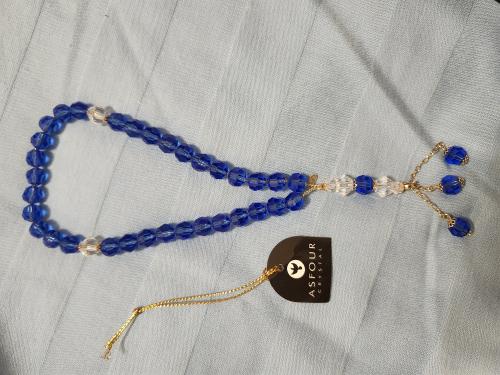
These were given to me a few years back by a guy i worked with for over 20 years. He went on vacation back home one year and brought these back as a gift for me.
@QuietByNature
Hey hi Nature 😊 hope u have a great day ahead ❤️
That’s a really thoughtful question 😊 n I appreciate the curiosity. I’ll try to explain it in a simple and respectful way
So, In Islam, we've something called Dhikr, which means remembrance of God (Allah). it’s a very personal n peaceful practice where we repeat short phrases to stay connected to God throughout our day.
Some of the most common phrases we say are:
SubhanAllah - meaning (God is perfect ) n free from any نقص (imperfection)
Alhamdulillah - meaning “All praise belongs to God”
Allahu Akbar - meaning ( God is the Greatest)
We even repeat specific verse's though.
We can say these anytime, while walking, sitting, resting, or even quietly in our hearts. It’s not limited to a specific place or time, which makes it feel very natural and constant.
We avoid saying Dhikr or mentioning God verbally inside the restroom, b'cos it’s considered a place that isn’t appropriate for acts of worship. Islam teaches us to keep the remembrance of God in clean and respectful environments :)
n Abt the beads..!!! yes, Muslims use prayer beads called Misbaha (also known as tasbih). they help us keep count when repeating these phrases, often in sets like 33 or 100.
But something important to note is that the beads are not required :) mnny Muslims simply use their fingers to count, n that is actually a traditional n encouraged way as well. ❤️
So in that sense, it can look a bit similar to the Rosary, since both involve repetition and sometimes beads 😊
However, the intention n structure are a little different... in Islam, Dhikr is usually more flexible. there isn’t always a fixed sequence. It’s more about continuously remembering God, rather than following a specific set of prayers every time.
At its heart, Dhikr is something very calming and grounding. It helps bring peace, especially during stressful or emotional moments n reminds us that we’re never alone 😊
I hope that helps explain it a little better 💓 feel free to ask me anything regarding islam, happy to ans..!! sending you lots of love and happy Vibes ur way 😊
Hugs 🤗
@Ailuraphilelove8tear9
Thank you for taking the time to explain the prayer beads, the guy who gave them to me never did explain. ☺️🤗
@Amanda84
Thank you, i keep them in my night stand, don't ask me why 🤭☺️🤗
@QuietByNature
You secretly believe 😁💚
@Amanda84
Now that made me laugh 🤣🤣🤣.
An emphatic NO
@QuietByNature
It wouldn't have to be emphatic if it were a simple no 😂😂😂😂😂
@Amanda84
🤣🤣🤣🤣
@QuietByNature
Aww <3 My pleasure...!! 😊 glad if it helps 💓
@QuietByNature
Beautiful rosary beads 💚
@jesusredeemedme2425
@Ailuraphilelove8tear9
Not sure if this is an Islam or just a Muslim thing
What is the significance of facial hair for the males?

@QuietByNature
Hey Quiet!!!! 😊
I know you didn’t ask me about this and I might not explain it as perfectly as @Ailuraphilelove8tear9 would, but as a Muslim, I just felt like sharing a little.
But first, I really appreciate your curiosity and interest. It’s so nice to see you wanting to learn instead of assuming things. That’s really wonderful!!!
So about facial hair for Muslim men....
In Islam, growing a beard is encouraged because it was the practice of Prophet Muhammad (PBUH).
He said:
"Trim the mustache and let the beard grow."
There are a few reasons behind it:
- First, a beard is a natural part of male biology. It helps distinguish men from women and is seen as a sign of dignity and respect when kept neat.
- Then, it’s also about following the Prophet’s example, which we call Sunnah. It’s not just about looking a certain way but more about the intention behind it. Wearing it is a personal way of showing devotion and identity.
- And for a lot of men, having a beard is a reflection of faith, mindfulness and respect for tradition. It’s kind of like a small daily reminder of values and beliefs.
Having said that, not every Muslim man has a beard and having one or not doesn’t automatically determine your closeness to God. What really matters is your heart, intentions and actions. Some men grow it fully, some keep it trimmed and some can’t grow much at all... and that’s completely ok. Different cultures, schools of thought and personal circumstances all play a role.
So yes, it’s encouraged, but you’re definitely not less Muslim if you don’t have one, especially if there’s a valid reason. It’s all about the heart and faith, not just the beard.
@MSCP
Even though you were not tagged, by all means any and all interjection welcomed. ☺️🤗
Thank you for explaining. ☺️. 🤗
@MSCP
Aww, thank you 😊, n you did well too ❤️ Appreciate that ❤️...!! thank you so much for sharing this with us ❤️
Hugs 🤗

That all Muslims r not clones.
And while core beliefs r same -- there is a huge variety of ideas under that umbrella <3
Why do Muslims say PBUH (peace be upon him) after saying Muhammad’s name?
We say it after the name of all prophets of God. Not just Prophet Mohammad (pbuh)
Its an etiquette thing to show respect ..
Even when Muslims meet each other they say Asalamolikum - which means "peace be upon you".
Who are the other prophets?
@jesusredeemedme2425
That’s an excellent question 😇🌷 ، In Islam, while there were many prophets sent throughout history to every nation, the Holy Qur’an mentions 25 prophets by name
We believe they all carried the same light ✨✨and the same message of peace and devotion to Allah. Here is the list of prophets ( peace upon them )✨✨🌷:
1. Adam(The first human)
2. Idris (Enoch)
3. Nuh (Noah)
4. Hud (Eber)
5. Salih(Shelah)
6. Ibrahim(Abraham)
7. Lut (Lot)
8. Isma'il (Ishmael)
9. Ishaq (Isaac)
10. Ya'qub(Jacob)
11. Yusuf (Joseph)
12. Ayyub (Job)
13. Shu'ayb (Jethro)
14. Musa (Moses)
15. Harun(Aaron)
16. Dhul-Kifl (Ezekiel)
17. Dawood (David)
18. Sulaiman(Solomon)
19. Ilyas (Elijah)
20. Al-Yasa(Elisha)
21. Yunus(Jonah)
22. Zakariyya(Zechariah)
23. Yahya (John the Baptist)
24. Isa (Jesus)
25. Muhammad (The final Prophet)
(Peace be upon them all)
As Muslims, we are taught that we cannot truly believe in one without respecting and loving them all. They are like a single chain of guidance for humanity😇
It’s also important to share a beautiful point from the Qur’an itself. While we know these 25 names, the Qur’an tells us that there were many more prophets and messengers throughout time whose stories and names were not mentioned to us.
Allah says in the Qur’an: bismAllah Alrahman Alrahem : {And [We sent] messengers about whom We have related [their stories] to you before and messengers about whom We have not related to you} (Qur'an 40:78)
This teaches us that Allah ✨✨✨guidance and mercy have reached every corner of the world and every nation since the beginning of time, even if we don't know all their names today. It makes the message feel universal and very inclusive🌷
@Tulipsmile
Mashallah... you got explain it amazing 😊...!! appreciate you so much for that 💞

@Tulipsmile
I really appreciate how nicely @Tulipsmile put it🤍. And @jesusredeemedme2425 's question is a really good one too.
I truly enjoy exploring, learning and sharing knowledge about Islam, as it is a deeply meaningful and inspiring faith.
I’d just love to add a little more to what was already shared, just to build on it.
There’s also a small distinction in Islam that people often don’t know about:
The difference between a Prophet (Nabi) and a Messenger (Rasool)
A Prophet receives revelation and teaches people usually continuing an existing message while a Messenger is given a specific mission and often a new scripture or law. So yeah,
Every Messenger is a Prophet, But Not Every Prophet is a Messenger.
Another thing that's important to understand is that being a prophet isn’t inherited automatically. Just because a father is a prophet, it doesn’t mean his children will be prophets too. Sometimes a son could be a prophet even if his father wasn’t. Prophethood is a special honor from God, not something passed down by family.
(And Allah Knows Best✨)
Thank you <3
I think most, if not all, are also named in our Bible.
@jesusredeemedme2425
I agree, but with slight name difference... 😊
@jesusredeemedme2425
Haha... Good question 😊
Muslims say PBUH (peace be upon him) after the name of Prophet Muhammad ﷺ as a way of showing respect, love,n honor, not only him but for every other prophet we add it.
It’s not just a habit we can say, it actually comes from the Qur’an itself.
Qur’an 33:56
Arabic:
إِنَّ اللَّهَ وَمَلَائِكَتَهُ يُصَلُّونَ عَلَى النَّبِيِّ ۚ يَا أَيُّهَا الَّذِينَ آمَنُوا صَلُّوا عَلَيْهِ وَسَلِّمُوا تَسْلِيمًا
English:
Indeed, Allah and His angels send blessings upon the Prophet. O you who believe, send blessings and peace upon him.
So Muslims follow this by saying things like:
"Sallallahu alayhi wa sallam (ﷺ)" or in English, peace/blessings be upon him (PBUH)
What it means is that:
Peace be upon him - asking Allah to grant him peace
Blessings be upon him - asking Allah to honor and elevate him ❤️
So it’s basically a dua (prayer), not just words that we add n also, it’s not only for Prophet Muhammad ﷺ as i mentioned above 😊 but muslims say peace be upon him for other prophets too, like
Prophet Ibrahim PBUH (Abraham)
Prophet Musa PBUH (Moses)
Prophet Isa PBUH (Jesus)
N every other Prophet's mentioned in Quran n Hadith ❤️
Why Muslims care abt this so much... cus, it’s a way to show gratitude n respect ❤️ It keeps a connection with the Prophet ﷺ it’s believed to bring reward n blessings
There’s also a saying of the Prophet ﷺ (Hadhith):
Whoever sends blessings upon me once, Allah sends blessings upon him ten times. ❤️
Hope this helps u understand better 😊
Hugs 🤗
@Ailuraphilelove8tear9
You explained that really beautifully😊
May Allah reward you🤍 (Ameen)
@MSCP
Ameen ❤️ Jazakallah khair 🤗... glad you like my explanation 😊
@Ailuraphilelove8tear9 

@Tulipsmile
Aww 😊, you sweeten my day... thank you for the flowers... i love tulips ❤️ sending you lots of love n tulips back 😄💕 your a beautiful soul, sweetiee 😊
Hugs 🤗
@Ailuraphilelove8tear9
owe owe you are so sweet that I will have diabetes shock 😂😁✨ from your sweetness 🌷🌷
glad you like and I am extremely happy for you 
@Tulipsmile
Lol 😂, I also have cure xD... so, no worries with that 😂, I've a power healing Ppl's 😉💞 thank you for the chuckles 😊..!! love youu infinite 💞

@Ailuraphilelove8tear9
I am pretty sure you have cure for everything dear 💞 💞 💞
my pleasure (*˘︶˘*).。*♡(◍•ᴗ•◍)✧*。(*˘︶˘*).。*♡
love you tooooooooo
@Tulipsmile
Aww 🤗💗 (*˘︶˘*).。*♡

@jesusredeemedme2425
I really appreciate this gentle and🌷🌷✨✨🌷✨✨✨ positive conversation✨✨ It’s such a beautiful space to share and learn from one another thank you so much ♥️♥️
I’d love to add a small but important insight that I wish more people knew about the Holy Qur’an. Sometimes, due to the actions of some who try to misrepresent Islam on internet so some ppl feel afraid or stressed about that due to misunderstanding 🥲 , people might take "half a line" or a single verse out of context to judge the entire faith, so I really want to help them know that.
What I want to share is this:
The Qur’an cannot be truly understood by picking isolated fragments. Its beauty and wisdom are found in the .full picture. Understanding it requires looking at the historical context, the reasons behind the verses, and the overall message of peace and justice ✨
It’s a Narrative of Wisdom:The Qur'an tells the profound stories of Prophets and people of the past to teach us mercy, patience, and how to navigate life's challenges.
A Call for Knowledge: When we read the words of the Creator with a sincere heart and look beyond the surface, we discover a depth of beauty that simple snippets can never capture.
I hope that by looking deeper and seeking true knowledge, we can clear the misunderstandings and see the true message of compassion it carries. Thank you all for being so open minded and kind❤️
@Tulipsmile

@Amanda84
@Tulipsmile
@Ailuraphilelove8tear9 
If Muslim don’t beleave in Jesus, he is not a Muslim.
Bcz the name Profit Jesus (PBUH) mentioned more time then the Progit Mohammad (PBUH) in Holy Quran.
Quran is the last massage of Almighty God revealed on Profit. Mohammad (PBUH) and it is in continuation of all massages of God on his messengers.
May be interpretation and misinterpretation of certain contents are humanly created but original contents of all tge messages of God are pure and for the guidence of mankind.
I don’t think I knew this about Jesus. Interesting <3
@considerateChestnut4179
✨🌷✨ Great words ,thank you for this important message

In Islam, there are five daily prayers, gently spread across the day like quiet pauses.
Fajr – before sunrise
Dhuhr – around midday
Asr – in the afternoon
Maghrib – just after sunset
Isha – at night
They begin at dawn, before the world fully wakes, and continue at midday, afternoon, sunset, and night. Each prayer is a moment to stop, breathe, and turn your attention to God.
During prayer, a person stands, bows, and places their forehead on the ground. It is a simple act that shows humility, gratitude, and trust. The words recited come from the Qur’an, but the feeling behind them is what matters most—peace, reflection, and connection.
These five prayers are not meant to feel like a burden. Instead, they are like small anchors in a busy day, reminding a person of what truly matters. No matter where someone is or what they are doing, they can pause, step away from the noise, and find calm.
In a simple way, the five daily prayers are a rhythm of returning again and again to stillness, purpose, and God