Skip to main content Skip to bottom nav
Community /

Community Projects & Events Forum

Create a New Thread
Gif Photo Link
Heather225 profile picture
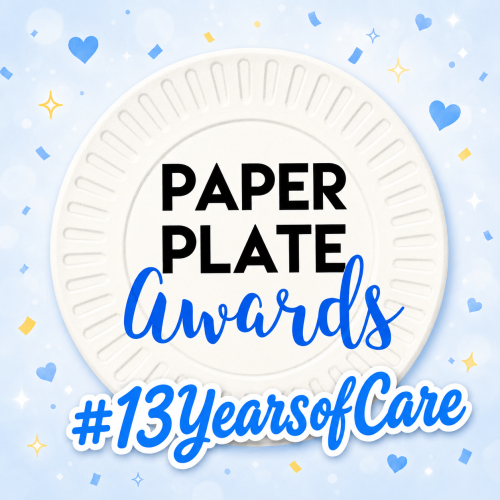
7 Cups 13th Birthday Paper Plate Awards: Nominations Open!!
by Heather225
Last post
August 23rd
...See more Hello, everybirdy!! In celebration of 7 Cups' 13th birthday (July 7th!), we want to recognize and appreciate the contributions, accomplishments, and milestones we achieved both individually and as a community. A "paper plate award" is a humorous, informal, and often homemade award given to someone to recognize a unique, funny, or specific characteristic, habit, or contribution, put on in various settings like schools, sports teams, or community events. In the context of 7 Cups, a Paper Plate award is given to a community member for their unique personality and contribution to the community. We will share the awards winners as part of our 13th 7 Cups Birthday events.  The rules of nomination are simple: * Anyone can nominate anyone! Yes, you can nominate yourself! * You may submit as many nominations as you like! Some examples:  * @Heather225 earns the paper plate award for the most emojis * This year’s paper plate award goes to me because ___________ * Paper Plate Award goes to 7 Cups for ______________ * To @Username for ______________  ✨ Submit your nominations here! [https://forms.gle/u47wFKyZBYg6ozTe6] Form closes July 10th!! Be creative and have fun!!  ------------------------- We expect to announce the final awards by July 24th!
SoulfullyAButterfly profile picture
13-Day Countdown to 7 Cups’ 13th Birthday: Celebrating #13YearsofCare (Master Post)
by SoulfullyAButterfly
Last post
July 7th
...See more 7 Cups is turning 13 on July 7! To celebrate, we’re beginning a 13-day countdown to our birthday, highlighting the care, connection, and community that have made 7 Cups what it is today. To celebrate, we have a mix of ongoing forum based and live events scheduled. Participants will be presented with a commemorative badge to mark their participation in the celebration. Ongoing Events/Forums: 🧁 Submit Your Videos, Voice Messages, or Graphics Here! [https://www.7cups.com/forum/projectsandevents/7CupsTurns13_2738/JoinUsinCelebrating7Cups13thBirthdaySubmitYourVideosVoiceMessagesorGraphicsHere_384569/] 🧁 13 for 13: Words That Define Us & Our Community [https://www.7cups.com/forum/projectsandevents/7CupsTurns13_2738/13for13WordsThatDefineUsOurCommunity_384451/] 🧁 7 Cups 13th Birthday Paper Plate Awards: Nominations Open!! [https://www.7cups.com/forum/projectsandevents/7CupsTurns13_2738/7Cups13thBirthdayPaperPlateAwardsNominationsOpen_384453/] 🧁 Color Your Season: A 7 Cups Birthday Challenge [https://www.7cups.com/forum/projectsandevents/7CupsTurns13_2738/ColorYourSeasonA7CupsBirthdayChallenge_384437/] 🧁 Submit Questions in Advance: Birthday AMA with Glen & the Community Team. [https://www.7cups.com/forum/projectsandevents/7CupsTurns13_2738/SubmitQuestionsinAdvanceBirthdayAMAwithGlentheCommunityTeam_384506/] 🧁 Support in Every Language: Share a Message of Care in Honor of 7 Cups Turning 13! [https://www.7cups.com/forum/projectsandevents/7CupsTurns13_2738/SupportinEveryLanguageShareaMessageofCareinHonorof7CupsTurning13_384511/] 🧁 7 Cups Talent Showcase: Submit Your Creative Work for Our Birthday Celebration [https://www.7cups.com/forum/projectsandevents/7CupsTurns13_2738/7CupsTalentShowcaseSubmitYourCreativeWorkforOurBirthdayCelebration_384512/] 🧁 You Aren’t Broken, You Have a Care Deficit - Try the Care Calculator Here  [https://www.7cups.com/forum/siteupdates/GlensNookCommunity_547/YouArentBrokenYouHaveaCareDeficitIntroducingtheCareCalculator_384433/] 🧁 Share Your Best 7 Cups Stories  [https://www.7cups.com/forum/therapy/General_2432/7CupsBirthdayStories_384782/] [https://www.7cups.com/forum/siteupdates/GlensNookCommunity_547/YouArentBrokenYouHaveaCareDeficitIntroducingtheCareCalculator_384433/] 🧁 What Bought You to 7 Cups? Share Here [https://www.7cups.com/forum/trauma/JournalingStories_318/Whatbroughtyouto7cupsoftea_385209/] Events to be Scheduled/Announced: 🧁 Live Community Team Birthday Party and High Five Live - Date and Submissions Announcement 🧁 Annual PB, Smalls, and Community Cupcake Awards 🧁 Community Birthday Video Announcement Live Events - all to be hosted in the Special Events chatroom: Date Event Name Host Time June 22, Monday Way of the River: Finding Your Flow Workshop SoulfullyAButterfly 12 PM EST Adults; 1 PM EST Teens June 23, Tuesday Stress Management Workshop SoulfullyAButterfly 12 PM EST Adults; 1 PM EST Teens June 24, Wednesday My 7 Cups Care Story - Sharing Circle Style SoulfullyAButterfly 12 PM EST June 25, Thursday Caring and Growing Mindfully Soulsings and AmiablePeace77 5 PM EST Mindfulness; 3 PM EST Teen Time June 26, Friday 7 Cups Trivia Night with Suryansh! Suryansh 2 PM EST Teens; 3 PM EST Adults June 29, Monday Madlib Monday with Mod Iris!  CommunityModIris 12 PM EST Teens; 1 PM EST Adults June 30, Tuesday July 1, Wednesday AMA with Glen and the Community Team! Pre-submitted answers and chitchat SoulfullyAButterfly and GlenM 12 PM EST July 2, Thursday Hope Grows Here: A Guided Self-Care & Journaling/Reflection Session with Our Clinical Director Lisa Meighan 12 PM EST Adults and Teens July 3, Friday July 6, Monday Talent Show + Coloring Page Gallery Announcement SoulfullyAButterfly 12 PM EST July 7, Tuesday Main Birthday Event TBA in the Community Community Team TBA Want a calendar invite to your preferred live events? Please RSVP through this form: Click Here [https://forms.gle/7xDDVScroxQzBCHP7] Once you fill it out, we’ll use the email you provide to send a calendar invite for the event. We’ll keep the guest list hidden from other attendees, so others should not be able to see who else was invited. Please make sure to use the email address where you’d like to receive the invite. Would you like to host an event to join in the celebration? Please contact me so that we can support you! 
Heather225 profile picture
13 for 13: Words That Define Us & Our Community
by Heather225
Last post
July 6th
...See more As 7 Cups celebrates 13 years of care, healing, connection, and kindness, we invite you to be part of the heart of our birthday celebration. Words are powerful. They can hold our experiences, our emotions, our memories, and the moments that made us feel seen. So we’re asking you to share: Which word(s) best describe your experience on 7 Cups? It could be a word about the community as a whole, or about the people who make it special - from listeners and members to leaders, peers, and everyone who helps care flow here. During our Birthday Events this July, we’ll gather 13 of the most powerful, heartfelt, and relatable words from the community and celebrate them together. ✨ Submit your word(s) here [https://forms.gle/txkML88nfMaN6bor9] ------------------------- Already submitted? Feel free to drop your word in the comments below too, so we can all cheer on your reflection together! #13YearsofCare
comfortableNight4463 profile picture
Does Travel Count as Therapy? Why Tourism is Great for Your Mental Health
by comfortableNight4463
Last post
September 7th
...See more "A recently published journal article in Tourism Management found that the experience of going on a vacation can be beneficial for people who navigate dementia. Researchers note how tourism experiences may provide positive impacts as a dementia intervention. It can help those who struggle with other mental health issues as well. Understanding the Research This research is one of the first to explore connections between tourism experiences and mental health interventions through the lens of positive psychology, with such benefits as savoring the moment, feeling gratitude, and thinking about positive experiences. Travel Can Restructure Your Mind Psychotherapist with Mindpath Health, Taish Malone, LPC, PhD, says, "This study supports that restructuring your mind can be more helpful when your stimuli, environment, people, duties, and so forth change." When people go on vacation, they find themselves in a new environment and different culture, and are physically moving in ways they may not at home. Malone highlights, "Some may have a distorted view that they will not have to continue to work on their growth strategies just because the stressors they once had were specific to their at-home experiences. However, they should focus on using the travel experience as a reset to choose better practices of experiencing life altogether." While a change of scenery and the absence of deadlines may help, Malone notes that admiring the beauty in life is possible no matter where you are. Finding a Sense of Balance Neuroscientist and clinical social worker Renetta Weaver, LCSW-C, says, "The research suggests that traveling to new environments offers a social and emotional experience that boosts happiness hormones and leads to new learning in ways that differ from the habitual structure of our everyday environment." Getting out of the country for a period of travel may provide that mental or emotional escape, according to Weaver. "Traveling out of the country can also help us shift our perspective and remind us that our problems are small compared to the largeness of the world; the world extends beyond our corner." Weaver explains, "Neuroscience teaches us about the plasticity of the brain and the possibility of recovering the parts of our brain that we thought we lost. Traveling can lead to the release of dopamine, serotonin, and oxytocin, which cause our bodies to heal and function well." " Read the complete article available at Very Well Mind! [https://www.verywellmind.com/travel-therapy-tourism-can-benefit-people-with-mental-health-distress-5649337] Reflection: Did you get a chance to travel this summer? How has it been on your mental health? *The initial planning and travelling can be quite stressful but once you get there, it's very exciting! I'm in Dubai for the summer and I'm enjoying it so far.* #Travel #Tourism #MentalHealth
sunnyWriting4806 profile picture
Healthline: Are You TikTok Tired? Here’s How to Stop Scrolling and Reclaim More Zs
by sunnyWriting4806
Last post
September 2nd
...See more “The fact that social media can disrupt sleep likely doesn’t come as a surprise. A 2016 study indicated that it could significantly impact rest, and, as a result, affect the health and well-being of young adults. More recently, a 2021 study of more than 1,000 TikTok users in China suggested that the popular app might lead to more daytime fatigue. Researchers believe the fatigue can be attributed to increased levels of cognitive arousal before bed. This research doesn’t surprise Dr. Alex Dimitriu, double board certified in Psychiatry and Sleep Medicine and founder of Menlo Park Psychiatry & Sleep Medicine and BrainfoodMD. “The behavior of ‘search and find,’ especially with food, has been shown to keep sleep-deprived mice awake endlessly,” Dimitriu says. “This makes evolutionary sense — finding food may be immediately more important even than sleep.” And Dimitriu says humans view TikTok in a similar light. Charissa Chamorro, PhD, a New York City-based private clinical psychologist specializing in anxiety disorders and sleep-related issues, agrees. “With TikTok, you stay hooked because the next video could be the funniest, most talked about, or most fascinating one you’ve ever seen,” Chamorro says. “You stay up late, despite being tired, because your brain is craving its next fix of fascinating entertainment. The videos on TikTok also provide an immediate reward while the benefits of sleep are experienced later.” The blue light emanating from devices likely doesn’t help. Older research of eReaders from 2014 suggested that blue light adversely affected morning alertness, circadian rhythm, and sleep.” Some Insights From This Article * Tik Tok and other related social media platforms have become the new slot machine for the new generation. Every swipe is equating toward a temporary burst of pleasure quickly burned out by the end of the video or our disinterest prompting us to swipe again. * This addictive short spurt of dopamine has been causing people to move on their phones at night, sometimes staying up for hours at time scrolling through content posted on the platforms. * The most affected population is the most to lose from this sort of sleep disruption. Teenagers and young adults have the most gain from regular uninterrupted sleep as their brain and body are still developing. Yet these populations report the most sleep loss due to social media use. Are there any strategies that you use to prevent using your phone at night or throughout the day? Full article is here! [https://www.healthline.com/health-news/are-you-tiktok-tired-heres-how-to-stop-scrolling-and-reclaim-more-zs#How-social-media-especially-TikTok-affects-sleep] #SocialMedia #Sleep #Teens
innateJoy9602 profile picture
All About Purpose: What It Means and Why It’s So Good for You
by innateJoy9602
Last post
July 27th
...See more “A sense of purpose — and the ability to adapt it throughout different phases of your life — has a positive effect on health and well-being, including your physical health and how you respond to stress. Studies suggest it may even help people live longer. Purpose can be defined in two ways. One is the content or character of your goals for life. According to this first definition, you might realize, for example, “my purpose in life is to help those in need” or “my purpose in life is to promote science.” But the second way: You can feel a sense of purpose, whether or not you tie it to a big aim. Whether purpose is of the life-goal variety, just a feeling someone has, or somewhere in between, it can be good for health and well-being. people who have a sense of purpose may be less distracted by daily events (and potential stressors). If you feel you have a path in life, you may be less stressed by the small stuff that hinders those who may not have as clear a sense of direction. It’s not that you don’t face those hindrances (the spilled coffee or tough conversation), but it’s less likely they’ll ruin your day. Another reason why purpose may boost health, is that people with a strong sense of purpose tend to take better care of themselves, whether it's through how they eat, how active they are, how much alcohol they drink, or how often they go to the doctor.” Tips for Finding Your Own Sense of Purpose * Be proactive * Learn from others * Reflect · Read the full article at EverydayHealth [https://www.everydayhealth.com/emotional-health/all-about-having-a-sense-of-purpose-what-it-means-and-why-its-so-good-for-you/] ✨Discussion: A sense of drive to carry out your everyday tasks can be referred to as a sense of purpose. It can also refer to specific life goals. Keep in mind that you're not alone in feeling like you haven't yet discovered your purpose. Many individuals feel the same way. ✨Reflection: What are your thoughts on having a sense of purpose? [https://www.everydayhealth.com/emotional-health/all-about-having-a-sense-of-purpose-what-it-means-and-why-its-so-good-for-you/] #Purpose #EmotionalHealth #Life
innateJoy9602 profile picture
How to Stop Ruminating
by innateJoy9602
Last post
July 23rd
...See more "If you find that your thoughts are so excessive and overwhelming that you can’t seem to stop them, or if they’re so distracting that you’re falling behind on responsibilities at work or at home, you’re probably experiencing rumination. How to break the rumination cycle Divert your attention. One of the most effective things you can do when your thoughts are spiraling out of control is to distract yourself. “Listening to music and focusing intently on the words or tune” can also help break you out of your thoughts — at least temporarily, Dr. Marks said. Other diversion tactics like talking with a friend, playing a game or exercising can also help. Avoid your triggers. If watching a Hallmark movie brings up overwhelming memories of the loss of a family member, or if scrolling through social media leads to an unhealthy fixation on your appearance, avoiding those triggers can help interrupt such thoughts. Set a worry timer. When you’re ruminating, it’s possible to get stuck in a negative feedback loop where you feel bad about ruminating, which itself can lead to more rumination and deepened feelings of distress. Setting aside 10 to 30 minutes of dedicated “worry or rumination time” periodically can help relieve that pressure. Even the simple act of giving yourself permission to ruminate can help you to feel more relaxed. Adding an activity like writing in your journal can also be cathartic and help to clarify and defuse your emotions Immerse yourself in the moment. Sometimes people ruminate about things that happened in the past or that will happen in the future, and which have no immediate solutions. To get yourself out of that unproductive thought pattern. Take a moment to notice everything that is happening around you, such as: “What do you see in front of you? What’s the temperature in the room? Is there anything that you can smell in the air? Take whatever experience you’re in and completely immerse yourself.” Read the full article on The New York Times [https://www.nytimes.com/2023/02/01/well/mind/stop-rumination-worry.html] ✨Takeaway: Rumination is a persistent pattern of thinking that becomes compulsive and distracting. Strategies to break the rumination cycle include diverting attention, avoiding triggers, setting a worry timer, and practicing mindfulness. ✨Reflection: Do you think you may be ruminating? #Rumination #MentalHealth #Mindfulness #Worrying #Anxiety #Depression #Wellness ------------------------- If you liked this article, you may also enjoy: Everyday Mindfulness Practices [https://www.7cups.com/forum/CommunityProjectsEvents_184/ArticlesandQuotes_2369/EverydayMindfulnessPractices_285660/]
KindnessMatters2020 profile picture
Thrive Global: When in Doubt, Do What Doesn't Come Naturally
by KindnessMatters2020
Last post
June 2nd
...See more Thrive Global: When in Doubt, Do What Doesn't Come Naturally I texted a friend to tell her my plan. She understood how I was feeling, but told me: “Wendy, go take a hike. It’s going to be a beautiful day. You’ll feel better if you do and you can always go back to the couch afterwards if you still want to.” It helps that my friend (Dr. Kelly Baron), also happens to be a clinical psychologist and sleep researcher like me. So I followed her advice, albeit reluctantly. Once I got outside and started moving, I noticed the cobwebs clouding my brain started to clear a bit, despite my sleep-deprived and over-served night. As my head cleared, words came to me that I so often tell clients in my therapy practice: “When in doubt and you are feeling really down, do the behavioral opposite.” The technique, stemming from Dialectical Behavioral Therapy, is called “Opposite Action [https://www.psychologytoday.com/us/blog/mindful-musings/201703/feeling-urge-and-then-doing-opposite-action].” It is based on the idea that when we are feeling anxious or depressed or otherwise bad, we experience a variety of urges toward things that we think will make us feel better, but ultimately make us feel worse. In my case, the urge was to spend the day on the sofa indulging all my fears and uncertainties. Some of the things I learned from this article: -it is ok (and super helpful) to take a break from intense situations -taking time to regroup mentally is self-care -utilizing support around us instead of retreating feels better than we might initially think To learn more, read the complete article here [https://thriveglobal.com/stories/when-in-doubt-do-what-doesnt-come-naturally/] What are some ways that you can try to do what doesn't come naturally in stressful situations in your life? #OppositeAction #Self-care #Stress
sunnyWriting4806 profile picture
ScienceDaily: Extreme temperatures fuel online hate speech
by sunnyWriting4806
Last post
May 15th
...See more “"Detecting hate tweets in more than four billion tweets from U.S. users with our AI-algorithm and combining them with weather data, we found that both the absolute number and the share of hate tweets rise outside a climate comfort zone: People tend to show a more aggressive online behavior when it's either too cold or too hot outside.," states PIK scientist Annika Stechemesser, first author of the study to be published in The Lancet Planetary Health. "Being the target of online hate speech is a serious threat to people's mental health. The psychological literature tells us that online hate can aggravate mental health conditions especially for young people and marginalized groups," Stechemesser adds. "We see that outside the feel-good window of 12-21°C (54-70°F) online hate increases up to 12 percent for colder temperatures and up to 22 percent for hotter temperatures across the USA ." The well-tempered tweet: Least hate tweets at 15-18 °C (59-65°F) across the USA JungTo arrive at these findings, the authors used a machine-learning approach to identify ca. 75 million English phrased hate tweets in a data set consisting of more than 4 billion tweets posted on Twitter in the USA between 2014 and 2020. To arrive at these findings, the authors used a machine-learning approach to identify ca. 75 million English phrased hate tweets in a data set consisting of more than 4 billion tweets posted on Twitter in the USA between 2014 and 2020. Subsequently, the authors analyzed how the number of hate tweets changed when local temperatures increased or decreased. In defining hate speech, the researchers were guided by the official UN definition: Cases of discriminatory language with reference to a person or a group on the basis of their religion, ethnicity, nationality, race, colour, descent, gender or other identity factor. Across the USA, the authors found low levels of hate tweets in a 'feel-good window' of 12-21°C (54-70 °F); the minimum of hate tweets is reached for temperatures between 15 and 18°C (59-65°F) . Temperatures hotter and colder are linked to increases in hate tweets. The precise feel-good temperature window varies a little across climate zones, depending on what temperatures are common. Temperatures above 30°C, or 86 degrees Fahrenheit, are however consistently linked to strong increases in online hate across all climate zones and socioeconomic differences such as income, religious beliefs or political preferences.” Some Insights From This Article * An interesting finding, according to a survey on twitter tweets, during the massive heat wave this summer, it was found that people posted more negative/hate tweets when it was very hot compared to days that were more mild. * Researchers posit that in general extreme weather can cause people to feel generally more easily irritable due to constant discomfort of the heat. It’s important to understand that these factors may lower the threshold of what may set people off to engage in hate speech online. * Perhaps it may be evidence for us to understand the factors such as the weather affecting our own emotions and moods. I know personally that there are many situations where I am more easily irritable and prone to negative emotions than others and during these situations I take more awareness and precaution to my current predicament. In what environments do you find yourself more easily irritable? Full article is here! [https://www.sciencedaily.com/releases/2022/09/220907192546.htm] #Weather #Emotions #Summer
fruityPond7887 profile picture
Using Infant Massage to Alleviate Postpartum Depression
by fruityPond7887
Last post
March 9th
...See more "Having a baby can be one of the most exhilarating and joyful experiences, but for some women, postpartum depression [https://www.psychologytoday.com/us/basics/postpartum] can make the transition into motherhood very difficult. Postpartum depression [https://www.psychologytoday.com/us/basics/depression] can start during pregnancy [https://www.psychologytoday.com/us/basics/pregnancy] or after childbirth and typically includes symptoms of extreme sadness, anxiety [https://www.psychologytoday.com/us/basics/anxiety], insomnia [https://www.psychologytoday.com/us/basics/insomnia], or changes in appetite [https://www.psychologytoday.com/us/basics/appetite] and energy levels. It's estimated that one in seven women experience postpartum depression (Mughal et al., 2022). Depression and anxiety during pregnancy, a family history of depression, stressful [https://www.psychologytoday.com/us/basics/stress] events, and limited support have been strongly associated with postpartum depression (Robertson et al., 2004). Untreated postpartum depression not only impacts the mother but can also negatively affect the baby and early attachment [https://www.psychologytoday.com/us/basics/attachment]. Treatment options for postpartum depression often include using antidepressants [https://www.psychologytoday.com/us/basics/ssris], counseling, hormone therapy [https://www.psychologytoday.com/us/basics/therapy], or injections such as Zulresso [https://www.fda.gov/news-events/press-announcements/fda-approves-first-treatment-post-partum-depression]. Other alternative treatments may include dietary interventions, exercise, yoga and meditation [https://www.psychologytoday.com/us/basics/meditation], sun exposure, and increasing social support. In addition, infant massages serve as another complementary approach that may help relieve postpartum depression symptoms and improve mother-infant interactions. Benefits of Infant Massage Infant massages consist of soft, rhythmic stroking of a baby’s body that encourages relaxation and connection. It is believed that when mothers give their babies a massage, the hormone oxytocin [https://www.psychologytoday.com/us/basics/oxytocin] is released, which can have positive effects on mood. Mothers also learn their baby's cues and see how their babies respond to their touch. Even at an early age, babies can communicate by vocalizing pleasure or displeasure with certain strokes and techniques. According to the International Association of Infant Massage [https://iaim.net/benefits/] (IAIM) health benefits for the baby may include improved self-regulation [https://www.psychologytoday.com/us/basics/self-control] and sleep, stimulation of body systems (including digestive, hormonal [https://www.psychologytoday.com/us/basics/hormones], immune, and circulatory systems), joint mobility, and better coordination and body awareness. Several studies have found that infant massages may improve bonding and help decrease postpartum depression. Regarding their experiences with the infant massages, mothers reported feeling attached to their babies and attentive to their baby's cues. They reported how the massages gave them a way of communicating with their baby when they initially didn't know how. Overall, mothers expressed positive experiences with the infant massages and saw this practice as an opportunity for emotional and physical connection with their babies (Midtsund et al., 2018). When it comes to postpartum depression, make sure to seek out appropriate medical care for you and your child. Using infant massages may serve as an additional tool to increase bonding and alleviate postpartum depression symptoms, but it shouldn't take the place of other necessary treatments. Massaging your baby can be a joyful and interactive experience for you and your baby and help you get to know each other through shared vocalizations, smiles, and cues." *Postpartum depression is something that many moms (and dads!) experience after having a baby. It can be a tough transition into parenthood and something that needs to be taken seriously. It's important that new parents feel supported because becoming a new parent is such a huge transition and something that shouldn't be done without support. My mom struggled with postpartum depression after having me as a baby and she has shared how difficult it was for a while and the adjustment it took. There are so many great resources out there and treatments to help navigate postpartum depression! There's absolutely no shame in seeking help and support during this difficult time. Do you know anyone that has struggled with postpartum anxiety or depression? What are some tips that you know of that may be helpful during this difficult time?* If anyone is struggling, you can reach out to Postpartum Support International [https://www.postpartum.net/] at any time! They have a Helpline that you can call or text at 1-800-944-4773 in English or text in Spanish at 971-203-7773! You can also get more help at the National Maternal Mental Health Hotline. [https://mchb.hrsa.gov/national-maternal-mental-health-hotline] They are equipped with counselors and crisis resources 24/7. You can call them at 1-833-943-5746. #PostpartumDepression #PPD #PostpartumAnxiety #PPA Please find the full article at Psychology Today! [https://www.psychologytoday.com/us/blog/the-flourishing-family/202301/using-infant-massage-to-alleviate-postpartum-depression] If you are looking for more information on postpartum depression, you may like this article [https://www.7cups.com/forum/CommunityProjectsEvents_184/ArticlesandQuotes_2369/FathersExperiencesofBirthTraumaDeserveAttention_291268/] on the father's experience!
sunnyWriting4806 profile picture
Healthline: Understanding Financial Stress and Tools to Help You Cope
by sunnyWriting4806
Last post
December 30th, 2025
...See more “The Financial Health Institute defines financial stress as “a condition that is the result of financial and/or economic events that create anxiety, worry, or a sense of scarcity, and is accompanied by a physiological stress response.” Emerging research is linking financial stress to mental health. A 2014 study from Yale University explores the idea that some “mental health problems” are actually money problems. Annie Harper, PhD, the anthropologist and researcher behind this study, noted that the majority of participants were in debt and were very stressed about it. Debt has a strong negative impact on mental health, and she suggested that if an individual’s financial problems were solved, other problems might be solved as well. On a day-to-day basis, financial stress can have a negative impact on your money decisions. It can lead to extremes of overspending or underspending. Similar to food where one can emotionally eat or severely restrict their diet due to stress, the same effect occurs with money. An individual may find comfort in “retail therapy” — mindlessly spending on nonessential items — or find relief in restricting their spending to the point where they go without basic necessities, limiting their food intake to save money. However, in the long run, both extremes can be harmful. As stated earlier, there are top-down changes that absolutely need to be made to reduce the stress caused by expensive healthcare, predatory student loans, stagnant wages or salaries, and the ever-rising cost of living. But what can you do to shift your situation while the folks in the ivory tower filibuster their way to change? How can you take back your power to reduce your financial stress, elevate your financial health, and feel good about your financial situation? My suggestion is to incorporate financial wellness into your life. Just like you read Healthline for physical and mental wellness tips to have agency over your general well-being, there are steps you can take to create agency over your financial health." Some Insights From This Article * What is financial stress? According to the article it says that it is any financial/economical event in your life that can create anxiety, worry, scarcity, etc. With the holidays coming and with the current economic events for some parts of the world, many of us may have some financial stress that may come. * How do we understand this? First understand your relationship with your money, how do you spend it? How do you view it? For some people they find spending on certain things essential while others may view spending on that same thing not as important. It all depends on each perspective. * Financial stress can be framed as taking away the control that money may have on your life from you. However perhaps reconsidering and reframing such a relationship may help us strive for financial wellness! Specific steps or actions can be found in the article! What is your relationship with your finances? Full article is here! [https://www.healthline.com/health/stress/understanding-financial-stress-and-tools-to-help-you-cope#financial-stress] #Money #Finance #Stress
globalBraid3744 profile picture
How TikTok is Affecting Your Brain and Mental Health
by globalBraid3744
Last post
December 14th, 2025
...See more The video platform is currently under investigation by a number of US states to determine its influence on young users’ mental health. Dr. David Barnhart, the clinical mental health counselor at Behavioral Sciences of Alabama, said all social media platforms can impact how a person views themselves. But TikTok users are exposed to dozens of videos within minutes, activating the reward pathway in the brain. Young users can become addicted to the app and may seek constant stimulation. In addition, Barnhart said young users are often exposed to TikTok videos that fuel body dissatisfaction, appearance-related anxiety, exercise addiction, and more. These videos can distort our self-image. “They begin to get this view of themselves in comparison to other people and the more of that we see, the more distorted our view of what it’s like to be the best, to be good.” What have I learned * Viewing content on apps like TikTok might promote body dissatisfaction, appearance-related anxiety, and exercise addiction among others * TikTok activates reward pathway in the brain that might grow into addiction, however, regulating our usage can prevent this * Regulating our use by postponing our use of a social media app until we get our stuff done can be effective You can read the full article here [https://www.msn.com/en-us/health/medical/how-tiktok-is-affecting-your-brain-and-mental-health/ar-AAVgEMP] 💬 What are your thoughts on this article? 💬 Are you a TikTok user? Have you noticed any negative effects from using the app (or similar apps)? 💬 What can we do to use these kinds of apps without impoverishing our mental health? #TikTok #mentalhealth #well-being #brain
comfortableNight4463 profile picture
The guardian: Letting go: the decluttering obsession moves into the mind
by comfortableNight4463
Last post
December 6th, 2025
...See more "All through 2020 and 2021’s lockdowns, a book published in 2012 kept being recommended to me. Letting Go by David Hawkins was pretty new age – but its seemingly simple message resonated: I could always let something painful go, not let it get to me, and move on with my life. It may sound like a small, obvious thing, but when we are trained to strive, we can sometimes forget we have that option. “We hang on to pain. It certainly satisfies our unconscious need for the alleviation of guilt through punishment. We get to feel miserable and rotten,” Hawkins wrote. “The question then arises, ‘But for how long?’” Hawkins’ book had a ripple effect on my life. I was suddenly a lot more relaxed about things not working out. Instead of being caught up in a spiral of trying to control an outcome, I let go and moved onto the next thing. Sometimes I had to cut my losses, sometimes I felt real grief, some things I tried to let go of proved stubbornly resistant. But I made a start. In this technique was an echo of Stoic philosophy, including Epictetus’s maxim: “Don’t hope that events will turn out the way you want, welcome events in whichever way they happen. This is the path to peace.” Melbourne researcher and psychotherapist Dr Richard Whitehead found people who are older tend to let go easier, as do people who have a strong meditation practice. Letting go is counterintuitive in many ways. We are encouraged and taught from a young age to succeed, to push through, to have goals and let nothing get in the way. Half the battle is fighting your own deeply ingrained notions of how success works. “I had an expectation of perfectionism and a belief that I had to light up every room. Letting go of this behaviour was about adopting a way of life that is much more sustainable,” he says. “We’re not smart enough, funny enough, good looking enough, rich enough. We are desperately trying to make up for this – look at the amount of money people spend trying to look better. From a young age we need to tell people we are worthy enough, we can belong.” There is a technique to letting go, says Ringrose, one that is bolstered through meditation. The other steps he teaches are “getting better at feeling feelings. Letting go is just feeling feelings – it’s allowing the feelings to be felt. It’s a lot easier than you think.” “People think that letting go hurts too much but it doesn’t,” he says. “It’s the resistance to letting go … that’s the thing that hurts.” “It’s about feeling really down and low and embracing the bad things as well. They will pass if you let them go.”" Read the full article here [https://www.theguardian.com/lifeandstyle/2022/apr/01/sweet-surrender-how-letting-go-became-a-self-help-phenomenon]! Reflection: How has 'letting go' of certain things that were out of your control helped you currently? #Detachment #MovingOn #MentalHealth
innateJoy9602 profile picture
Your Guide To Anxiety Fidget Toys
by innateJoy9602
Last post
September 7th, 2025
...See more "Fidgeting—or small movements of restlessness—can look like tapping your fingers, bouncing your knees and twirling your hair. It can be common among people with attention deficit hyperactivity disorder (ADHD) or anxiety, and has been thought to be a coping mechanism for the body to promote stimulant release and increase focus in people with attention disorders. Fidget toys can help. Designed to increase focus while alleviating other, more distracting habits, fidget toys give your hands something to do so the mind can effectively redirect its attention, and when needed, relax. How Do Fidget Toys Help With Anxiety? Individuals with anxiety may fidget or make small movements when they are feeling anxious, restless, impatient or nervous. Fidget toys give these movements an outlet, which can help calm a person’s nerves, relieve stress and serve as a distraction in an overstimulating environment. The toy pulls the user away from any particular stressful thought or situation and provides a temporary form of relief. Types of Fidget Toys for Anxiety Fidget Spinners Fidget spinners, usually made from plastic or metal, are a three-pronged tool that fits in your hand and is meant to be spun. These can be helpful for people who struggle with hand fidgeting, however, in the wrong use case, they have been noted to be distracting. Stress Balls Stress balls vary in size, shape and material and can be an aid in expelling energy and to calm the nerves. These fidget toys have also been shown to signal relaxation, relieve arthritis and strengthen muscles in the wrists and hands. “The squeezing motion of a ball or even just clenching our fist and releasing it is part of a relaxation exercise called ‘progressive muscle relaxation,’” says Dr. Varma. Some stress balls have special features such as added scent to aid in stress relief or resistance options for strength training in physical therapy. Some even have positive affirmations written on them to provide extra motivation and relief. Putty While putty is a common household and classroom item, can also be a sensory fidget toy. Similar to a stress ball, putty or play doh releases tension and stress. Putty comes in a variety of colors and is pocket-sized, but it’s also a silent tool that can be less distracting than other toys, like a fidget spinner. Chewable Pendants and Mindful Breathing Straws Sensory tools aren’t limited to your hands. Chewable pendants are an oral sensory tool for anyone who tends to chew on their nails, hair, pencils, sleeves and more. When searching for chewable sensory toys, be sure to look for toys that are latex-free, BPA-free, lead-free, PVC-free and made with materials that are safe to put in your mouth. These are designed for all age groups, but adult supervision is required if purchasing this type of toy for a child. Meanwhile, mindful breathing straws derive from the breathing practice called straw breathing—an anxiety-reducing practice that can be used with or without a straw. Straw breathing starts with inhaling normally and naturally through the nose, then exhaling by mouth through a straw, and repeating as necessary. The straw can be a tool to help individuals exhale fully, which helps decrease anxiety or panic and regain natural balance. Fidget Cubes This six-sided toy is a bit more complex, bearing multiple options to keep your fingers busy. Typically made of plastic, each side of the cube includes various activities such as twisting, clicking, spinning or flipping, allowing the hands to stay occupied and the mind to focus elsewhere. What To Consider When Looking For a Fidget Toy There are many options for fidget toys and knowing which fidget toy is right for you, your child or loved one will depend on a few factors. When selecting a fidget toy, the most important thing to recognize is your need, and to identify a toy that feels natural and will benefit you the most." Read the full article on Forbes [https://www.forbes.com/health/mind/fidget-toys-for-anxiety/] ✨Takeaway: Handheld devices designed to aid in concentration and reduce stress are known as fidget toys, and they are typically marketed at adolescents. But, they can be used by anyone! It is also thought that the toys enhance learning. Although there isn't enough scientific evidence to back up their advantages, researchers frequently use and suggest them. Fidget spinners, fidget cubes, and rubber band balls are just a few examples of the various types of fidget toys available. ✨Reflection: Have you tried anxiety fidget toys? If so, what's your favorite type? #Anxiety #MentalHealth #Fidget #Toys #Guide #Coping #Wellness #Wellbeing

sunnyWriting4806 profile picture
Scientific American: In Schools, Honest Talk about Racism Can Reduce Discrimination
by sunnyWriting4806
Last post
August 15th, 2025
...See more ““Where are the Native Americans now?” asked fifth grade students in an Iowa City classroom last year. There are many ways their teacher, Melanie Hester, might have answered. She could have pointed out that today Native Americans live in cities and towns across the U.S. About 20 percent live on reservations, and Hester could have used that to open a discussion of the U.S. government’s forcible movement and isolation of tribes. Hester might have also discussed how European and American settlers brutally killed many Native Americans in the 18th and 19th centuries. Instead she evaded the question and continued her lesson without offering historical context for her students to understand the present. Teachers across the country are avoiding explicit conversations about race, racism and racial inequality because of a series of recent laws passed in several states. In Iowa, for example, a law prohibits any teaching that suggests the U.S. is “fundamentally or systematically racist or sexist.” The Iowa law also specifies that teachers must ensure that no student feels “discomfort, guilt, anguish or any other form of psychological distress on account of that individual’s race or sex.” The laws in other states lay out similar logic. The legal language seems, for the most part, protective of children. But the effect is quite the opposite. As psychologists who study how parents and teachers communicate with kids about race, we can attest to an ever growing body of scientific evidence that suggests these laws are failing the children they purport to help.” Some Insights From This Article * There are laws in place in which educators cannot explicitly talk about teachings that may be fundamentally or systematically racist or sexist which may cause discomfort, guilt or anguish to another student. This may be protective of children and the intention may be to help avoid situations where students can find learning uncomfortable due to discussion of race or sex. * However, this article shows that there may quite an opposite effect in avoiding these uncomfortable conversations, educators and policy makers may be allowing confusions about racism and sexism brew within children who may have certain questions and assumptions about it. * In general, having comfortable conversations and finding a solution in which “no one feels out of place” may be an idealized scenario in which we assume all people have perfect ideas of what racism and sexism entails. But for many of us, we still may have unanswered questions and confusions that may warrant a conversation about it for us to truly understand. Full article is here! [https://www.scientificamerican.com/article/in-schools-honest-talk-about-racism-can-reduce-discrimination/] What do you believe is the solution or an aspect to solving racism/sexism? #Racism #Sexism #Education

In our resources section you can find application links and the leaders of each community. Feel free to join in on building our 7 Cups community!

Community Guidelines

❢Join in the different community project teams here! The resources section contains the applications and leaders for each team

❢Do not feature or set your individual project thread as a check-in. Every community project is equally important

❢Do not moderate projects that are not your own. Respect each other's spaces

❢Notify @CheeryMango if your team's application or leaders have changed

❢Notify @CheeryMango if you would like to move your project into "on hold"

❢Notify @CheeryMango if you would like to move your project out of "on hold"

Community Resources

Below are the applications and leaders for community projects on 7 cups of tea! Leaders, please contact @CheeryMango if information or links need to be changed.

Forum Team: @CheeryMango
Music Therapy: Inactive at the moment
The Needs Reply Team: @bookworm274
Q & A Project: @SoulfullyButterfly
Subcommunities: @CheeryMango
Translation Project: @SoulfullyAButterfly
Team Lightship: @ASilentObserver

Updated: 11/23/2022 by @CheeryMango