Chapter 9: Cup 4: Live: Sleep, Eat, and Exercise Well
Sleep, Eat and Move!
The simple truth is that your brain is in your body. It is one part of the complex system of your body, a system we are just beginning to understand. You could read book after book and spend hundreds of hours talking to the most brilliant experts in order to unravel your psychological challenges. However, if you are not sleeping, eating, and exercising, then all of this will be for naught. These core self-care skills are fundamental to your life and functioning. We can not expect to grow and move forward as people if we do not get the basics right.
The unfortunate thing is that the three basic life functions get high-jacked by our distraction systems, making them feel complicated and difficult, sometimes impossible. Volumes of books address these three skills, but many of them get lost in complex explanations. Fortunately it really isn’t that complicated. Learning to do these things well is very simple. When you get the basics down, you take care of your brain and body and your life will get much, much, better.
Sleep
We sleep for one third of our lives. Think about that for a second. Each day, we spend 2/3rds of the day awake and 1/3rd sleeping. Sleeping is a huge part of our lives, but we tend to minimize its importance.
To illustrate this, think about your work life for a moment. Like sleep, you will also spend one third of your life working. As individuals and as a society, we talk and think about work about 10x more than we think about sleep.
Doesn’t that seem odd?
Perhaps because it is a passive and largely unconscious process, we consider it somewhat optional as adults. Sleep doesn’t feel productive! But,arguably, it is one of the most important factors for your physical and emotional health. You absolutely cannot expect to make your life better if you are not sleeping well. Sleep is fundamentally important. Let me say it again. If you are not sleeping well, then you will not be healthy. It is as simple as that.
Why is sleep so important?
Sleep is so important because it gives your brain a chance to rest and clean itself of all the toxins and rogue molecules that are associated with brain decay. Think about your brain as a thriving metropolis, like one of the biggest cities on earth. It is lit up with over a billion lights, roads, sky scrapers, and communication centers. It is alive like nothing else. In the daytime, this city is bustling. Late at night there are pockets of it that are still hopping, but, for the most part, it is dark and quiet. This is when the street sweepers come out. All of the cars are parked and away for the night. They can go down every road, pick up all the trash, get rid of the dirt and grime that has built up during the day. Everybody wakes up the next morning and the city looks great. They have no idea that there have been millions of people cleaning it up while they slept. In the brain, these trash men are called glial cells. They do very important work.
What happens to cities when nobody cleans them up at night? The trash starts to pile up. The smells become unbearable. It starts to feel dangerous or unsafe. Nobody wants to live in those cities.
The same is true for our brains. When we don’t let the glial cells clean our streets, we, too, start to be unpleasant. We get irritated more easily, we make bad decisions, and we get emotionally uneven. We sometimes make the problem worse by pumping our brains full of caffeine and other chemicals to try to compensate. All of this just makes it harder to sleep at night.
And this cleaning and repairing process is happening not just in the brain, but throughout the entire body. Toxins are being cleaned out and tissue repaired throughout your body. Studies also show that the stress hormone cortisol is higher in individuals who are sleep deprived. This hormone is linked to obesity and every other health concern.

Here are some basic tips to help you sleep better.
Do not drink any sort of caffeine after noon. Yes, this applies to everyone, even if you think that caffeine does not impact you.
Do not take more than a cat nap during the day. If you nap, then you will not be tired when it is time to go to bed. (This, of course does not include those who are forced to be up during the night, such as new parents of infants and those caring for the sick. However, be aware that nighttime rest is quantifiably different from daytime rest, and work to get as much rest during the night as possible.)
Exercise during the day. It doesn’t have to be much. A walk or a jog is sufficient. You just want your body to be physically tired.
Do not drink alcohol before for 2 hours prior to going to sleep. If you plan to go to bed at 11:00 PM, then do not drink alcohol after 9:00 PM. Alcohol allows you to sleep well for the first part, but negatively impacts the second half of sleep.
Wear an eye-covering mask. Yes, I’m recommending you get one of those masks. Yes, men can wear them too. I do. Your brain has something called the reticular activating system. It is extraordinarily sensitive to light. If you wake up early and are not rested, then get a mask to block out the light. Also, get thicker curtains to further limit any light that gets through.
Use a fan or noise machine to block out sound if you live in an area with a lot of noise or have noise interruptions that wake you up. You can also just use earplugs. They take some getting used to, but they are cheap and they work.
Do not use a computer or smartphone for 2 hours before going to bed. If you want to sleep at midnight, then make sure you are not using your phone at 10:00. Checking your email, or looking at social media, gears your brain up when it should be winding down.
Do not watch a gory, violent, or extremely thought provoking film prior to going to sleep. If you watch any of these sorts of films prior to sleep, then you run the risk of over activating your brain. It may want to keep on processing the movie. If it does, then you will not be able to sleep.
Spend time 3 hours before you go to sleep talking with someone or journaling about anything in your day that feels unsettled. If you ignore these issues, then they’ll visit you when you are trying to sleep. They are patiently waiting to be processed and will take advantage of the quiet they sense when you are trying to get ready for sleep. Resolve them earlier to let your mind naturally fall asleep.
Please do not dismiss how important sleep is to your health. Just because we do not talk about sleep a lot does not mean that it is not critically important. You’ve got to let the clean up crew do their work while you sleep so your brain and body can function well together and you can feel well. Follow the above guidelines to start sleeping good.
Eating
Eating is different from sleep in that we talk about it a lot. Food is central to every culture in the world. Most parties, holidays, and events have food as a key part. People even take pictures of the food they are eating and share it on social media. But, in the western world, food has taken on another face. As we have already covered in detail, food companies have created mountains of fake foods which we have become addicted to. But, at the same time, we also have a compulsive desire to be thin and perfect like all of our favorite celebrities. This creates a painful self-loathing which is fueled by the popular media and beauty magazines. Now add to that a diet industry worth billions of dollars, which promises to rescue us, but instead sells us confusing and conflicting information.
It is clear that, for many of us, food has become a painful tug of war, pulled between an addiction to processed junk with our compulsion to be thin and perfect. One feels like an escape from the other, but, in reality, they are both dead ends. This dynamic is negatively impacting our physical and emotional health.
The good news is that this is all part of the system of distraction which we have been talking about. If are struggling with food and body-image issues, this program can help you unlock the trap and step out. You can be free.
Let’s start with the simple how to eat.
There is a lot of advice and recommendations out there about food. It can feel pretty overwhelming and confusing. One diet restricts one food group, another diet restricts a different food group. They both claim amazing results. You may even get good results from both of them. Fortunately, if you look at what is in common about all the major successful diets, much of it can be boiled down into a simple statement. If you keep this in mind, and eat accordingly, then you should be good. Michael Pollan said:
“Eat food. Not too much. Mostly plants.”
That really is the heart of it. Read that a few more times to let it sink in. This is what a healthy diet comes down to and it’s easy to break down.
“Eat food.” Food comes from the earth, not a laboratory. The less a food is processed, the better. Here’s an example.
Fruit...Dried Fruit...Fruit Juice...Fruit Loops
Fresh fruit is food. This is the best option. It is packed with vitamins and minerals, antioxidants, fiber and energy. Dried fruit is processed fruit, with an age retardant and sugar added. This is still food, but has elements added that are hard for your body to process. Fruit juice is food with all of the good fiber taken out so that it is basically just the sugar left. Taken out of it’s natural context, this sugar is hard for your body to process. Fruit Loops has no fruit in it. What it does have is a lot of sugar, food dyes and other unnatural ingredients that are hard for your body to process. The further away you get from the tree, the less it will help your body and the more likely that it will do harm. Zero calorie sweeteners are not food.
“Not too much.” Your body has a natural way of telling you how much food it needs. It is very nuanced. It corrects automatically for the amount of physical activity you get and, if you become very tuned in to it, can even direct you to which types of food your body needs right now. This mechanism is called hunger. The turn off mechanism is called fullness. If you want to know how much food is “not too much”, begin to listen to your body. Start eating when your stomach growls and stop before your belly feels stuffed. It can be tricky to figure out hunger and fullness if you are not used to them. It takes practice. And, again, if you are eating the processed fake food, it will be even more difficult for you. Processed grains and sugars cause inflammation in the body. Even if you don’t have an autoimmune disease or allergy, these toxins will just make you feel kind of uncomfortable. Your blood sugar will spike and dip erratically and your body will be ill at ease. You will find yourself looking for more food to try to settle your body down. If you feel like, once you start eating, you can’t stop, you can be sure that you are suffering from inflammation caused by what you are putting into your body.
“Mostly plants.” There is no diet on earth that asks you to stop eating vegetables. Whether you are a vegan or Paleo enthusiast, eat you vegetables every day. When you plan your meals, start with the vegetables.
Knowing and doing are two different things, so here are a few tips to help you start out.
Drink a big glass of water before every meal. Dr. Davy of Virginia Tech did a big study (the best kind) where she instructed people to drink a pint of water before every meal. On average, the people cut their calorie intake (or the amount of food they consumed) by a third a day. This works because your belly has limited space. When you fill up that space with a big glass of water before eating, then you are essentially shrinking the stomach space where the food can go. You meet that “I’m full” place much more quickly.
You are manually doing with a glass of water what people do when they go through bariatric surgery, but for a much lower cost and without the risk. The surgeon, in this procedure, reduces the size of the stomach.
It also solves the problem of dehydration. Most Americans are chronically dehydrated, which causes it’s own host of difficulties. You will be amazed what will change for you if you just start drinking more water.
Like all of the exercises in this book, drinking a big glass of water before each meal works, is simple to do, and, best of all, it is free.
Pay attention to what you are drinking. Do not drink anything but water, coffee, and tea. Juice, soda, and power drinks are all loaded with sugar and chemical additives. And zero calorie sweeteners are cancer-causing. They are not food. Cut them from your diet.
Start slowly and add healthy eating habits every week. Crash diets don’t work. We are less concerned about your weight and more concerned about you being healthy and getting free of the old diet/food distraction. Set a small lifestyle goal, such as “stop drinking soda”, and then use all of the support you need to accomplish that goal. When you are breaking an addiction, you can expect a lot of unpleasant feeling to arise. Acknowledge those feelings and that you will stay trapped unless you begin to deal with them. These are the feelings that you have been using the food distraction to avoid. Use the 7 Cups program to work through those feelings until you are free. Then add another gain.
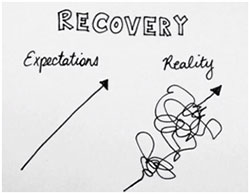
Don’t go backward, but don’t let setbacks stop you either. Small regressions are part of progress. Sometimes we have to travel the same road a few times in order to really learn the lesson it has to teach us. It’s ok.
Consider an exploratory fast. This can be applied to food and any other addiction or distraction. If giving up a certain type of food or behavior feels intimidating, it can be helpful to try giving it up in a short term way first. This allows you to experience the benefits of giving it up first hand, which can help you commit to giving it up for good later. For instance, I can tell you until I am blue in the face that processed food is toxic and causing harm to your body. But, if you give it up for 1 week and pay attention to how different you feel, you will never need to hear it from me again. You will internally motivated to change by your earlier experience of feeling great. This is an easy way to teach yourself healthy habits.
Reach out when you need to. Making significant changes to your diet can be challenging, but with the support of others, you can do it. We have great listeners at 7 Cups who can help you make healthy food choices an integral part of your life.
Move
My grandmother is 86 years old. She swims 3 days a week for an hour each time. She likes to be busy. When she cannot swim she starts to get cranky. Doctors cannot believe how well she is doing both physically and mentally. In fact, she is seemingly getting even younger and smarter than before.
Exercise is great for brain and physical health.
There are a number of correlational studies that show that physical exercise is very good for your brain. It seems to fight against brain aging and helps you do better at problem solving. Simple exercise is likely even better than those brain training games, crossword puzzles, or sudoku.
Exercise is also great for mental health. We know this though, right? Think about a time when you were stressed out, anxious, or sad and then did a bit of exercising. How did you feel when you finished exercising? Better, right? Exercising is a very powerful way of shifting your mood. Just taking a walk and getting some fresh air can help put things in perspective. In fact, the research shows that for many, just 20-30 minutes of moderate exercise per day can be as effective as an antidepressant or antianxiety medication in shifting your mood. That means that, while exercise is making you feel good right now, consistent exercise will actually also change the trajectory of your life long term.
Contrary to popular belief, exercising does not have to be challenging or strenuous to have health benefits. In fact, for most of us, moderate exercise is ideal. People that do marathons and triathlons may actually be doing more harm than good.
What do the experts recommend?
They’d like you to get at least 150 minutes of moderate activity a week. You can do this for an hour a day 3 days a week or for 30 minutes a day 5 days a week. Alternatively, you can sneak 15 minutes in here and there to get to that total if it is challenging to carve out longer periods of time.
What kind of activity is recommended?
They recommend the equivalent of a brisk walk. Imagine walking with a friend where you are walking at a slightly faster rate than normal. You can easily talk with them while walking and you are not out of breath. Once you get into it, you should find yourself warmed up, but not sweating too much. For example, if you are wearing a t-shirt and a sweatshirt, perhaps halfway through you find yourself removing your sweatshirt to cool down a bit.
Like with these other recommendations, do not make an unrealistic goal or put too much pressure on yourself. That never works. Instead, start small. If you are not exercising at all right now, then make a goal to take two 15 minute walks this week. When you do that successfully, pat yourself on a back and share this victory with a friend or a listener on 7 Cups to get encouragement. Next, take three 15 minute walks the next week. Keep adding this at a rate that feels comfortable to you. Within a matter of weeks you will have moved from no exercise to a very healthy amount of regular weekly exercise.
Another tip: exercise in a way that feels enjoyable to you. At the gym or hiking by yourself in the woods, an online yoga class in your home or by playing a sport on a team. You are more likely to follow through with exercise if you find an activity that feels like a treat to you.
In closing this chapter, Cup 4 is all about living in a healthy manner. We have a brain. It lives in our body. If we do not take care of our body and brain, then we, very simply, cannot be healthy. Fortunately, living in a healthy manner is more simple to do than you may have realized and it feels fantastic. Of course, some of these changes will probably come in direct conflict with your personal distraction systems. If you find yourself bumping up against a major problem, reach out for support to find your way through.