Skip to main content Skip to bottom nav
Community /

Anxiety Support Forum

Create a New Thread
Gif Photo Link
daydreammemories profile picture
Not All Longest Nights Belong to the Sky
by daydreammemories
Last post
5 hours ago
...See more Hello hello wonderful humans! I hope your days go as smoothly as possible💚 Happy holidays and Merry Christmas to everyone celebrating🎉🙂 Last Sunday was the longest night of the year for many of us. In Persian, this night is celebrated as "Yalda". Yalda Night is known as the longest night of the year — a moment we can measure, predict, and mark together. We know exactly when it starts and when it ends. Historically, it symbolized the victory of light over darkness and hope over hardship. Families gather to stay awake through the night, trusting that after the longest darkness, the days would begin to grow longer again. ✨ But life has its own longest nights. There are nights that don’t follow astronomy or calendars. Nights of loss, anxiety, depression, uncertainty, illness, or waiting. Nights where time feels stretched, where the idea of “morning” feels distant or irrelevant. Nights that don’t end with sunlight, gatherings, or tradition. This post is about acknowledging those nights. The ones we don’t name. The ones we endure silently. The ones that feel endless not because of the sky, but because of what we are carrying. Yalda reminds us that darkness passes. But it also invites us to ask harder questions about the darkness we live through. ⁛What has been the longest night of your life? ⁛What made it feel endless? ⁛Did you have support, or did you carry it alone? ⁛What helped you get through — or are you still in it? ⁛And when you imagine “morning,” what does that actually mean for you? (Kindly please add trigger warning if necessary!) (Please use your member account to answer and your listener account for supportive replies)
Laura profile picture
New To The Anxiety Support Community? Introduce Yourself Here!
by Laura
Last post
September 9th
...See more Let us know more about you, what brings you to 7 Cups! We are glad you are here!
Emmur profile picture
Join The Anxiety Support Taglist!
by Emmur
Last post
August 28th
...See more This thread lets us update our Tag List through an automated system. This Tag List is used to send you a notification when a new Check-In or Event thread is posted. To add yourself to this taglist, press the "Post to Thread" button at the very bottom of this page, and write inside the box the exact words: Please add me Then click the "Post" button at the bottom. To remove yourself from this taglist, press the Post to Thread button and write the exact words: Please remove me Then click "Post" Updated by @tommy - 16 Dec 2023 @daydreammemories - 28 Aug 2026 @0hMakayla @22butterflies @3Rabbits @42Matt42The564Listener @4DarkSouls @95969 @Aamberr410 @AbbyHarris1976 @acesarrow @adaptablePomegranate1115 @AddictedTealover98 @Adeline12345 @Admirablerainbow2825 @adorableFern7820 @adrjust1 @agreeableCoconut5361 @agreeablePond9662 @agreeableSquare9389 @agreeableTangerine2563 @agreeableWillow7545 @Ahava1205 @Ailuraphilelove8tear9 @Aireal2034 @Akunin11 @AllisonPena @allyswift @ALove3 @AlwaysAnxious1998 @AlwaysForYou197 @alyssakate346 @ambitiousNorth1459 @AmeliaPond4578 @AmeneH @amiablePal9825 @Amyrachelle08 @Aniconic @AnisneyRobin @Annabanana1014 @annedromeda844 @Anrai @AnxietyAt40 @Anxiousbean2310 @AnxiousPana @Apollorosedove @AReine @arrowway0812 @ArtDraw27 @Ashcash10 @Ashleeta777 @Assirac08 @AstronomySkies @AutiBoy @AverageAbigail @axlyxx27 @AzureWinter @B00nasaurusr3x @Bardofthevoid @basilcandle @batmansmom @baylinAnderson123 @Becca1231233 @BenjaminLee23 @BettieNotBetty @betty212 @blissedNblessed @blissfulChatter7642 @blissfulSpring1368 @BlueDusk99 @blueMaple5323 @bluePomegranate4531 @bluewhitehyacinth @bouncyCandy4246 @brightPine1483 @brightShip19 @brightSoul7805 @BritnyK123 @BrokenMedic @bryl @bubblySunshine4852 @BumblebeeHeart @butterflyboy @caffeinatedcatio @Caitlyn1993 @calmFriend5030 @calmmoon2104 @calmsoulmeet @carefulEast6708 @Caringone1004 @CarverTea @catsluvr @cattoccino @catwriter2389 @cbwood @CelineEvil @charmingDay5236 @charmingNorth9087 @charmingSky5972 @charmingWords1065 @checkmate0212 @cheerfulKiwi1776 @cherishedHoney2792 @cherryskiies @ChrissyHoward3 @Christopher1243 @coffeejellyy @comfortablePeace003 @conscientiousowl7754 @considerateChestnut4179 @considerateCircle9411 @consideratePineapple5388 @convivialKite4157 @convivialLychee8692 @convivialSquare2347 @cookiemonster1410 @coolpineapple13 @CordialBeing @cosmicats @courageouspanda2006 @courageousPup5706 @courteousRaspberries8980 @CraftyCatMomma @creativeLion1989 @creativeNickel7334 @CrowofCompassion @cuteOrange213 @cyanCup5451 @cyanGlobe6079 @cyanPeach789 @cyanVase4070 @Cydneyroberson @Dagro1933 @daisieslavendar @Dallas86040 @Danielle00000 @DaydreamEllie @Daydreamer0402 @daydreammemories @decisiveLychee3669 @delaware @delilahbard1812 @determinedSea6259 @Dhie2001 @DiamondSpace @DinaElwy @diligentChestnut509 @DinaElwy @diplomaticNest2838 @diplomaticWillow7584 @donnie25311 @DragonessCocoa1 @Ecargrace @echobell @ecmcookiez @Einstein6427 @electricPoetry61 @elektra1717 @ella43 @Ellewoods24 @elora03 @ElysiumC @Emery15 @emikoda @Emily328 @emilyel @EmKayGee10 @Emm22 @emma131 @Emmiollie7 @Emmur @emotionalpal710 @emotionalScarf5866 @Empatheticcounsellor1 @EmpathyShoulder1904 @emylly @enchantedlove @enchantingWings22219 @Endowments @enjoysilence @enlightenedGrace9961 @EvilRegalsReadToo @Fancydancer @fairmindedGrapefruit6968 @fairmindedScarf1703 @fathifullemon4712 @fearlessCar2051 @fearlessLemon4109 @FeatherIce25 @findingpeace89 @FlowerTheSun @forcefulFriend4768 @forcefulLion8163 @Forestling @Fosterkittycat @freya10 @FroggyTheCubsFan @funnyLime3611 @fuzzyLemon @GA999 @galactictroubles @Galatickat @galaxywatcher @gardinermmii @GatoMurr @generousPapaya5979 @generousTiger9431 @Genny0422 @gentleKiwi1330 @GeorgeK45 @gigantCloud92 @girlonline1816 @GlitteringNights @GoldenRuleJG @goodPond6231 @goodStrawberries7059 @grace1606 @grapes27 @Green2602 @happylittlenote @hardworkingEast9081 @hardworkingPark7364 @HealingTalk @heathermarie95 @heisenberg1729 @helloThinker214 @Helpinghand360 @hereforyoualy01 @higgi646 @Holly74 @honestBlueberry2601 @honestDog4802 @honestSky3076 @HoneyBear13 @HumidHumor @Hydrangea03 @Iamwhoiamwhoami @Icicle0212 @iloveyouxx @imlistening01 @imofficiallyburnt @impartialTriangle8899 @ImTryingMyBes @incarnatedsoul @incredibleFriend229 @indigoCucumber8623 @IndigoParkbench @indigoRaspberries4203 @Inevitablefates @Infurno2345 @inhb2511 @intellectualberry845 @intellectualSea9360 @intellectualStrings6074 @intelligentWheel627 @intimatefriend @intuitiveBanana7916 @intuitiveNectarine1438 @inventiveAcai8749 @Invisibility101 @ireallydontknowatthispoint @Itsastressyjellyfish @itsmeleigh @ivoryHuman1319 @IvoryOcean1985 @iwishuwell @Jacof @jamaya @JarofSeeds627 @JazzyQueen @JeanneDarc @Jenn7Cups @JerseyGirl55305 @JGfirefly @jimbotyke @jinlatte @jlswan15 @JohnathanAusgaber @Jordan1872 @jrk27 @Judy7 @jumpingforjoy @jvrjrz @K87 @karabear1979 @kareninaa @kathy3667 @katia22 @kbrosious @kcipria23 @kdsyahirah @kindMist7113 @kirstenolga97 @kitkatbreak56 @kjthales @KnownSignal @Kobiedog @KremeBrulee @KrystalRose01 @Kurt789 @kwheelz @Kylenostyle @L0404 @LadyPisces94 @LalaLives @laneyyrose @Laura718violin @lavender50 @lavendersecret1 @Lavendersubmarine @leaaa1804 @leader00 @LemonSea @LeonardoMarino @Lexloveslife @lxxfab @lialeeloves @LightSoul108 @lilbit010609 @lilsquiggles0516 @limegreenPenguin3507 @limeVillage6456 @LinaMoon @lindsaychamomile @liquidfuse @literallystarr @littleBeechwood3442 @LittleBirdie30 @littleChestnut8533 @littleCucumber4166 @littleHemlock6787 @littlePomegranate9703 @Lolaem @LoLoMarx @lovelyYellow7670 @lovingVillage6519 @lovingWater1982 @loyalChestnut464 @loyalHouse9898 @lucie01100 @lucywood83 @lulu2024 @Lumibree @lunaalistens @LunaLovegood21 @lyf2021 @M4GIC @MadHatter07 @MaiDaffodil @mandyfar @mang016 @mapleleaf606 @mapler459 @masterekat @mayarsaur @MayStorm @Mcgirl @Mcoco23 @Mel15 @Melayla @mellow6mel @melodyenola @Mennah95 @Meowsicle @Metamelomai @mgmpa @mhx1 @MidnightMaze @MikuoniandBlueCheese @miraculousKoala374 @Mishka1599 @MissHopesAndDreams @MochaFrappuccino22 @moonlightinnight @MrsAshleyMarie @MsOctober72 @munchiegoosie @muskoka @mxmes @MyFeathers @MyGigi @mytwistedsoul @Neonpaint21 @newsiesstoptheworld @nicePenguin3272 @NineIX09 @Nintendoll666 @NoneTheWiser @nongelic @NorahListens @notjustsomeone @NurturingNicole @Oceangirl131 @Opentalkers @optimisticOak9114 @ORANGESLemonsCITRUS @ouwillbefound @owo123 @PandaHelp000 @Paprika001 @parisayano @PatienceImpatiens @patmunster92 @PentUpAtsoc @pinklily123 @pinkPine2200 @pioneeringMelon3335 @pioneeringPark2431 @pioneeringPlace7190 @pixley1 @politeAcres756 @politeHemlock297 @politeStrawberries7858 @ponderingLily71 @PositiveFlowers @positiveRiver9935 @potassiumm @PotatoSoup @powerfulTalker1436 @PrabhavR @practicalBalloon309 @practicalLemon6788 @practicalMoon4496 @PrettyDiver @prplppleater9955 @purpleHuman1040 @purpleMango9286 @PurpleSnail @purva13 @quickwittedMaple4335 @QuietLightning @raadhiyah @RachelAngeli @raeannelyssa @raellerina @Rambino @Rea2255 @Reader118 @RecklessM @redHPmh33666 @reginalistener18 @relaxSea @reliablePear5579 @renaddicott @reservedAcres8109 @reservedCat9143 @reservedJar1333 @ResponsiveRia @RhaegarValyria @Rian92 @richyShiny39 @Riverwarrior11 @rocketpajamas @Rose1324 @Rue420 @RuroBell @Ryanbecerra @Ryndax @RyP @sabeyesofblue3535 @Sabrinared @sadclxud @Sadstan869 @SavoyTruffle20 @secretAcai1180 @secretPeach2997 @Seeker1898 @selfconfidentSugar @serenemelody7829 @sgraceroe @shadowmothhh @Shatteredmusic @shiningDay80 @ShrutiScarlet @ShyCat1678201 @shyEyes378 @simpletons @sinclair @Singlemama123 @SirenOfTheBrokenKind @sjundeinseglet @Skillalistenalot @sky2Ocean20 @Skylar4 @SlugBuggie @Smallbean0404 @Smileydays @Snoipe @snugglyMirage9778 @sofiacarsonfan27 @Sonena @sonerii @sophia997 @sporkchop @Squidward07 @Stardew3 @starfire48 @starkmechanic3000 @starryskies108 @Stevenl34 @SThatsit @StillClimbing @straightforwardLion9986 @Stressedinboston @Summerlove18976 @Sunshinefishgirl @sunshinegiraffe123 @supportbuddy @SvenTree @sweetheartExhale @SweetListener4654 @Syd113 @sympatheticCamp3221 @SynSavory @Taytay25 @TealPhotog @Teddylistener @teemo98989 @TeenyTinyAppy @ThatoCares @Theanxiouskat @TheAutumnWitch @TheCaringOne @TheChozen1 @TheGoodFairy @TheResilientDancer @thisismafiaboy @thiswillbeeasytoremember @thoughtfulJet4615 @thoughtfulmomma @thoughtfulPine3302 @Time2GoDark @tinysnowflakes @tiredtree1 @TNTDynamite @Torean @TrickyRicky @ttheal @turquoiseBike7729 @TylerWh @unassumingBirch5677 @UnnamedFeeling2003 @uqhkenzi @Username5432 @UwUIWolfieIUwU @V3ntus @vampire1999 @ventallout @versatilePear4061 @VickyP @victoriasorya @violalover1234 @Waluigi420 @warmheartedEmily @warmheartedFarm7120 @warmheartedSailboat2021 @warmheartedSea2180 @warmheartedSkies7091 @whisperingcanyon @WhiteDolphin27 @Wildarkberry @windSpirit @WishUponAStar968 @Witchybird27 @WittyCar0607 @wittyLunch657 @wonderfullIceCream1127 @Wrehn @wxsteriia @xandia @xxParkerxx @Yasshhaaaaa @Yazoo83 @yellowSquare6431 @yessszuchi08 @yumii88 @Zengrl
Jem7Cups profile picture
Is Anxiety a Constant in Your Life? Here are 6 Tips on How to Cope
by Jem7Cups
Last post
July 24th
...See more Deep Breaths - There is always a way to control your anxiety I'm sure most of you are familiar of the feelings that anxiety manifest: a faster heartbeat, sweaty palms, dizziness, etc. That... Is anxiety. And it's a cruel mistress. If you haven't yet identified your triggers, here are the most common ones: ⭐First day at school/job ⭐Meeting the parents of your partner ⭐Giving a presentation ⭐Attending an interview ⭐Public speaking Of course, everyone has different triggers. That is why it is so important to identify the necessary steps to coping with and managing anxiety. It takes time and relfection to identify your own personal triggers. While you are figuring this out, there are things you can actively do to help keep your anxiety from completely dominating your life. 6 Ways to Keep your Anxiety at Bay Sometimes anxiety is sporadic and getting in the way of your everyday life. If this is the case, there are ways to take control of the situation. If this is the case, then it's important to find strategies to help check your mental health in check. Manage your triggers by identifying them and learning about them Often, triggers can be obvious, for example caffeine, alcohol, or smoking. However sometimes, they can be less obvious. Long-term stressors, such as work-related/financial issues may be the culprit, but Will take time to figure out. Could it be a person, situation or both? When you do figure it out, try to limit your exposure to the stressor as much as you can. In some cases, it cannot be avoided, it's important to use other coping tools. Try online therapy, such as CBT (Cognitive Behavioural Therapy) This, although time-consuming whilst practicing, can help you condition your brain to dismiss thoughts of anxiety as soon as they crop up. If you struggle with staying still or concentrating, start with yoga for beginners. Change parts of your diet, or implement supplements Changing parts of your diet or including supplements is a great long-term strategy to keep your anxiety at bay. Research has suggested that certain supplements can help anxiety reduction/ I'll explore them below: ⭐Dark chocolate (as long as it's in moderation) ⭐Valerian root ⭐Kava kava ⭐Green tea ⭐Lemon balm ⭐Omega-3 fatty acids Although this supplements are indeed an excellent tool, it will take up to 3 months for your body to adjust to these nutrients and show the wanted effects. If you're taking any medication, please make sure you consult your doctor before taking any of these supplements. Make sure to keep yourself healthy, both mentally and physically This means exercising (no matter whether light or heavy) regularly, having good sleep hygiene, and staying in contact with those you deeply care about, as this will gradually fight off symptoms of anxiety. Make an appointment with your GP and discuss medications If you feel that your anxiety is extreme enough to merit a visit to your GP, there are numerous directions in which to go - all depending on the symptoms you're exhibiting. Please be sure to discuss these with your doctor/mental health practitioner. Question you Thought Patterns Many of us experience this - they can take root in your mind and truly catastrophise the severity of any situation you might find yourself in. I'd encourage you to challenge any negative thought you may have by simply asking: is this true? Anxiety may always be a part of your life, but it shouldn
Hydrangea03 profile picture
How to reduce anxiety!
by Hydrangea03
Last post
May 12th
...See more I personally have severe anxiety and from that I discovered some ways to cope and to reduce my anxiety. I hope this can help you as well! 1. Take a deep breath and let it out. Breathing properly while having an anxiety attack is very important, because it actually makes you a lot calmer. Just empty your mind, take a deep breath for 3 second and exhale for another 3 seconds. 2.Drink some water. Your brain needs more oxygen supply when you're anxious, and drinking water helps. 3. Accept that you are having an anxiety attack. Don't try to refuse this fact, because it'll make you feel even more anxiety. How to distract yourself: 1. Listen to some music. This is my favourite technique to distract myself. I usually would listen to classical music. It is very relaxing. 2. Draw/paint/colour. 3. Run laps. 4. Do some sport. 5. Write how you feel. 6. Doodle. 7. Clench your fist. 8. Cry if you have to. 9. Read a book/magazine. 10. Do your hobby! Some useful websites: 1. Make your own nebula https://29a.ch/sandbox/2011/neonflames/ 2. Imagination https://neave.com/imagination/ 3.Weave silk https://weavesilk.com/ 4. Coffee shop sounds https://coffitivity.com/ 5. Ghibli Studio piano collection https://www.youtube.com/watch?v=l1Q-cI4RE5s 6. Forest sounds https://www.youtube.com/watch?v=_2fzRP7Kt5c
thebendygirlListens profile picture
ACT to Get Out of Your Thoughts
by thebendygirlListens
Last post
December 16th, 2025
...See more 1. Focus on all the muscles in your torso. One by one, relax them. If they tense up again, just keep going. Free yourself up for everything next. 2. Take some deep breaths. Focus on the feeling of the air coming in and out. Slow down to think. 3. Reframe your thoughts. Move from "I feel, I think, I react by," and purposefully think "I'm having the feeling that, I'm having the thought that, I'm having the reaction of" instead. ex: "I'm having the feeling that I'm anxious for my upcoming test. I'm having the thought that I will fail. I'm having the reaction of rocking on my feet." 4. Know that you are not what happens to you. The thoughts in your head are words, they only have the power that you give them. You are able to choose how you respond to everything the world throws at you, and you got this.
suchanorigianlusername profile picture
How CBD Is Changing Mental Health Treatment
by suchanorigianlusername
Last post
October 30th, 2025
...See more It might be at your local bodega, enhancing coffee or seltzer. You might find it online as a capsule, suppository, or cream. Its available by prescription, too, as a drug to treat epileptic seizures in children. Its billed as everything from a pain reliever to a cancer cure. The holder of this impressive résumé? Cannibidiol, or CBD, one of the many compounds known as cannabinoids that are found in marijuana and its sister plant, hemp. For years, CBD lived in the shadow of its intoxicating cousin, tetrahydrocannabinol (THC), the cannabinoid thats responsible for marijuanas high and on which the bulk of research has focused. CBD does not produce a high, but has recently overtaken THC as the cannabinoid du jour. Deemed safe by most experts, it is said to induce calm, boost mood, and relieve pain without the impairment or anxiety that THC can induce. But though CBD is showing real promise for treating conditions such as anxiety and addiction, researchers worry that false claims are flourishing—and far outstripping the ability of science to catch up. The Cannabinoids Within As a plant-derived compound, CBD is known as a phytocannabinoid. But plants dont hold a monopoly on the molecules. Animals—including humans—produce cannabinoids, called endocannabinoids, which work as neurotransmitters in a network of receptors scattered throughout the central and peripheral nervous systems. The endocannabinoid system, or ECS, has a hand in a dizzying array of physiological and psychological processes, from reproduction to memory. Increased knowledge of the ECS has changed the understanding of neurotransmission. One of two known endocannabinoids, 2-arachidonoylglycerol (2-AG), is unusual among neurotransmitters in that it originates on the post-synaptic side of neural pathways. When a neuron is overstimulated, 2-AG travels backward across the synapse and—in a process known as retrograde inhibition—stops the pre-synapse from additional action. It controls how neurons fire and if they can fire repeatedly, explains pharmacologist Aidan Hampson of the National Institute on Drug Abuse-the importance of which, he argues, cant be overstated. Firing too quickly can trigger neuronal death. Also, 2-AG inhibits inhibitory neurotransmitters, a double negative that encourages excitation of neural pathways. A pathway that doesnt get excited regularly weakens, Hampson explains, so 2-AG helps neurotransmitter systems—including those that control mood and memory—maintain homeostasis. Fellow endocannabinoid anandamide doesnt appear to embark on the same reverse synaptic journey. Its range of effects is a bit unclear, although in animal studies it has modulated memory, stress, and anxiety. Chill Out Enter CBD. Its theorized that when its ingested—usually as droplets or capsules of oil extracted from cannabis or hemp—it interacts with the ECS in ways that promote mental health. One area where its shown tangible promise is in relief of anxiety disorders, including social anxiety and PTSD. In one study, participants with social anxiety ingested a capsule of CBD before a public speaking task; compared to a placebo, the drug significantly reduced levels of stress in another, volunteers took CBD after THC; CBD mitigated THCs anxiety-inducing effects. In a trial published this year, daily CBD doses given to 47 adults with anxiety for up to three months rapidly decreased symptoms—with effects staying steady the entirety of the treatment period. [Researchers] are really seeing reductions in anxiety only in folks with anxiety pathology, says Mallory Loffin, a psychologist at the University of California, San Diego, who is currently running a long-term clinical trial of CBD as a treatment for PTSD. That suggests youre actually getting a change in the pathological process—not just an overall dampening of the central nervous system, like what youd see with a benzodiazepine." How CBD reduces anxiety isnt clear. We know it [increases] 2-AG, but were not quite sure how, Loflin says. It also may inhibit production of fatty acid amide hydrolase (FAAH), an enzyme that breaks down anandamide, and it could activate the serotonin receptor 5-HT1A—either of which could lower anxiety by boosting anandamide or serotonin in the brain. Theres not a clear-cut single mechanism, she says. It has diffuse effects on several pathways that were still trying to figure out. In PTSD, CBDs inhibition of FAAH may increase extinction learning, or how quickly a person stops associating environmental cues with a trauma response. Treatment for Addiction Just as THC can raise anxiety, it can induce drug-seeking behavior, research has shown. As the opioid epidemic worsened, psychiatrist Yasmin Hurd at the Mt. Sinai Icahn School of Medicine in New York wondered whether CBD might dampen those same behaviors. Individuals with heroin use disorder who took a daily CBD solution for three days saw significantly reduced anxiety, as well as lower levels of the stress hormone [https://www.psychologytoday.com/us/basics/hormones] cortisol, in a clinical trial [https://www.ncbi.nlm.nih.gov/pubmed/31109198] Hurd published in May. More critically, CBD lessened drug craving, a key contributor to prolonged use. Addiction is really a disorder of craving, Hurd says. People who develop drug addiction are sensitive to environmental cues—such as seeing an object associated with drug use—and to stress, which impacts cognition [https://www.psychologytoday.com/us/basics/cognition] and decision-making [https://www.psychologytoday.com/us/basics/decision-making], triggering relapse [https://www.psychologytoday.com/us/basics/relapse] even after withdrawal has faded. CBDs dampening effect on cravings—an effect that endured for a week after the last dose—represents a breakthrough, Hurd says. Other opioid treatments, like naloxone or methadone [https://www.psychologytoday.com/us/conditions/opioids], block opioid reward or serve as safer substitutions. But they dont target cravings or anxiety, which often rise and fall in tandem. Cravings are one of the most critical parts of the addiction cycle, she says. If we can treat them, we have a much better shot that people will reduce their drug use. CBD also provides some hope for schizophrenia [https://www.psychologytoday.com/us/conditions/schizophrenia]. When administered to patients along with a traditional antipsychotic, CBD significantly reduced the severity of hallucinations [https://www.psychologytoday.com/us/conditions/hallucinogen-persisting-perception-disorder] and delusions compared to the antipsychotic alone, as well as slightly improving scores on cognitive tests, in a small trial published last year. [https://www.ncbi.nlm.nih.gov/pubmed/29241357] Unlike other antipsychotics [https://www.psychologytoday.com/us/basics/psychopharmacology], CBD does not appear to antagonize dopamine [https://www.psychologytoday.com/us/basics/dopamine] receptors—possibly unlocking a new mechanism for treating psychosis [https://www.psychologytoday.com/us/basics/psychosis]. Dosing - An Open Question With approximately 20 percent of U.S. adults affected by anxiety and nearly 50,000 deaths from opioid overdose each year, CBD looks to some like a general-purpose wonder drug—one that can be shipped to you in a few clicks. But theres a catch, experts say. Most of the clinical trials that begat results did so courtesy of daily doses that ranged from 400 mg to more than 1,000. Thats exponentially more than youre going to find in commercial CBD extract, Loflin says. Commercial capsules tend to hover between 10 and 25 mg each. Lower doses than those tested may well be highly effective—but thats yet to be determined. Dosing has not been established for any indications except for epilepsy, Hurd says. That hasnt slowed the market. Consumers shelled out an estimated $500 million in 2018 for commercial CBD to manage anxiety, insomnia [https://www.psychologytoday.com/us/basics/insomnia], or chronic pain [https://www.psychologytoday.com/us/basics/chronic-pain]. By 2025, sales are projected to pass $23 billion. But commercial CBD is inconsistently regulated, Loflin warns. Potency, labeling accuracy, and safety vary widely. Of 84 products Loflin tested for a 2017 study [https://www.ncbi.nlm.nih.gov/pmc/articles/PMC5818782/], about 70 percent contained either more or less CBD than claimed. Twenty percent contained THC—which can intoxicate or induce anxiety, particularly in kids, or set off drug tests. Some products have also been found to contain contaminants like pesticides; others have contained no CBD at all. It may pay to buy from more reputable retailers. [See Is CBD Legal? Its Complicated, below.] Someone who buys CBD to treat anxiety or addiction may see results—perhaps via a placebo effect [https://www.psychologytoday.com/us/basics/placebo]—or they might not. When it doesnt work, they may say, ‘Its just snake oil, Hurd observes. Its a double-edged sword. One group thinks its a wonder drug without any proof; another thinks its snake oil—again, with limited information. CBD could also interact with other medications in potentially harmful ways. [Some] companies are promising CBD for things they have never tested, Hurd warns, singling out vaginal suppositories touted to increase libido. When we put it in everything from sliced bread to water, it trivializes its potential benefits. Still, she describes herself as cautiously optimistic [https://www.psychologytoday.com/us/basics/optimism] about CBDs future. Im cautious because Im a scientist—and at the end of the day, its the data that count. But what shes seen so far has given her hope that CBD could be a safe, effective option for many disorders, including addiction. Is CBD Legal? Its Complicated Whether from the marijuana plant or the closely-related hemp plant, all CBD is nonintoxicating and interacts with the body in the same way. Hemp-sourced CBD can be sold in certain stores and online. While cannabis is still highly controlled at the federal level, hemp was legalized nationwide in the 2018 Farm Bill. In those states where marijuana is legal, either medically or for adult use, CBD products may be sold in regulated dispensaries. Those CBD products could be derived from cannabis plants, which are regulated under the applicable state marijuana program, or they could be derived from hemp plants, which are regulated under the Farm Bill. Some consumers may be unaware of the difference, but talking to their local dispensary about the source of their CBD is a wise first step. Many larger retailers, including Curaleaf, a major U.S. retailer of cannabis and hemp, label the source (hemp or cannabis) of each CBD product. They also test each batch—for CBD, THC, and contaminants—in labs certified by the International Organization for Standardization (ISO). But such labs are not necessarily FDA-compliant, says UCSDs Mallory Loflin—and since testing is done at a companys expense, smaller mom-and-pop operations may not be able to incur the cost. Retailers cannot make specific claims about the benefits of CBD that have not been FDA-vetted—and the agency has sent warning letters to violators, including at least 15 companies that claimed their CBD could cure cancer or ward off Alzheimers. Its also technically illegal to sell CBD in food—and while some localities still look the other way on CBD-infused coffee, others (including New York City) are yanking such products from shelves. The FDA convened hearings in May to clarify regulation going forward. By early fall, the agency plans to report progress on addressing the many questions about CBD. Resource Frye, Devon. (2019) How CBD Is Changing Mental Health Treatment. Cannabidiol, or CBD, is touted as a remedy for all that ails us. It may not cure cancer—but it's showing promise for anxiety and addiction.

JamieSclafaniLMSW profile picture
Mindfulness Monday
by JamieSclafaniLMSW
Last post
September 12th, 2025
...See more Well it is time again for Monday. Try not to think about it as rushing to get everything done. Try to take time for you and allow your brain to have a break
HealingTalk profile picture
Coloring to relieve Anxiety
by HealingTalk
Last post
September 8th, 2025
...See more Coloring is a pleasant, fun, and very effective way to relieve anxiety. There is a great recent post about Coloring by @EmotionsListener in the Hobby Zone SubCommunity. It has very interesting information and resources to start coloring and take advantage of its benefits for relieving Anxiety. I encourage you to read it (click HERE [https://www.7cups.com/forum/HobbyZone_125/ArtsCrafts_641/CelebratingNationalColouringDayandtheBenefitsofColouring_285947/] ) It is backed by science, you can find its scientific sources following the link at the end of that post ------------------------- I hope you find it as super useful and interesting as I did! -------------------------
SoulfullyAButterfly profile picture
Conquering Anxiety: Panic Attacks and How to Tackle Them
by SoulfullyAButterfly
Last post
September 5th, 2025
...See more Hey everyone, I’m excited to join the Conquering Anxiety series with a discussion on panic attacks. These attacks can be scary and feel overwhelming, but there are ways to manage them. What is a Panic Attack? A panic attack is a sudden surge of intense fear or discomfort that peaks within minutes. Physical symptoms like shortness of breath, chest tightness, heart palpitations, dizziness, or numbness can accompany it. These symptoms can be really frightening, but it's important to remember that they're not dangerous and will pass. How are Panic Attacks Different from Anxiety? Anxiety is a general feeling of worry or unease, often about future events. Panic attacks, on the other hand, are sudden and intense episodes of fear that come on strong and fast. People with anxiety disorders may experience panic attacks, but not everyone who has a panic attack has an anxiety disorder. Strategies for Managing Panic Attacks In the Moment: * Deep Breathing: Shallow breathing is common during panic attacks, but deep, slow breaths from your belly can help slow your heart rate and calm your body. Try inhaling for 4 seconds, holding for 7 seconds, and exhaling for 8 seconds. * Focus on Your Senses: Ground yourself in the present moment by focusing on what you see, hear, smell, taste, or touch. Notice five blue things in the room, count the sounds you can hear, or sip some cool water and describe the taste. * Positive Self-Talk: Remind yourself that this is a panic attack, it's temporary, and you'll get through it. Some people enjoy writing their own affirmations in advance. * Relaxation Techniques: Progressive muscle relaxation involves tensing and releasing different muscle groups, which can help ease tension. Practicing PMR regularly during calm periods can be very helpful for managing general anxiety and reducing muscle tension. This lower baseline tension can make you less susceptible to panic attacks. It is not recommended that you practice/apply PMR during periods of panic attacks or long-term anxiety as the body is already in a heightened state of arousal/tension during such states. General Strategies: * Learn Your Triggers: Identifying situations or thoughts that trigger your panic attacks can help you avoid them or prepare for them. A panic attack journal can help you look for common patterns that may be triggering. Some common triggers are stressful situations, social situations, or negative thoughts. * Challenge Negative Thoughts: When anxious thoughts arise, challenge them with evidence-based reasoning. For example, if you're worried about passing out in public, remind yourself that panic attacks, while uncomfortable, are not dangerous. Try evaluating the evidence that supports and is against the thoughts you are having. * Seek professional help: A therapist can teach you coping mechanisms and help you understand your anxiety. Actionable Activities: * Create a "Calm Kit": Assemble a collection of items that help you feel grounded and relaxed during a panic attack. This could include calming scents like lavender, a stress ball, pictures of loved ones, or a playlist of soothing music. Having this kit readily available can be a helpful reminder that you have tools to manage your anxiety. * Practice Visualization: Imagine yourself in a calm and peaceful place during times of low anxiety. This can create a mental refuge during a panic attack. * Develop Your Personal Panic Attack Plan: Personalize what you will do during a panic attack according to your needs. Discussion Questions: Members: 1. What are some of your experiences with panic attacks? 2. What coping mechanisms have worked well for you? Listeners: 1. Are there any resources you'd recommend for people who struggle with panic attacks? 2. How can you best support someone who is dealing with a panic attack? Remember, you're not alone in this. There is help available, and you can learn to manage your panic attacks.  This post is part of the Conquering Anxiety series, you can find all posts of the series here.  [https://www.7cups.com/forum/community/CommunitySpace_2590/ConqueringAnxietyMasterpostOngoingSeries_327724/] You can join or leave the tag list here. [https://docs.google.com/forms/d/e/1FAIpQLSe4lpVXC3O_M5IFg4EGkFVJ5y3rj9re7Wq4bOhaVIGOvcRpAw/viewform] @exuberantBlackberry9105 @unassumingEyes @WeEarth @CordialDancer @YourCaringConfidant @daydreammemories @yellowPineapple3652 @BaklavaBaby @CalmRosebud @Gettingbettertoday @GregariousSky @mytwistedsoul @sincereZebra2546 @pamharley003 @Sugarapplefairy5 @orangish @NovaIsNB @Blahblah1805 @KateDoskocilov
GoldenRuleJG profile picture
Anxiety and Shame - Assessment and Reflection
by GoldenRuleJG
Last post
August 30th, 2025
...See more So what is interesting about shame and why does it apply to anxiety? Shame can be a crippling emotion. The Evolutionary Biopsychosocial model says that if we are to raise wariness towards our social attractiveness, threats to group belonging and social rank then shame can foster survival and welfare as noted (Gilbert, 2003, 2007). Baumann et al 2021 sought to explore cultural differences in shame categories; internalized shame (This involves attributing oneself as less than, unworthy of love or attention, different defective and alone), externalized shame (This category can make oneself feel they are the butt of jokes. The individual can feel inferior and flawed in the eyes of others). Please find below the External and Internal Shame Scale used in the research: Findings: Japan showed significantly higher external shame levels than all other countries whilst Portugal showed significantly lower external shame and internal shame. Looking into research has been an exciting experience for me. I’ve recently been interested in the association with anxiety and shame, so I’ve been having a brainstorming question on what questions could be relevant to explore 🙂 Questioning prompts anxiety and shame: Feelings orientation subscale: *I am ashamed to chat about my feelings (scale from 0-7) * I am not ashamed to chat about my feelings (scale 0-7) *I make decisions based on my emotions (scale 0-7) *I do not make decisions based on my emotions (scale 0-7) Rational orientation subscale: * I make decisions based on my thoughts (scale 0-7) *I do not make decisions based on my thoughts (scale 0-7) Comments scale: * I feel uncomfortable when others give me constructive feedback (scale 0-7) *I feel comfortable when others give me constructive feedback (scale 0-7) *My confidence is boosted when others give me praise (scale 0-7) *My confidence is not boosted when others give me praise (scale 0-7) Jealousy scale: *I find it hard to be happy for others (scale 0-7) * I do not find it hard to be happy for others (scale 0-7) Interpersonal Power scale: * I like to call the shots in my friendships (scale 0-7) *I do not like to call the shots in my friendships (scale 0-7) * I feel betrayed when others do not reciprocate any good gestures I’ve shown (scale 0-7) * I do not feel betrayed when others do not reciprocate any good gestures I’ve shown (scale 0-7) *If a friend did not like my outfit I would change it: True or False *People consider me to be dependent in my relationships: True or false *People do not consider me dependent in my relationships: True or False *People consider me to be independent in my relationships: True or False *People consider me to not be independent in my relationship: True or False What reflections do you take from this? You may want to apply it to your personal, professional life or voluntary work at cups. No need to share here as I get this can bring up certain emotions within others. Stay safe! 🙂 Credits to: Matos, M., Galhardo, A., Moura-Ramos, M., Steindl, S. R., Bortolon, C., Hiramatsu, Y., Baumann, T., Yiu, R. X. Q., & Ferreira, C. (2021). Measuring shame across five countries: dimensionality and measurement invariance of the external and internal shame scale. Current Psychology. https://doi.org/10.1007/s12144-021-02019-5 [https://doi.org/10.1007/s12144-021-02019-5]
Hope profile picture
Conquering Anxiety: Cycle of Anxiety
by Hope
Last post
July 18th, 2025
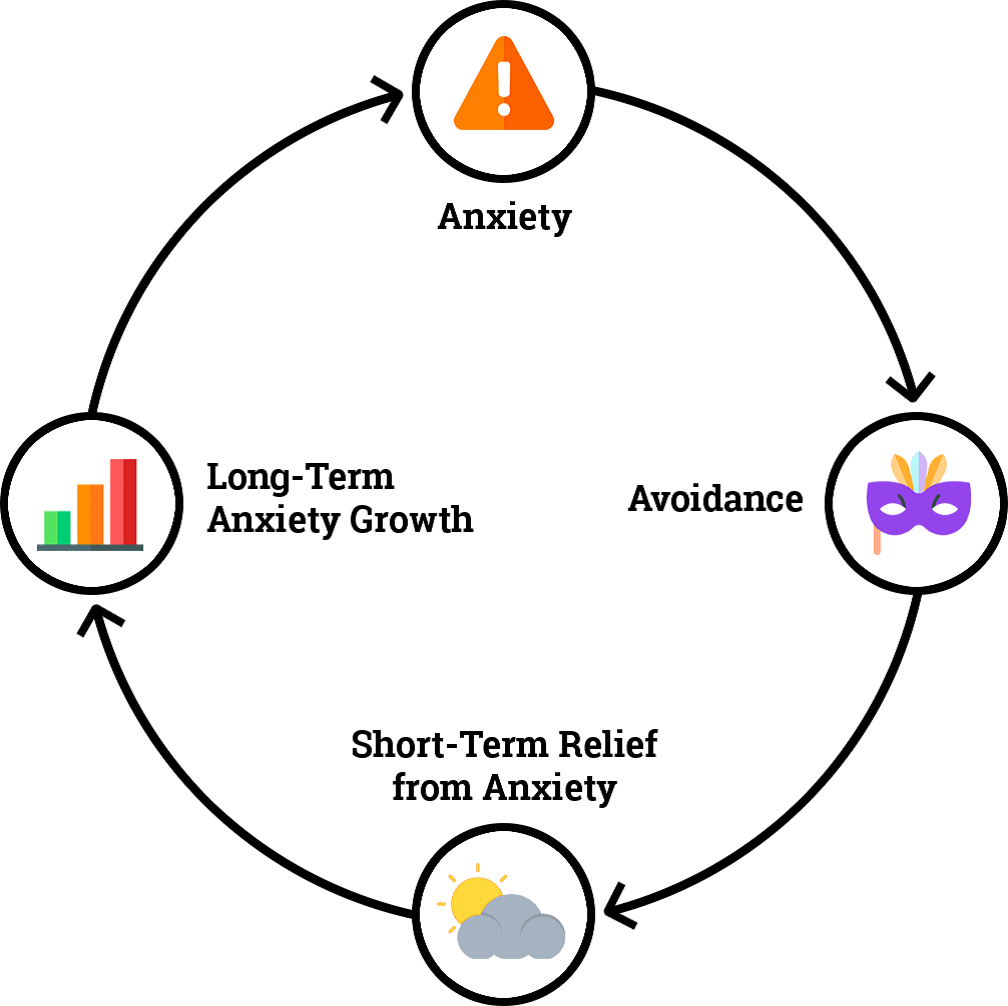
...See more Hi everyone, I hope you are doing well. Last week we talked about what anxiety is and how it can impact one’s life. You can participate in the first post here.  [https://www.7cups.com/forum/anxiety/Resources_412/ConqueringAnxietyIntroductiontoAnxietyanditsimpactonlife_327723]This week we will dive into the cycle of Anxiety! We often talk about anxiety but I have not seen the cycle being talked about that often it is an important pattern to understand to improve your anxiety.  Here is the anxiety cycle visualized The cycle of anxiety, as illustrated in the graphic from The OCD & Anxiety Center [https://anxietycoach.mayoclinic.org/anxiety/anxiety-ocd-cycle-module/] Here is how it looks in action: * Public speaking: The speaker fears judgment, avoids presentation (temporary relief), but misses the chance to gain experience and the anxiety persists. The next time the same opportunity is presented, the fear is stronger.  * Driving: A person fears driving in busy places and avoids them initially but over time the idea of driving on busy roads feels completely unacceptable. What started as hesitance, becomes a deep-rooted fear.  Please take two minutes to watch this video on the anxiety cycle 📺Click Here to Watch the Video [https://youtu.be/D46Y-LDbFWY?si=-70GJA-zjv-Q2yej] So are we doomed then?  No, the interesting thing about the anxiety cycle is, that just as you can feed and strengthen your anxiety, you can also do the opposite. Let's look at the already given above examples where we learned that if we avoid something we are scared of, we strengthen the feelings of anxiety associated with it. So if we wish to weaken the intensity of these feelings, we have to do the opposite! We have to face what we fear (this will be covered more thoroughly in the coming posts, we are just dipping our toes in the idea of facing our fears at the start of the series) So what do we do when we are faced with anxiety? You do the thing you are scared of. I know it is easier said than done but this is an effective method.  For example, if you are a new driver who is scared to park in busy areas, you do exactly that! But we don’t go into these situations without our handy grounding tools to help us get through it! These will be covered in the posts to come.  For this post, we are simply learning about the cycle of anxiety and reflecting on how we have strengthened and weakened it in our lives.  Questions for reflection It is preferred that you complete the series on a member account but to accommodate anyone who wishes to use a listener account, I have divided the questions into Member and Listener categories.  (Members Only) Please do not answer these on a listener account * Reflect on an area of life where you have struggled with anxiety think about the cycle of anxiety that has existed surrounding that topic and share with us what that cycle looked like for you.  * Think of something you were once anxious about doing but now you either feel reduced anxiety surrounding it or do not feel anxious at all. Do you think you knowingly or unnowlingly broke the cycle? (Listeners Only) * Think of something that can be generally anxiety-provoking and give us two examples, where one path leads to more anxiety and another weakens the cycle.  Further Reading  * Understanding the cycle of anxiety [https://theocdandanxietycenter.com/understanding-the-cycle-of-anxiety/] * Free Anxiety Course [https://youtu.be/Kucxlrh74sg?si=FpK7CLdfqlhB4inv] ------------------------- This post is part of the Conquering Anxiety series, you can find all posts of the series here.  [https://www.7cups.com/forum/community/CommunitySpace_2590/ConqueringAnxietyMasterpostOngoingSeries_327724/]
Hope profile picture
Conquering Anxiety: Introduction to Anxiety and its impact on life
by Hope
Last post
July 18th, 2025
...See more Hi everyone! I hope you are doing well. It is time for our very first post in the Conquering Anxiety series. This is an introductory post. For most people who deal with anxiety, you likely do not need an introduction therefore we are only briefly talking about this topic.  What is anxiety?  NHS UK defines anxiety is a feeling of unease, such as worry or fear, that can be mild or severe. It is normal to feel anxious from time to time such as before an exam. However it is an issue when your anxiety starts to hinder you from living your life. When you do not show up to your exams because you are anxious, when you no longer want to meet people because of how anxious you feel etc.  Why does anxiety exist? Because it is helpful in reasonable situations, it protects us from immediate dangers. Usually it encourages flight or fight state where you either wish to fight the situation or flee to save yourself from the immediate danger. Duke University professor Mark Leary put it, “A deer may be startled by a loud noise and take off through the forest, but as soon as the threat is gone, the deer immediately calms down and starts grazing. And it doesn’t appear to be tied in knots the way that many people are.” The challenge for most of us is that the stressors are usually not immediate and even if they are the solutions are not as simple as the deer’s example. When we start to feel anxious about things that are out of our control or are way in the future, so often that it disturbs our life, then we need to put a stop to it.  When your anxiety stops you from living your life or disturbs your routine where you go out of your way to avoid certain things and do other things to avoid worsening anxiety then it is worth checking with a professional about the possibility of an anxiety disorder.  What areas of life can be impacted by anxiety? We are specifically talking about the kind of anxiety experienced by someone who has an anxiety disorder. You will have heard of many different ways anxiety impacts but lets look at some broad common experiences.  * Physical sensations like stomach aches, fast beating heart, excessive sweating, and feeling hot or cold.  * Experiencing worry, excessive stress, and ruminating over things (rumination is obsessive thinking about an idea, situation, or choice especially when it interferes with normal mental functioning) * In social life, people can withdraw from social situations to avoid heightened anxiety.  * Relationships, if you are often on edge and experiencing anxiety, the disturbance it causes can impact your relationships.  * Work and study, you may do poorly on work and/or study.  Almost everything can be impacted but it can vary from person to person, therefore we have a wide list of anxiety disorders.  What are some common Anxiety disorders? People often talk about anxiety in general but this is an umbrella term and there are quite a few categories of anxiety.  * Generalized Anxiety Disorder (Perhaps the most common one and the one people think about when we say anxiety).  * Panic Disorder (panic attacks being the main reoccurring symptom) * Social Anxiety (Trouble socializing) * Obsessive Compulsive Disorder (Often misrepresented in media, compulsions are one of the main symptoms of the disorder) * Phobia-related (The list is extensive but the underlying factor is the inability to continue with daily life because you are terrified of X or Y) It is important to understand that labels are only as helpful as the help they lead to. To some, it can feel validating to receive a label and for others it may be devastating. It is best to leave the assignment of such labels upto a qualified professional. If you feel like you have an anxiety disorder, please reach out to a trained professional.  This series will tackle anxiety in general, the principles can help people across any anxiety disorder as anxiety is the main factor in all of these disorders, just the specific focus of it tends to differ.  Questions for you. Please note you note you need to answer these questions to be eligible for the certificate at the end of the series.  * When did first notice anxiety disrupting your day to day life? * If you could do one thing without feeling anxious, what would you pick? The above questions require talking about personal experiences which is not possible on a listener account, listeners, you can instead tell us about your key takeaways from this post. Further Reading What is anxiety? [https://www.nhs.uk/mental-health/conditions/generalised-anxiety-disorder/overview/] The Evolution of Anxiety: Why We Worry and What to Do About It [https://jamesclear.com/evolution-of-anxiety] ------------------------- This post is part of the Conquering Anxiety series, you can find all posts of the series here.  [https://www.7cups.com/forum/community/CommunitySpace_2590/ConqueringAnxietyMasterpostOngoingSeries_327724/]
Hope profile picture
Conquering Worry: Challenging Isolation and Creating Home
by Hope
Last post
July 17th, 2025
...See more Hi everyone! I hope you’re doing well. You’ve been working hard, engaging with this series, and tackling tasks that require deep reflection and effort. I know this is not easy work! But you are capable of doing hard things! While this post isn’t directly related to the book we’re basing the series on, it’s inspired by the use of quotes in the book. The Toughest Parts of Worry Do you know what makes worry so hard? It makes us feel alone and isolated. It also makes us so uncomfortable. Here are two of the toughest parts of what worry does:  * Isolation: Worry makes you feel so alone, as if you’re the only one carrying this mountain of worry, and no one else can understand or relate. * Discomfort: Worry also makes the world feel uncomfortable, like everything is out of your comfort zone. This reminds me of a reel I saw, where the person longed for home while sitting at home. Because, as we know, home isn’t just a physical place, it’s a concept, a feeling of safety and comfort. Today we will tackle these two tough parts. Here is how! You are not alone! Worrying is a Universal Experience Many of us feel isolated, especially when it comes to expressing our worries. As humans, we often hold back from sharing the extent of our stress, making it feel like we are carrying the weight alone. Think about your own worries: how many people in your life truly know just how much they affect you? More often than not, it’s not many. But the reality is, that everyone experiences worry, some more intensely than others. It's part of the human experience. Across history, countless philosophers, thinkers, and leaders have offered wisdom on managing worry. Here are some quotes that speak to the universal nature of worry, along with the periods they came from. The time periods have been added to remind everyone that humans have struggled with worry and reflected on managing worry throughout history.  * “If you see ten troubles coming down the road, you can be sure that nine will run into the ditch before they reach you.” — Calvin Coolidge (1920s) * “I have suffered a great many tragedies in my life, some of which actually happened.” — Mark Twain (1910) * “The wise man accepts his pain, endures it, but does not add to it.” — Marcus Aurelius (161–180 CE) * “We suffer more often in imagination than in reality.” — Seneca (4–65 CE) * “The greatest mistake you can make in life is to be continually fearing you will make one.” — Elbert Hubbard (1800s) * Fear is a mile wide and an inch deep (Unsure who said it, recently Alex Hormozi but historically could have been Lao Tzu) These quotes span different periods, yet they all share the same theme: that worry is a constant part of life, and often, the stress we feel is amplified in our minds. This timeless wisdom shows us that we are not alone in our struggles. In addition, many religious sources have also echoed similar sentiments, offering comfort and perspective on our worries. For example, a well-known passage from the Quran reminds us that with hardship, comes ease. Similarly, the Serenity Prayer encourages us to accept what we cannot change while finding courage for the things we can influence. Whether you turn to philosophy, religion, or simply the words of others who have been there, the message remains: We will all experience worry, but we don’t have to face it alone. And in time, things do get better. I’m reminded of something I think Tim Ferriss once shared. He mentioned that when he’s feeling overwhelmed by the worries of the present, he goes to the library, closes his eyes, and picks up a random book from the history section. What he often finds is that throughout history, people have faced grim times and deep worries, yet here we are, still moving forward and making it through. It’s a powerful reminder that we are not alone in our struggles, and things have a way of working themselves out over time. Unfortunately, I could not find the video. Creating Home Now in the second half of this post, we will discuss the idea of creating our home! A place where we can find comfort. I have distilled it down into core parts, physical and mental comfort. For home is where you feel physically and mentally relaxed.  a. Physical comfort This can include your physical space being comfortable, it can include things like: * Create a Comfort Ritual: Set aside time each day for a comforting routine, like enjoying a hot drink, reading, journaling, or simply taking a deep breath to signal relaxation. * Comfortable Furniture: Pay attention to the furniture you spend the most time with, ensuring that chairs, couches, or beds are comfortable with small adjustments like extra cushions or proper lumbar support. * Comforting Fabrics: Surround yourself with soft, cozy fabrics, such as fleece, cotton, and flannel in clothes, throw blankets, or bed linens to bring warmth and relaxation. * Surround Yourself with Nature: Bring elements of nature into your space by adding plants, flowers, and natural textures like wood to create a calming and grounding atmosphere. * Create a Clean, Organized Space: Maintain a clutter-free environment by cleaning regularly, adding organizational tools like baskets or drawer organizers, and decluttering to reduce decision fatigue. * Soundproof Your Space: Create a quieter space with soundproofing measures, like thick curtains or acoustic panels, or use noise-canceling headphones or calming sounds like rain or white noise. * Personal Touches: Add sentimental items like photographs, meaningful objects, or art that brings comfort to provide a sense of connection and make your space feel like “home.” * Spraying Scents or Using Wax Melts/Candles/Diffusers: Use calming scents like lavender, eucalyptus, or chamomile through candles, wax melts, or diffusers to create a peaceful atmosphere. * White Noise or Relaxing Sounds: Block out distractions or fill silence with calming sounds, such as rain, fire crackling, or the hum of a busy café, using a white noise machine or music. * Create Systems to Maintain a Clean Space: Implement simple systems like a basket for clutter, drawer organizers, or wet wipes on your desk to maintain cleanliness and order throughout your day. * Get Rid of Unnecessary Items: Declutter your space by removing things you no longer need to reduce decision fatigue and make room for a more peaceful environment. b. Mental Relaxation The following are some ways you can build and maintain a relaxed mind.  * Create a Comforting Routine: Set aside time each day for activities like journaling, reading, or deep breathing exercises to help your mind unwind and reset. * Practice Mindfulness or Meditation: Take moments throughout the day to focus on the present, practicing mindfulness or guided meditation to calm racing thoughts and find inner peace. * Limit Overstimulation: Reduce mental overload by limiting the use of screens, taking breaks from social media, and avoiding excessive news consumption. * Take Breaks for Mental Reset: Regularly step away from work or stress to recharge, whether it’s a short walk, stretching, or engaging in a relaxing hobby. * Reframe Negative Thoughts: Challenge and change negative self-talk by using positive affirmations or focusing on solutions instead of dwelling on problems. * Engage in Creative Activities: Express yourself creatively through art, writing, music, or crafting, allowing your mind to focus on something enjoyable and distracting from worry. * Limit Multitasking: Focus on one task at a time to reduce mental clutter and improve concentration, which can lead to a calmer, more relaxed state of mind. * Practice Gratitude: Keep a gratitude journal or take a few moments each day to reflect on things you’re grateful for, which helps shift focus from stress to positive aspects of life. * Pray on it: If you are religious, it can really help to get in touch with religion-specific practices to ease your mind. For example, a Muslim may pray on it. * Connect with Supportive People: Reach out to friends, family, or a support group to talk about your thoughts and feelings, reinforcing the idea that you are not alone. * Consume Content that Encourages an Optimistic Mindset: Engage with books, podcasts, or videos that promote positive thinking, personal growth, and resilience. Tasks of the week!  Please complete both parts and any sub-tasks. Part 1: * Choose one quote or thought that helps you feel less alone. It can be from the post above or anywhere else that resonates with you. Share it with us. * Write down at least 3 activities from the Physical Comfort section and 3 from the Mental Relaxation section that you can incorporate into your day. You can use the lists provided above or any other activities you already enjoy. Part 2: * Visualize a day where you’ve included at least two activities from each section (physical comfort and mental relaxation). How does your day look with these activities? You can keep your visualization brief. Example: "In the morning, I clean up my workspace (physical) and listen to a calming podcast (mental). I take breaks during the day to do a quick stretching routine (physical) and meditate for 5 minutes (mental) before bed." ------------------------- This post is part of the Conquering Worry series, you can find all posts of the series here.  [https://www.7cups.com/forum/community/CommunitySpace_2590/MasterpostConqueringWorryOngoingSeriesCertificateAvailable_344231/]


Hope profile picture
Conquering Worry: Keeping Busy
by Hope
Last post
July 17th, 2025
...See more Hi everyone! It is time for a new post in the series. This week we are covering keeping busy! A simple yet foundational tool for conquering worry. Worry often feels all-consuming, but it thrives best in an idle mind. Here is the formula, write it down! stay busy but with purpose. Carnegie talks about doing tasks that absorb you! We will take it a step further and talk about being busy with tasks that align with our core values. So this post is inspired by the book and a blend of both Carnegie’s ideas and the concept of core values. Busyness isn’t just about keeping your hands occupied, it’s about channeling your energy into meaningful tasks that align with your core values. Worry naturally takes a backseat when your actions are tied to what truly matters to you. Most of us have experienced, that we were worried about something and an opportunity came where we had to rise to the occasion and suddenly the worry took a back seat. Maybe you are worried about a test result and get a call from your friend who needs your help, you rush to the occasion and forget about your problem for the time being.  Why Staying Busy Works Carnegie observed that worry often stems from overthinking and inactivity. By staying engaged in work that resonates with your values, you not only fill your time productively but also cultivate a sense of purpose. “The quickest way to stop worrying is to work on something that will absorb you completely,” Carnegie writes. Usually, it's the tasks that align with our core values/greater purpose that absorb us completely.  Let's look at a three-step process to keeping busy!  1. Identify What Matters Most To combat worry, start by understanding your core values. Ask yourself: * What activities make me feel fulfilled? * How can I use my strengths in a way that benefits others? * What goals align with my long-term vision for my life? For example, if you value connection, spend time deepening relationships with loved ones. If growth is important, dedicate time to learning or self-improvement. George Bernard Shaw famously said: “The secret of being miserable is to have the leisure to bother about whether you are happy or not. Keep active, keep busy!” Unsure what your core values are? Here is where you can start!  [https://www.7cups.com/forum/selfesteem/BuildingSelfesteemseries_2655/BuildingselfesteemValueclarification_322221/] 2. Engage in Tasks That Reflect Your Values Once you’re clear on your values, fill your time with activities that reflect them. Carnegie emphasizes that meaningful work not only occupies your time but also fosters emotional resilience. Here are some ideas: If you value creativity, explore hobbies like painting, writing, or crafting. If you value compassion, volunteer or offer your support to someone in need. If you value personal growth, commit to learning a new skill or habit. By staying busy with these tasks, you’re not just avoiding worry, you’re actively building a life you find fulfilling. Most people will find that engaging in tasks that help other whilst utilizing something they are passionate about can be a great way of spending your time. For example, if you like painting and are good at it, see where you can volunteer your time teaching it to others. If you like cooking, find opportunities to cook for others.  3. Don’t Overload Yourself While staying busy is vital, it’s important to avoid over-scheduling.  George Bernard Shaw reminds us: “The load of tomorrow, added to that of yesterday, carried today, makes the strongest falter.”   Focus on doing what matters most rather than filling your time with unnecessary tasks. A balanced approach ensures that your busyness serves as a remedy for worry, not a source of burnout. Remember! We are trying to spend time doing meaningful work, the goal is not to spend every minute of your day doing something. Be busy with something worthy! What "Keeping Busy" Is Not! It's crucial not to confuse procrastination or mindless activities with truly keeping busy in a productive way. ❌ Binge-watching shows ❌ Endlessly scrolling through social media ❌ Procrastinating by doing unrelated tasks instead of addressing the issue at hand ❌ Overloading yourself with work just to avoid thinking about the problem Instead, focus on applying the techniques from the previous post about tackling worry. This means: * Taking actionable steps toward resolving your concerns. * Avoiding idle worry by channeling your energy into meaningful work. Use your extra time wisely, and balance purposeful activities with well-earned rest. When you rest after taking steps to address your worries, you'll feel genuine peace, knowing you’ve done your part. True rest comes from meaningful action, not from procrastinating under the guise of relaxation. 🌱Tasks of the week * Identify your core values: What truly matters to you? Share at least three core values that guide your life. * List meaningful activities: What tasks or activities align with these values and can make a positive impact on others? Write them down. * Choose one task: Select at least one of these activities to complete this week. Which task will you take action on? (Specify the time, day you will complete this task, be specific) Share with us the answers of all three!  Further Reading Value clarification [https://www.7cups.com/forum/selfesteem/BuildingSelfesteemseries_2655/BuildingselfesteemValueclarification_322221/] ------------------------- This post is part of the Conquering Worry series, you can find all posts of the series here.  [https://www.7cups.com/forum/community/CommunitySpace_2590/MasterpostConqueringWorryOngoingSeriesCertificateAvailable_344231/]

The 7 Cups Anxiety Support Community is here to ease the pain of living with anxiety. Here you will find connection, love, understanding, and support. New to the Anxiety Support Community? We want to get to know you! Introduce yourself here!

Adult and Teen Anxiety Group Support Sessions (EST):
☆ Please check the community calendar for any support sessions or events. Thank you!

☆ The Anxiety Support Room is open for adults on Wednesdays! [24 hours]

Community Guidelines

Please always add a trigger warning to your thread if you believe it may cause harm or trigger another person's anxiety.

Please try to limit your usage of capital letters and emojis, as they may be triggering for some.

Community Leaders
Community Mentor Leader
Forum Supporter
Room Supporter
Community Resources

Anxiety

Coping with Anxiety Growth Path by Cheery Mango

Anxiety Growth Path by Izzy

Relaxing and calming Guided Visualizations by prestigious professionals, compiled by 7 Cups

Tips to Cope with a Panic Attack

(Resources for recognizing a panic attack and coping with a panic attack)

Some relaxing gifs to help you calm down! 

(Take a look at these gifs/follow their instructions to help you calm down and relax in the event of a panic/anxiety attack.)