How to Speak Up Without Escalating

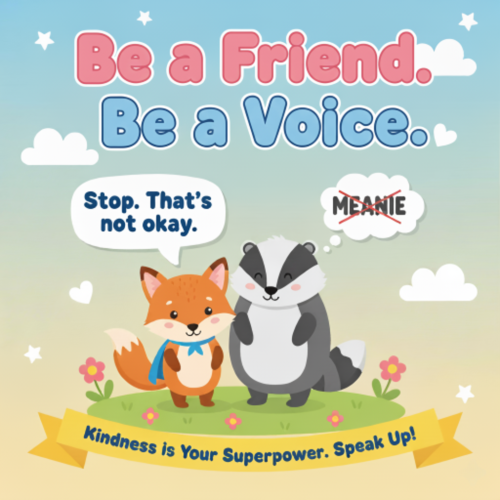
Speaking up when something feels wrong (whether online, at school, at work, or in our personal lives) can be incredibly brave. But it can also feel scary. Many of us worry that saying something will make things worse, lead to conflict, or put us in the spotlight.
Today, to mark the start of celebrating anti-bullying week and standing up for support under our Cupsgiving event, we’re focusing on how to speak up safely, calmly, and confidently, without escalating the situation or putting yourself at risk.
Here are some tips:
1) Pause Before You Respond
Give yourself a moment. Responding thoughtfully instead of instantly can help you stay grounded and clear.
2) Use “I” Statements
Instead of blaming language, try:
“I feel uncomfortable when…”
“I think this might be hurtful because…”
This keeps the focus on your feelings rather than the other person’s character. Share how they make you feel.
3) Keep Your Tone Calm and Neutral
4) Set Boundaries Without Attacking
You can say:
“I’m not okay with this.”, “Let’s take a break.” or “I’m stepping away from this conversation for now.”
Boundary-setting is a form of self-respect, not confrontation.
5) Ask Questions Instead of Making Accusations
Sometimes misunderstanding things can lead to escalation but we can ask "What did you mean by that?" to make sure we understood the person's intentions. It can help them understand that they may be wrong too at times!
6) Know When to Walk Away
If the situation feels unsafe or harmful, protecting yourself by stepping away is the strongest choice you can make.
7) Reach Out for Support
Even if you have to walk away, you are not alone. Please inform a parent, teacher, supervisor, manager or any other person to help you. Talking about it on 7 Cups with a listener can help you process things and what you can do in response.
Please share your experiences and tips using the following questions so that we can help each other:
Questions
1) What helps you stay calm or grounded when you need to speak up about something difficult?
2) Have you ever used a phrase or boundary that helped de-escalate a situation? What was it?
3) What supportive tips would you give someone who wants to speak up but feels scared or unsure?

@SoulfullyAButterfly
I am just always honest with how I feel and I like to treat people as I would like to be treated.
If I have nothing good to say, I tend to say nothing 💖


@Amanda84
You spoke my mind! I am exactly the same 🤗
@SimplyCompassionate
I can be blunt to a fault 😁
Yes, I do agree.

@SoulfullyAButterfly
Hi there soul
I’ve attempted question five before and that wasn’t received well. Then I just accept it as ok they don’t feel close to me to tell me or feel they will overshare. Could it be that sometimes people don’t like taking feedback from those in not as high of a leadership role as them or they feel a sense of competition with those in same role as them?
These are good pointers for everyone.
I think naturally people would feel more protective towards their twinnie.
That’s what I’ve noticed based on my own experiences.
Communications and interactions are like apples and oranges you get the good and the bad but with the bad you can make a positive out of it.
@SoulfullyAButterfly I told everyone in the LSR based of experience and past situations that me and the other person chatted and resolved things in private messages and they don’t need to ask questions about what happened. Sometimes curiosity can push towards gossip. If two people can directly chat it out - do it even if you don’t feel great. It’s gives both parties space to directly chat.

@SoulfullyAButterfly
1) What helps you stay calm or grounded when you need to speak up about something difficult?
I keep in mind that this is for the betterment of the situation (namely, your well-being) and that no one can benefit from silence. As you so perfectly put it: boundary-setting is a form of self-respect, not confrontation."
2) Have you ever used a phrase or boundary that helped de-escalate a situation? What was it?
It depends on the situation, but recently it was, "I think we might not be understanding each other. Let's take a moment to rewind and talk this back through." This allowed for a pause, a breather, and to try to align and reach a middle ground where we both could clearly see where the other was coming from.
3) What supportive advice would you give someone who wants to speak up but feels scared or unsure?
Advocating for yourself is one of the most important things you could ever do.

When I need to speak up about something difficult, I have to choose carefully whom I'm going to talk to. In a workplace, there are many types of people, so, based on my observation, I'll choose the one whom I believe will be fair, not judge, not have any biased thoughts, and can keep things confidential (which often is either my Supervisors, department RNs or the Senior Tech). I sometimes will choose to use email, rather than verbally communicate with them.
I'm still learning myself, in ways to how to speak up. I've made some progress, but I do still hesitate. I think the first time I spoke up about something was a couple of years ago. With the help of a coworker who told me resources and people she reached out to, before speaking up about something. With others' support, she was able to speak up and make her point heard. So, with her tips, I prepared myself in a similar way.
So, sorry, I don't have much useful tips to share.. I'm still working on it.
@SoulfullyAButterfly
@SoulfullyAButterfly
I would just say what is needed. The more we explain, more scope of misunderstanding. I prefer to continue speaking only if it is respectful.

Speaking out and standing up for what you believe is right, is incredibly vital in our day to day life, especially now that people prefer silence over truth. I have had many instances at work where i had the opportunity to speak up and I did. There were consequences but what helped me was thati believed in the truth i wanted to speak out loud. That gave me courage and calmness before and after the storm had passed.
Know what you are standing for and believe in it.
Always stand tall with your truth.
Accept the consequences whether its in your favor or not.
Have evidences if it's an escalation at work or college. This will back you up when you confront.
Know your facts and your shortcomings and how well you are able to overcome them.
Be kind only when the kindness is returned especially at office/school/college. If not then stay grounded but do not accept disrespect.

@SoulfullyAButterfly I saved the post I saved in my phone yeah I had to learn that in high school others they do get affected by bullying also as well

@SoulfullyAButterfly
Very insightful thank you so much for this post!

@SoulfullyAButterfly
Thank You :) This is a great way to spread awareness and I think this kind of info is really important these days..