Community /
IDG 7 Cups Hub Forum

Quick links
About Us
Get Started
Create a New Thread
Gif
Photo
Link
Evolution of Values: Embracing Change
by SoulfullyAButterfly
Last post
October 1st
October 1st
...See more
Values are fundamental beliefs and principles that guide our attitudes, behaviors, and decision-making. They play a crucial role in shaping our identities and influencing the way we interact with the world. It's fascinating how these values can transform throughout our lives due to a variety of factors.
Life experiences often serve as catalysts for changes in our values. These experiences can be both positive and negative. For instance, personal achievements, such as landing a dream job or achieving a long-term goal, can lead to a greater emphasis on values like ambition or perseverance. On the other hand, facing adversity, loss, or hardship can prompt a reevaluation of values, placing greater importance on qualities like resilience, empathy, or compassion.
Cultural exposure and diversity also contribute to the evolution of our values. Interacting with people from different backgrounds and belief systems can broaden our perspectives and lead to a deeper appreciation for values like tolerance, inclusivity, and cultural sensitivity.
Moreover, as we progress through various life stages, such as adolescence, adulthood, or parenthood, our priorities and values often shift to align with our evolving responsibilities and personal growth.
Think of a value that you have now that you did not used to have, or one that has become more important to you. What life experiences led to this value changing? How does this change affect you now?
Please share your thoughts and experiences on how your values have evolved.
Reflecting on the evolution of our values can help us embrace change while cultivating the Being (Relationship to Self) Dimension of the Inner Developmental Goals.
Cognitive Skills Activity: Future Mental Health Scenario Analysis
by SoulfullyAButterfly
Last post
July 20th
July 20th

...See more
Ready to develop critical thinking, complexity awareness, perspective skills, and long-term orientation? We have an interesting activity for you!
Scenario: Imagine a future where the prevalence of mental health challenges continues to rise due to various societal factors, such as increased stress, social isolation, and economic uncertainty.
Instructions:
1. Research the Scenario: Gather information from credible sources on the factors contributing to the projected increase in mental health challenges. Explore different viewpoints and expert opinions on this issue.
2. Identify Key Factors: Identify the key factors and driving forces that contribute to the complexity of the scenario. Consider both short-term and long-term factors, such as the impact of technology, healthcare policies, and social support systems.
3. Create A Scenario: Develop 1 more future scenario that envisions how mental health challenges might evolve over the next 5 years. The scenario should cover a range of possibilities, from optimistic to pessimistic.
4. Analyze and Evaluate: Apply critical thinking skills to analyze and evaluate each scenario. Assess the credibility of the evidence and assumptions underlying each scenario.
5. Complexity Mapping: Create a visual representation (e.g., a mind map or diagram) that illustrates the interconnectedness of factors and causes within each scenario. Highlight potential cause-and-effect relationships.
6. Perspective Consideration: During your analysis, actively seek and incorporate insights from diverse and contrasting viewpoints. Consider how different stakeholders, including individuals, healthcare providers, and policymakers, might perceive and respond to each scenario.
7. Long-Term Vision: For each scenario, explore the long-term implications and potential outcomes for mental health and society as a whole. Formulate a vision or commitment that aligns with the broader context and takes into account the extended future.
8. Compare and Reflect: Compare and contrast the different scenarios, considering their complexity, credibility, and long-term implications. Reflect on what you've learned about the future of mental health and your ability to think critically and anticipate future developments.
Share your brainstorming, analysis, or reflections in the comments to this post!
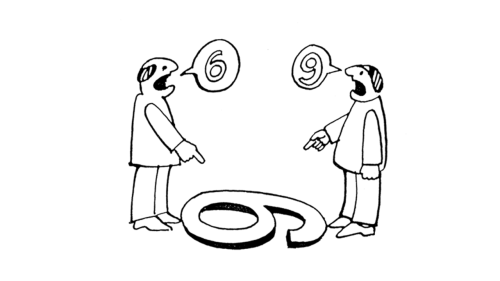
perspective ; is it a 6 or is it a 9?
by emilystar
Last post
2 days ago
2 days ago
...See more
perspective skills are a part of the thinking category in the inner development goals framework. the definition of perspective is “seeking, understanding, and actively utilizing insights from differing perspectives.” i think that's such an interesting aspect of this particular skill—just because we look at things differently than somebody else doesn't automatically make us incorrect.
everybody goes about life from their backgrounds, experiences, beliefs, feelings, knowledge, et cetera. it makes sense to say then that the same scenario could happen to two different people and be understood completely differently by those individuals! so many times we just assume that “this is what happened” but honestly, it's our interpretation of what happened.
i found this to hold even more weight during conflict. it can feel good to argue until everything we stand for wins out. however if the goal is truly understanding the scenario, then listening to others' perspectives could provide information that we were completely unaware of. but that's also not to say that you must accept every single opinion out there. you can be attentive listeners, examine reasoning, and come to the conclusion that they're simply incorrect!
perspectives skills also correlate with humility. if i accept my own perspective to be limited, this allows me to approach situations with curiosity rather than thinking i already know everything. additionally, the ability to empathize can relate since understanding others’ perspectives helps explain why someone feels or thinks differently.
however, while accepting multiple perspectives is important, this does not necessarily imply we should adopt all claims nor abandon our own principles and morals. it simply requires us to critically evaluate our own assumptions and willingness to change our minds once confronted with new ideas and perspectives! (this sounds simple but can be extremely challenging to apply!)
to me, perspective-taking is less about changing my views and opinions and more about ensuring that i’ve explored what i may not have considered yet before deciding on any opinion <3
discussion prompts !!
* has there been an experience where someone’s perspective complicated or altered how you understood a certain situation?
* how do we remain receptive toward opposing viewpoints without adopting them as true?
perspective skills are part of the values taught in the inner development goals course, you can learn more about more such values in the course here [https://www.7cups.com/forum/academy/AcademyPrograms_2311/InnerDevelopmentGoalsCourse_318284/].
is it a 6 or is it a 9? i'm on one side and insist it's a 6 because i see it as so, yet you're on the other side and insist it's a 9 because you see it as so. there is no wrong or right in this situation—only perspective and interpretation.
~ thank you!
Perspective Skills
by goldenFlamingo9717
Last post
August 15th
August 15th

...See more
I think perspective is interesting because two people can experience the exact same event but remember it completely differently and take something completely different from it. But that doesn't always mean one person is wrong because everyone has had different experiences that slowly shaped their own perception of the world. I think learning to understand another person's perspective is one of the hardest thing to achieve, but also the most valuable, when you want to truly get to know another person
Has anyone ever changed your mind about something you were completely confident you were right about?
Thread Title: Developing Emotional Intelligence
by Sompo2402
Last post
August 12th
August 12th
...See more
Emotional intelligence (EI) is a crucial skill that can greatly impact personal and professional success. It involves understanding and managing emotions, both in oneself and in others. Developing EI can lead to better relationships, effective communication, and enhanced decision-making skills.
Discussion Prompt:
* Share an experience where you were able to effectively manage your emotions in a challenging situation. How did you approach the situation, and what was the outcome?
* How do you think developing emotional intelligence can benefit you in your personal and professional life?
The Importance of Thinking Critically
by kindEmbrace4674
Last post
August 12th
August 12th
...See more
Hello everyone,
One of the skills that stood out to me was critical thinking. The definition from the IDG course states that it is a skill where you are able to critically review evidence, viewpoints, and plans. I like that this is listed as a skill because critical thinking is something we acquire through practice, and I think this is an incredibly important skill to have, especially since AI is becoming more prevalent. So it's easy to fall for misinformation or doctored evidence or videos using AI; it's important to ensure that we ask questions, check the source, and look at different points of view.
Why is this an important skill? First, it helps us to effectively solve problems we face at school, work, or home because we are thinking in a fair-minded fashion, where we are less biased and are able to look at all the pieces of evidence, and this allows us to make logical decisions that are based on fact instead of emotions and biases. A recent example where I had to use my critical thinking skills was when my father told me that Ginger Ale (Canada Dry) had been recalled due to contamination issues, and the first thing I asked was, where do you get this information? He told me ***; well, that doesn't mean anything. The company hasn't issued a statement. I googled it, and one simple question dismantled that lie that had gotten thousands of views and comments. It's important, with the increased usage of AI and new improvements in technology, that we are constantly verifying the validity of claims made online.
I have two questions:
1. With the increase in AI usage and fake news spread online, what are some of the biggest challenges you face in thinking critically?
2. Can you share a time when you relied on your own biases instead of looking at the objective facts and how that either led to bad decision-making?
The Importance of Critical Thinking in Decision-making
by ChillingRain
Last post
August 11th
August 11th
...See more
Critical thinking is a skill that has had a profound impact on how I approach problems and make decisions. In the IDG framework, critical thinking is described as the ability to review the validity of views, evidence, and plans. This means going beyond accepting information at face value and instead asking questions, analyzing the sources, and considering different perspectives.
One of the key moments when I realized the power of critical thinking was during a major life decision—choosing a career path. I felt overwhelmed by opinions from family, friends, and societal expectations. However, by applying critical thinking, I began evaluating the evidence behind the advice I was given. Was it based on current job market trends, or was it rooted in outdated beliefs? I also considered my own interests and long-term vision for my life. This process helped me feel more confident in my decision, knowing it was well-thought-out rather than influenced by external pressures.
In today's world, where we are bombarded with information from various sources, critical thinking is essential. It allows us to navigate through misinformation and make informed choices, both in our personal and professional lives.
Discussion Prompt:
- How do you practice critical thinking when faced with important decisions or overwhelming amounts of information?
- Have you ever applied critical thinking to challenge your own beliefs? What was the outcome?
Perspective Skills
by kindEmbrace4674
Last post
August 1st
August 1st
...See more
Hello everyone,
Perspective skills stood out to me as another important topic to discuss. As active listeners on 7Cups, one of the skills we acquire through training and taking chat hours is taking on the perspective of others. As the course describes it, it is a collection of skills acquired through practice, and where you have to seek, understand, and actively use these different perspectives. It is a mature and well-understood framework of viewing the world. Instead of looking at it objectively, you view it subjectively because everyone's life experiences and viewpoints really shape how we view the world as unbiased active listeners tasked with providing a safe space for others by offering support without judgment.
For Example, I am an American, and we are a very individualistic culture, meaning that our individual achievements and passions are held in the highest regard, while other countries, especially ones in the East, are very collectivistic cultures, so their identity is based on social roles and group belonging. As an active listener, I have to remember that when talking to members who are from collectivist cultures, group membership and social roles are held in higher regard than in America, so I have to take on the perspective of the member in order to listen and support them.
I have two questions:
1. What strategies do you employ while actively listening to step outside your own biased and subjective viewpoint, while remaining unbiased to provide support?
2. Can you share an experience, without disclosing confidential information, where you were listening to a member and had to navigate a different cultural background?
Cognitive Skills Activity: Future Mental Health Scenario Analysis
by SoulfullyAButterfly
Last post
July 20th
July 20th
...See more
Ready to develop critical thinking, complexity awareness, perspective skills, and long-term orientation? We have an interesting activity for you!
Scenario: Imagine a future where the prevalence of mental health challenges continues to rise due to various societal factors, such as increased stress, social isolation, and economic uncertainty.
Instructions:
1. Research the Scenario: Gather information from credible sources on the factors contributing to the projected increase in mental health challenges. Explore different viewpoints and expert opinions on this issue.
2. Identify Key Factors: Identify the key factors and driving forces that contribute to the complexity of the scenario. Consider both short-term and long-term factors, such as the impact of technology, healthcare policies, and social support systems.
3. Create A Scenario: Develop 1 more future scenario that envisions how mental health challenges might evolve over the next 5 years. The scenario should cover a range of possibilities, from optimistic to pessimistic.
4. Analyze and Evaluate: Apply critical thinking skills to analyze and evaluate each scenario. Assess the credibility of the evidence and assumptions underlying each scenario.
5. Complexity Mapping: Create a visual representation (e.g., a mind map or diagram) that illustrates the interconnectedness of factors and causes within each scenario. Highlight potential cause-and-effect relationships.
6. Perspective Consideration: During your analysis, actively seek and incorporate insights from diverse and contrasting viewpoints. Consider how different stakeholders, including individuals, healthcare providers, and policymakers, might perceive and respond to each scenario.
7. Long-Term Vision: For each scenario, explore the long-term implications and potential outcomes for mental health and society as a whole. Formulate a vision or commitment that aligns with the broader context and takes into account the extended future.
8. Compare and Reflect: Compare and contrast the different scenarios, considering their complexity, credibility, and long-term implications. Reflect on what you've learned about the future of mental health and your ability to think critically and anticipate future developments.
Share your brainstorming, analysis, or reflections in the comments to this post!
How I Try to Understand the World 🧠
by HealingAlien4444
Last post
June 25th
June 25th

...See more
Critical Thinking
I don't accept ideas just because they're popular.
I ask:
• Is it true?
• Why does it work?
• What's the evidence?
Questioning trends gives me the freedom to choose what aligns with my values instead of blindly following the crowd.
-------------------------
Complexity Awareness
I've stopped looking for simple answers.
Success isn't just hard work.
Failure isn't just laziness.
Human behavior, money, confidence, relationships, and careers are all connected. The more I learn, the more I see the bigger picture.
-------------------------
Perspective Skills
Content creation taught me that my perspective is only one perspective.
To truly help people, I need to understand:
• Their fears
• Their goals
• Their experiences
Growth happens when we learn to see through different lenses.
-------------------------
Sense-Making
I love connecting ideas across different fields.
Psychology explains behavior.
Behavior explains business.
Business explains success.
Finding patterns where others see separate pieces is a skill I'm constantly developing—and encouraging others to develop too.
-------------------------
Long-Term Vision
Building a brand takes years.
Building wisdom takes years.
Building trust takes years.
I've become less interested in quick wins and more interested in creating lasting impact. That shift has taught me patience.
-------------------------
My mission is simple:
To understand the human mind.
To help people discover their potential.
To make financial education easier to understand.
To bridge psychology, business, and self-development into practical insights.
Because success isn't just about what we achieve.
It's about who we become in the process.
👇 Which of these 5 skills do you think is most important in today's world—and why?
Changing our negative thoughts, and how powerful this can be
by CozyPup1
Last post
April 27th
April 27th

...See more
Since stating this path, I’ve been realizing how much our thoughts affect how we feel day to day, and affect us in life. Sometimes I catch myself thinking negatively without even noticing, and it can really bring my mood down, making me feel worse and less productive. Lately, I’ve been trying to catch myself whenever I have these negative thoughts and flip them into something more balanced and kinder to myself, and it actually helps much more than I expected.
So I have some questions for you:
What’s a negative thought you catch yourself having often?
and
Have you ever tried to challenge or reframe it? How did that feel?
Changing negative thoughts!
by CozyPup1
Last post
April 27th
April 27th
...See more
Since stating this path, I’ve been realizing how much our thoughts affect how we feel day to day, and affect us in life. Sometimes I catch myself thinking negatively without even noticing, and it can really bring my mood down, making me feel worse and less productive. Lately, I’ve been trying to catch myself whenever I have these negative thoughts and flip them into something more balanced and kinder to myself, and it actually helps much more than I expected.
So I have some questions for you:
What’s a negative thought you catch yourself having often?
and
Have you ever tried to challenge or reframe it? How did that feel?
Role of Critical Thinking on Inner Development
by yellowflowersinthedark
Last post
April 2nd
April 2nd
...See more
So, I have a goal.
The next thing I need to do is to find resources that will help me achieve my goal. I find that there are many possible paths and countless resources available. However, not everything might be helpful for me or credible in the first place. I learned that I need critical thinking for effective planning as well as identifying challenges and ways to overcome them.
With the spread of fake information as well, I need to be careful about what I trust on social sites. To practice critical thinking, I need to identify the source of information, if it is backed with evidence and if the data it provides is consistent with existing information. It means I have to analyze the data and evaluate how it fits to the situation.
Answering the critical thinking activity was really helpful. It was a knowledgeable and practical exercise for me. Researching increased my knowledge and through the activity I was able to form my own reflections. It reminds me of the importance of awareness; as one of the prevailing challenges in mental health is stigma which is caused by lack of awareness. The activity also helped me in considering various perspectives, it is what makes it holistic. It taught me to think of long-term effects and goals.
So, every action must have a reason, a step forward towards the goal. The goal is not a one-time thing. It is a start to something sustainable.
Have you ever encountered false information? How did you recognize it?
Complexity Awareness
by sunshineOcean8546
Last post
February 8th
February 8th
...See more
Discovering the name and the whole concept of this cognitive skill was for me the beginning of a beautiful liberating journey.
I have been dwelling on it, as long as I can remember, asking and reflecting on more possibilities than black and white to any given situation. The perspective of black and white has been one of the major sources of frustration in my life. The lack of nuance that I have so many times came upon, was hard to bear without knowing how to name what I was facing. Looking back over the past years, I realise I evaluated and defined it as all shades of grey between white and black. That was, at the time, my best explanation of my point of view in a situation. Some months ago I came upon the actual name: complexity awareness and it felt liberating because, most of all, I could read about it, refine it in myself, and find a source of external resonance for something I felt inside of me for so long.
The realisation of the following added to this sense of liberation:
* Romanticising greatness as something clean is pretty limiting. Great thinkers, artists and builders of worlds rarely have linear lives and we have a lot to learn from that. There are many trials and errors in achieving and living my purpose and my dream life. My purpose and my dream life are not something written in stone, but more a long blank page sketched in pencil, where I can and will make smaller adjustments here and there and even bigger, drastic and dramatic ones if needed.
* Trying to solve complexity as solution. I have tried this very hard, asking life to make sense on my own terms. What brought me relief was allowing life to be meaningful without being fully explainable. Seeing more, being aware of complexity does not make life easier, it makes it more real, and this is something I was longing for.
* I do not have to collapse into a clear narrative to be whole. Beauty, life itself, does not wait for the ideals conditions. It appears and asks to be lived anyways. I choose the act of making something beautiful even when the world is not.
Is growth about resolving contradictions, or learning to live with them?