Community /
IDG 7 Cups Hub Forum

Quick links
About Us
Get Started
Create a New Thread
Gif
Photo
Link
Evolution of Values: Embracing Change
by SoulfullyAButterfly
Last post
October 1st
October 1st
...See more
Values are fundamental beliefs and principles that guide our attitudes, behaviors, and decision-making. They play a crucial role in shaping our identities and influencing the way we interact with the world. It's fascinating how these values can transform throughout our lives due to a variety of factors.
Life experiences often serve as catalysts for changes in our values. These experiences can be both positive and negative. For instance, personal achievements, such as landing a dream job or achieving a long-term goal, can lead to a greater emphasis on values like ambition or perseverance. On the other hand, facing adversity, loss, or hardship can prompt a reevaluation of values, placing greater importance on qualities like resilience, empathy, or compassion.
Cultural exposure and diversity also contribute to the evolution of our values. Interacting with people from different backgrounds and belief systems can broaden our perspectives and lead to a deeper appreciation for values like tolerance, inclusivity, and cultural sensitivity.
Moreover, as we progress through various life stages, such as adolescence, adulthood, or parenthood, our priorities and values often shift to align with our evolving responsibilities and personal growth.
Think of a value that you have now that you did not used to have, or one that has become more important to you. What life experiences led to this value changing? How does this change affect you now?
Please share your thoughts and experiences on how your values have evolved.
Reflecting on the evolution of our values can help us embrace change while cultivating the Being (Relationship to Self) Dimension of the Inner Developmental Goals.
Cognitive Skills Activity: Future Mental Health Scenario Analysis
by SoulfullyAButterfly
Last post
July 20th
July 20th

...See more
Ready to develop critical thinking, complexity awareness, perspective skills, and long-term orientation? We have an interesting activity for you!
Scenario: Imagine a future where the prevalence of mental health challenges continues to rise due to various societal factors, such as increased stress, social isolation, and economic uncertainty.
Instructions:
1. Research the Scenario: Gather information from credible sources on the factors contributing to the projected increase in mental health challenges. Explore different viewpoints and expert opinions on this issue.
2. Identify Key Factors: Identify the key factors and driving forces that contribute to the complexity of the scenario. Consider both short-term and long-term factors, such as the impact of technology, healthcare policies, and social support systems.
3. Create A Scenario: Develop 1 more future scenario that envisions how mental health challenges might evolve over the next 5 years. The scenario should cover a range of possibilities, from optimistic to pessimistic.
4. Analyze and Evaluate: Apply critical thinking skills to analyze and evaluate each scenario. Assess the credibility of the evidence and assumptions underlying each scenario.
5. Complexity Mapping: Create a visual representation (e.g., a mind map or diagram) that illustrates the interconnectedness of factors and causes within each scenario. Highlight potential cause-and-effect relationships.
6. Perspective Consideration: During your analysis, actively seek and incorporate insights from diverse and contrasting viewpoints. Consider how different stakeholders, including individuals, healthcare providers, and policymakers, might perceive and respond to each scenario.
7. Long-Term Vision: For each scenario, explore the long-term implications and potential outcomes for mental health and society as a whole. Formulate a vision or commitment that aligns with the broader context and takes into account the extended future.
8. Compare and Reflect: Compare and contrast the different scenarios, considering their complexity, credibility, and long-term implications. Reflect on what you've learned about the future of mental health and your ability to think critically and anticipate future developments.
Share your brainstorming, analysis, or reflections in the comments to this post!
Courage and Its Power
by GoldenRuleJG
Last post
14 hours ago
14 hours ago

...See more
When I think of a symbol of courage I think of a lion.
A lion is fierce and powerful!
A lion is willing to protect their cubs and at the same time provide a safe space with warmth.
Courage can be about making the decisions that are not the most popular ones. It is about staying true to your values. Your mind say "I'm afraid this might not be the right move."
1) What animal or symbol to you reflects courage and why?
2) What other qualities for you do exist with courage, reflecting on how you applied this to your life?
3) Can you think of time you were courageous? What were the sensations before you experienced in your mind before being courageous and after being courageous? Did you feel better or did you regret it?
I feel that courage takes risks and spontaneity in action! For example, you notice someone is not standing up for themselves when someone is speaking negatively about them. Because you know them well you might support them because you see them as a friend.
Stepping in too often can be something a rescuer does, which drama triangle theory [https://clarenormancoachingassociates.com/drama-triangle-winners-triangle/] explains.
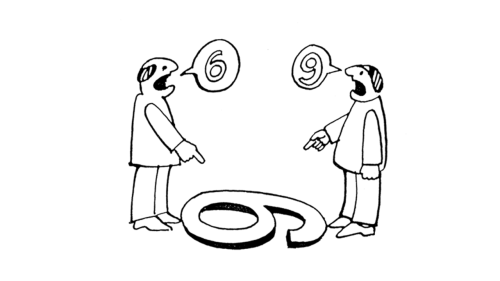
perspective ; is it a 6 or is it a 9?
by emilystar
Last post
2 days ago
2 days ago
...See more
perspective skills are a part of the thinking category in the inner development goals framework. the definition of perspective is “seeking, understanding, and actively utilizing insights from differing perspectives.” i think that's such an interesting aspect of this particular skill—just because we look at things differently than somebody else doesn't automatically make us incorrect.
everybody goes about life from their backgrounds, experiences, beliefs, feelings, knowledge, et cetera. it makes sense to say then that the same scenario could happen to two different people and be understood completely differently by those individuals! so many times we just assume that “this is what happened” but honestly, it's our interpretation of what happened.
i found this to hold even more weight during conflict. it can feel good to argue until everything we stand for wins out. however if the goal is truly understanding the scenario, then listening to others' perspectives could provide information that we were completely unaware of. but that's also not to say that you must accept every single opinion out there. you can be attentive listeners, examine reasoning, and come to the conclusion that they're simply incorrect!
perspectives skills also correlate with humility. if i accept my own perspective to be limited, this allows me to approach situations with curiosity rather than thinking i already know everything. additionally, the ability to empathize can relate since understanding others’ perspectives helps explain why someone feels or thinks differently.
however, while accepting multiple perspectives is important, this does not necessarily imply we should adopt all claims nor abandon our own principles and morals. it simply requires us to critically evaluate our own assumptions and willingness to change our minds once confronted with new ideas and perspectives! (this sounds simple but can be extremely challenging to apply!)
to me, perspective-taking is less about changing my views and opinions and more about ensuring that i’ve explored what i may not have considered yet before deciding on any opinion <3
discussion prompts !!
* has there been an experience where someone’s perspective complicated or altered how you understood a certain situation?
* how do we remain receptive toward opposing viewpoints without adopting them as true?
perspective skills are part of the values taught in the inner development goals course, you can learn more about more such values in the course here [https://www.7cups.com/forum/academy/AcademyPrograms_2311/InnerDevelopmentGoalsCourse_318284/].
is it a 6 or is it a 9? i'm on one side and insist it's a 6 because i see it as so, yet you're on the other side and insist it's a 9 because you see it as so. there is no wrong or right in this situation—only perspective and interpretation.
~ thank you!
IDG Dimension 3: Relating - Caring for Others and the World
by yoursmileisasradientastheSun
Last post
2 days ago
2 days ago
...See more
Caring for others and the World stand out to me the most in the Inner Development Path. The reason that this community was built and the fact that all of us are here is due to this factor.
More importantly, empathy is a skill that can be learned, rather than an inborn characteristic. I still look back and question myself, how did I learn to be kind? I was somewhat a troublesome kid, but now seeing others in pain hurts me just as much. And this nature, brought me the people that are very dear to me, also strengthened my bond with my family. Helped me learn other skills like acceptance. I want to spend my life helping people, that's why I planned to study Psychology.
One important thing that I would like to highlight is - You cannot pour from an empty cup - this is something I learned very recently. I would go down the way for others, but wouldn’t take time for my own peace, which led to burnout and emotional detachment. But now I remind myself to give some grace, every once and then, this not only brought me peace but enhanced my empathetic skill too.
Discussion Questions:
*
Which skill did you learn first—caring for yourself or caring for others?
*
Which one would you suggest others focus on learning first?
Looking forward to reading your thoughts😊💛🍀
Empathy and Compassion
by Architak2007
Last post
2 days ago
2 days ago
...See more
There are numerous skills that are included into the framework of Inner Development Goals. I would like to note that such skills as empathy and compassion are especially valuable for me since they allow people to make connections, gain new perspectives, and maintain their relations. In today's world where diversity rules, empathy is needed to be able to consider other people's experience and point of view instead of evaluating any situation based on one's preconceptions.
While empathy is about gaining an understanding of other people's feelings, compassion is a desire to help those who need support. I believe that developing empathy and compassion is crucial to building more inclusive societies and enhancing cooperation between people since they will be more willing to collaborate with one another when feeling understood.
However, empathy and compassion do not necessarily have to involve other people only; it is necessary to develop these traits in relation to oneself too. Being compassionate to oneself is a good way to take better care of oneself in various difficult situations.
To me, both empathy and compassion are very strong qualities since they motivate us to take care of others and at the same time not forget to take care of ourselves.
Do you remember any instance when empathy has helped you solve an issue or improve your relationship?
How do you exercise self-compassion in hard times?
Small Steps, Real Change
by LopaConnect
Last post
2 days ago
2 days ago
...See more
Change, I’ve learned, doesn’t always happen in big leaps, sometimes it’s quiet and personal, one heart at a time. When I started Lopa Connect, it wasn’t about changing the world all at once. It was simply about creating a space where people could talk, reflect, and feel supported. But over time, I’ve seen how even small actions, a message, a check-in, or a shared story, can start ripples of change.
This domain, Acting : Enabling Change, reminds me that action grows out of care and purpose. I’m not just connecting for the sake of activity; I’m connecting to help others find a bit of light, and in doing so, I find my own strength too.
Sometimes, change also means standing up for positivity, setting examples, and showing that kindness can be powerful. Through Lopa Connect, I’m learning that enabling change doesn’t mean having all the answers; it means being willing to start, even if it’s small.
I would like to have a few suggestions from you all:
*
What’s one small action you’ve taken (or could take) that makes a positive difference for others?
*
How do you find the courage to keep creating change, even when it feels slow or unnoticed?
perseverance ; if a butterfly cannot find anymore pollen in a flower, should it stay or move on?
by emilystar
Last post
2 days ago
2 days ago
...See more
perseverance is definitely one of my favorite concepts under the acting dimension of the inner development goals! in the IDG framework, perseverance refers to "the capacity to maintain engagement and commitment despite delays in the achievement of desired goals." however, i feel like perseverance gets portrayed in a way in which it seems inherently good, which i don't entirely agree with.
while i absolutely understand that persevering through a struggle does teach many valuable lessons, there are instances when perseverance does not always mean that one should push forward. struggling to learn a challenging concept, training oneself to learn a certain skillset, forming connections with others, and pursuing a distant objective certainly require perseverance–patience in particular! there are moments when it is incredibly difficult to witness progress each day.
however, i feel like the problem lies within this attachment towards believing that giving up means admitting defeat. the world does not stand still for anyone. there are going to be days when you must adapt and move along since circumstances dictate that your original goal was not meant to be anymore. this is where i struggle to define perseverance.
it makes me realize how perseverance might not function alone and needs the help of other IDG skills. knowing ourselves is important because sometimes self-awareness lets us understand what drives us to persevere with our actions. critical thinking allows us to understand if we use the appropriate strategy in our endeavors and helps evaluate them objectively. an internal guidance system allows us to assess if the thing we work towards matches our moral and ethical views. perseverance could mean continuing; however, it also implies taking different ways towards achieving one’s goal.
sometimes there lies this big distinction between "i haven't made it yet" and "this isn't working anymore," which i believe should become a significant step in growing up personally <3
discussion questions !!
* how would you know whether it is healthy or not to persevere?
* does quitting one’s goal sometimes imply perseverance of something bigger?
perseverance skills are part of the values taught in the inner development goals course, you can learn more about more such values in the course here [https://www.7cups.com/forum/academy/AcademyPrograms_2311/InnerDevelopmentGoalsCourse_318284/].
the butterfly searches for flowers with pollen, but when a flower has none, it knows when to move on rather than continuing to stay. like the butterfly, we may need to recognize when something no longer has what we need and have the perseverance to keep searching rather than remain where we cannot grow.
~ thank you!
Making sense of life through journaling
by 6Dreamwish9
Last post
2 days ago
2 days ago

...See more
Our Lives gets messy sometimes, and honestly our thoughts get messy right along with it. One thing that's helped me is just writing stuff down. Not in a professional way, just writing down what happened during the day and how it made me feel. Just a note about a situation and the feeling that was there then, that’s it.
At first I felt like all af that is pointless, as I was just talking to myself pointlessly. But after doing it for a while, I started going back and reading old notes, and that's only when things got interesting. I found patterns I never would've noticed before, like that there are certain situations always makes me anxious, or specific people always leaving me drained. Things or feelings that felt random before actually had a shape to it once I just looked back.
That's basically what sense-making is, I think. It's not about having everything figured out right away. It's about giving yourself the opportunity to look back and just connect the dots, instead of trying to understand everything while you're still in the middle of it.
It's really a simple habit, but it's changed how I understand myself. Doesn't need to be long or perfect, just keeping it up.
Have any of you ever kept a journal and noticed a pattern in your emotions or reactions that surprised you? What did that teach you about yourself?
Integrity and Authenticity
by RoshanaShabanii
Last post
2 days ago
2 days ago
...See more
Integrity and authenticity are qualities that connect strongly with several of the Inner Development Goals (IDG) domains, especially Being, Relating, and Acting. I think they are important because they influence not only how we understand ourselves, but also how we interact with other people and how we put our values into practice.
Within the Being domain, authenticity can mean developing a clearer understanding of who we are, what we value, and what matters to us. It can be easy to change ourselves depending on the people around us or to focus so much on other people's expectations that we lose touch with our own thoughts and feelings. Being authentic does not mean sharing everything with everyone. Instead, it can mean being honest with ourselves and making choices that feel consistent with our values.
Integrity connects closely with the Acting domain because it involves putting our values into practice. It is one thing to say that something is important to us, but another to act according to that belief when it becomes difficult or inconvenient. Integrity does not mean being perfect. Sometimes it means admitting that we made a mistake, taking responsibility, and trying to act differently next time.
There is also an important connection to Relating. When we communicate honestly and respectfully, while still maintaining healthy boundaries, we can build trust with others. Authenticity can help relationships feel more genuine, while integrity can help people feel that they can rely on us.
For me, developing these qualities means regularly asking myself: Are my actions consistent with my values? Am I being honest with myself about what I think and feel? These questions can help turn the IDG concepts from abstract ideas into something we can practice in everyday life.
Now, I have these questions for you everyone:
*
Which IDG domain do you think has the strongest connection to integrity and authenticity, and why?
*
What helps you stay true to your values while still being respectful of other people's perspectives and boundaries?
Collaboration and why this is important
by GoldenRuleJG
Last post
2 days ago
2 days ago

...See more
Collaboration is all about working as part of a collective unit where there are shared goals and room for flexibility to accomodate.
The destination is that each person will feel valued.
It asks the question of who skills work best in which area of the goal. It involves being a supporter of your team when they are unsure.
Collaboration for me allows the space for inclusivity and diversity; therefore making for rich experiences.
You can share different social etiquette from your culture and I can then modify how I communicate.
I do not need to hide my personality or values but I can then be respectful of your culture.
Research evidence has shown that Muslim school boys from Switzerland as a social etiquette do not shake hands with opposite sex peers and this rule is only acceptable for female relatives they are related to.
1) What is one norm you would let someone know about your culture when collaborating with them?
2) Collaborating is easier when ... (fill in the blank).
3) Collaborating is more difficult when (fill in the blank).
4) Name one social skill you are good at and one you are wanting to work on.
5) A symbol for collaboration for you is (fill in blank)
Reference:
Baumgartner, C 2019. (Not) Shaking Hands with People of the Opposite Sex. Civility, National Identity and Accomodation. in J Seglow & A Shorten (eds), Religion and Political Theory: Secularism, Accommodation and the New Challenges of Religious DIversity. Rowman & Littlefield, pp. 119-136
reminder
by yuliiablossom
Last post
3 days ago
3 days ago
...See more
I find it really useful to have reminders like this:
you are doing better than you are probably thinking.
and it’s important to stay kind to yourself despite the things that your mind is telling you.
Openness and Learning Mindset
by RoshanaShabanii
Last post
Monday
Monday

...See more
I’ve been thinking about how closely openness and having a learning mindset are connected. To me, being open doesn’t necessarily mean agreeing with every opinion or accepting every new idea. Sometimes it simply means being willing to listen, stay curious, and consider that there might be something we can learn from a different perspective.
We all have our own experiences, beliefs, and ways of looking at the world. They naturally influence how we understand things, and there is nothing wrong with that. But sometimes, without realizing it, we can become so attached to what we already know that we stop being curious about what we don’t know.
I think having a learning mindset can help with this. Instead of seeing ourselves as people who either “can” or “can’t” do something, we can give ourselves permission to be learners. We can make mistakes, ask questions, change our minds, and try again. Even something that doesn't go well can teach us something about ourselves or give us a different way of approaching the situation.
For me, one of the most interesting parts of a learning mindset is the idea of “not yet.” Instead of thinking, “I can't do this,” we can sometimes ask, “What would help me learn how to do this?” That small change in perspective can make challenges feel less like judgments about our abilities and more like opportunities to grow.
At the same time, I think openness requires some humility. We don't have to abandon our values or opinions whenever we encounter something different. We can simply make room for curiosity and ask ourselves, “Is there something here that I haven't considered before?”
*
Can you remember a time when being open to a new perspective, experience, or idea taught you something unexpected?
*
When you make a mistake or struggle with something, what helps you stay curious and see it as part of learning rather than as a failure?
(Please forgive me if there's any sort of confusion in the grammar or spelling errors.)
Connestedness
by Iv02
Last post
October 1st
October 1st
...See more
For the second one:
Connectedness is an important skill because it reminds us that meaningful relationships are a major part of emotional well-being and personal growth. Recently, I’ve been reflecting more on my friendships and relationships and realized that many of them have felt somewhat superficial. Although I spend time with people and enjoy social interactions, I noticed that I often struggle to fully open up, be emotionally vulnerable, or maintain deeper connections over time.
At first, this realization felt discouraging, but it also helped me better understand what I truly value. I realized that I genuinely crave deeper and more authentic relationships where people feel comfortable sharing honestly, supporting each other, and being emotionally present. Instead of seeing this as something negative, I now view it as motivation for growth. Becoming more connected with others starts with learning how to be more open, consistent, and emotionally available myself.
This reflection also made me realize that connectedness is not only about having many relationships, but about building relationships with trust, understanding, and mutual effort. I want to become more intentional about maintaining friendships, expressing appreciation for people I care about, and allowing myself to connect more deeply without fear of judgment or rejection.
Discussion Questions:
* What does a meaningful connection or friendship look like to you?
* What are some challenges that prevent people from forming deeper relationships?